
Best GPS Tracker for Construction Equipment (2026 Guide)

-
01
High-risk equipment should be tracked first to improve recovery chances
-
02
Heavy job site interference reduces accuracy on low-quality trackers
-
03
Battery life depends on usage so match power type to equipment
-
04
Cellular trackers lose signal in remote areas without coverage
-
05
Start with key assets and expand tracking based on real data
9 Best GPS Trackers for Construction Equipment (2026)

Hey, thanks for being here. If you’re looking for a rugged GPS tracker for construction equipment, chances are something already went wrong on a job site. I get that feeling. When machines and tools live outdoors, get dragged across rough ground, and sit near steel all day, tracking needs to survive real abuse, not brochure claims.
I’m Ryan Horban, and I’ve spent the last 15 years testing GPS trackers on active job sites, not desks. I’ve mounted them on trailers, generators, skid steers, and storage boxes, and the patterns show up fast. Some devices look tough online and fail within days. Others keep reporting after dust, vibration, and rough weather push them hard.
This guide exists to save you time and money. I’ll show which trackers keep working under job-site pressure, how each one behaves day to day, and which setups fit different equipment. That way, you choose based on experience, not guesswork, before another asset disappears.
The victim said after he reported the missing equipment to police, he was forced to buy new tools at a cost of around $5,000. But because of the tracking system he installed, he was able to see where his stolen equipment was and decided to try to follow the tools.
He said he grew frustrated seeing his tools move around on the tracking system and decided to go to the Elkridge storage unit that led police to find over 15,000 stolen pieces of construction equipment. Officers eventually conducted search warrants on 12 total locations, 11 of which were in Howard County.
Our Top Picks: Best GPS Trackers For Construction Equipment
|
|
|
|
|
|
|
|---|---|---|---|---|---|
| Best For | Overall construction equipment performance | Trailer & towable asset tracking | Powered equipment & long runtime | Compact theft recovery | Entry-level & temporary tracking |
| Cost | $59 | $129 | $259 | $269 | $29.88 |
| Top Features |
Strong magnet, fast updates, job-site ready | Strong magnet, geofencing, trailer alerts | High-capacity battery, rugged build | Twin magnetic waterproof case | Small size, global coverage |
| Battery Life | ~2–3 weeks (active use) | ~1–3 months (motion-based) | Weeks to months, depending on the mode | 10–14 days | 2–5 days |
| Where to Buy | Buy Now | Buy Now | Buy Now | Buy Now | Buy Now |


How We Tested GPS Trackers for Construction Equipment

I don’t test trackers the way most review sites do. No desks, no clean garages, no short demo runs. Every device in this guide went straight onto active equipment on site and stayed there long enough to show its real behaviour.
I’m Ryan Horban, and for over 15 years, I’ve tested GPS trackers on trailers, skid steers, generators, fuel tanks, and steel storage boxes across live job sites. Each tracker faced the same setup to keep results fair. Same equipment types, same locations, same abuse.
First came mounting. Trackers were installed on painted steel, worn metal, dusty frames, and vibrating panels. If a magnet slipped, loosened, or shifted during normal operation, it didn’t move forward.
Next was signal reliability. Job sites are packed with steel plates, containers, parked machines, and tight lanes. I watched how each tracker behaved around metal-heavy zones, during slow manoeuvring, hauling, and long idle periods. Units that froze, jumped locations, or delayed updates were cut.
Battery behaviour followed. Trackers ran in active, motion-based, and low-power modes across multi-shift days. Devices that drained too fast or needed constant attention didn’t make the list.
Only trackers that stayed attached, kept accurate reporting, and handled dust, vibration, and weather without fuss earned a spot here. This section isn’t theory. It’s what held up when work started and didn’t slow down.
1. SpaceHawk GPS Tracker - Best Overall for Construction Equipment

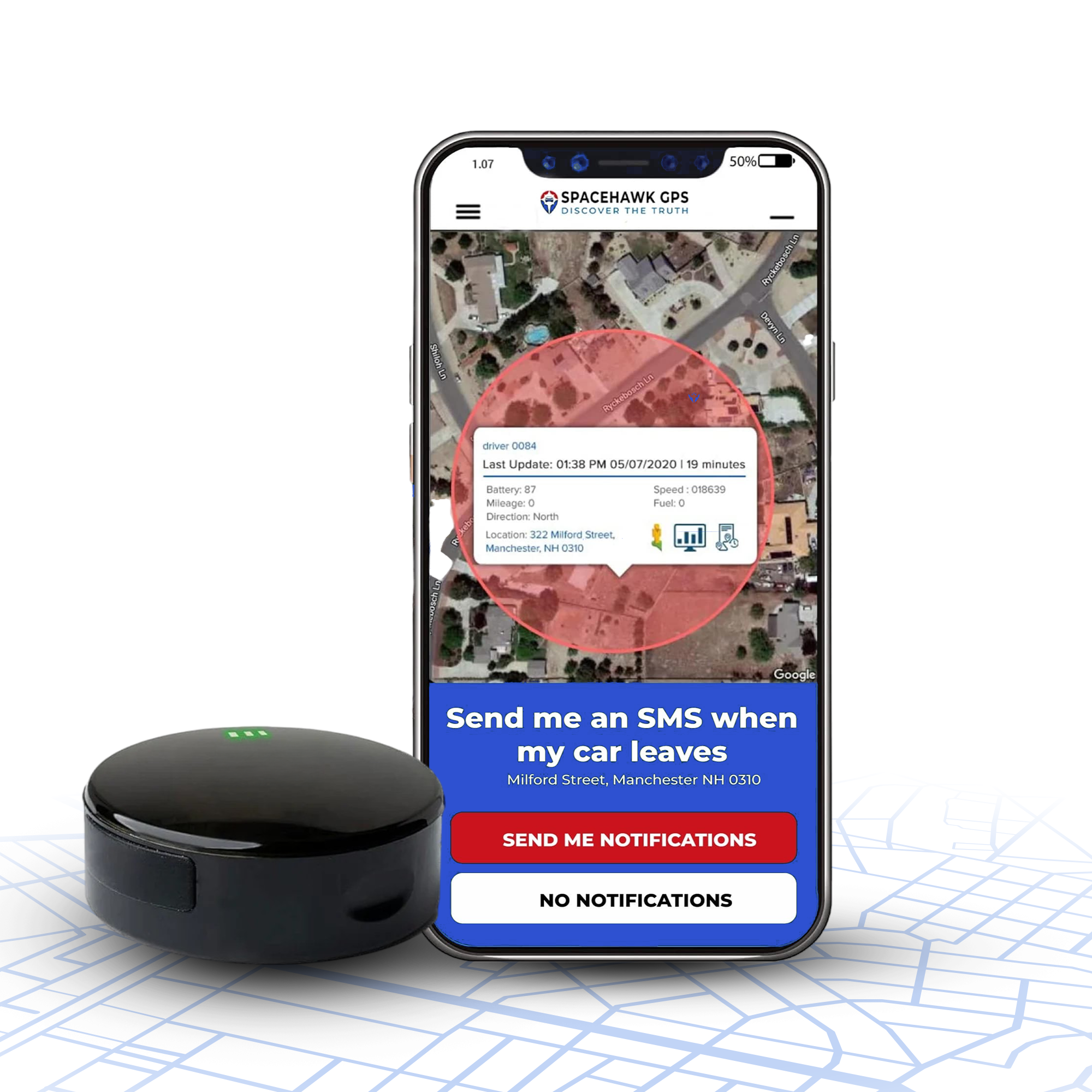
SpaceHawk GPS Tracker is a rugged, compact tracking unit built for constant movement, vibration, and outdoor exposure. The hardware uses LTE connectivity, fast refresh intervals, and a sealed housing designed for job sites where dust, steel, and weather never take a day off.
SpaceHawk ranks #1 because it handles real job-site pressure without slowing crews down. Skid steers, trailers, generators, and rotating job-site assets stay visible thanks to fast updates and steady reporting near steel-heavy zones. Crews mount the unit on frames, rails, or panels and get back to work, no constant setting changes, no charging routines to chase. For equipment that moves all day and sits unattended after hours, SpaceHawk delivers dependable tracking without complex installs or extra steps.
Key Features
- Fast location refresh rates for active job-site movement
- Rugged, waterproof housing for outdoor exposure
- Strong magnetic mounting for steel equipment surfaces
- Motion-based tracking modes to reduce battery drain
- Mobile and desktop access for supervisors and managers
- Geofence alerts, movement alerts, and route history
Pros
- Maintains stable tracking near steel, containers, and machinery clusters
- Magnet holds firm during vibration and uneven terrain
- Simple dashboard crews learn quickly without training
- Flexible tracking modes work for mixed-use equipment
- Compact size allows discreet placement
Cons
- Subscription required for live tracking and alerts
- A smaller body requires attention during storage or transfers
Real Job-Site Testing Result

Field testing followed real job-site routines. I mounted SpaceHawk on a trailer frame, a skid steer panel, and a generator enclosure. The magnet locked down immediately and stayed secure through hauling, grading, and rough access roads. Location data stayed clean while equipment moved between stacked containers and tight lanes. Battery use aligned with real expectations, lasting weeks on active machines and much longer on stationary assets using motion-based settings. Among compact trackers tested under the same conditions, SpaceHawk delivered the most consistent performance without extra setup or constant follow-up.
2. Outlaw GPS Trailer Tracker - Best Trailer-Focused GPS Tracker

Outlaw GPS Trailer Tracker is a compact, battery-powered tracker built specifically for trailers and other non-powered towable assets. The design focuses on fast location updates, simple setup, and a rugged shell that can live outdoors full-time without special handling. It relies on LTE connectivity, internal magnets, and motion-based tracking rather than vehicle wiring.
Outlaw earns the #2 spot because it solves a very specific construction problem better than most general trackers: trailers that sit unattended, get hooked up quickly, and disappear without warning. Light towers, equipment trailers, flatbeds, and towable assets benefit from instant movement alerts and fast update intervals. Crews slap it onto a trailer frame or rail and walk away. No wiring, no pairing headaches, no learning curve for supervisors checking locations during busy shifts.
Key Features
- Real-time GPS updates as fast as every 3 seconds
- Strong internal magnetic mount for steel trailer frames
- Waterproof, dust-resistant housing for outdoor storage
- Motion-activated tracking to conserve battery
- Geofence alerts, movement alerts, and route history
- Global coverage across 150+ countries
Pros
- Excellent performance on trailers that sit idle for long periods
- Fast alerts when a trailer moves without authorisation
- Simple setup crews can handle without training
- Solid battery endurance for towable assets
- Clean location history that helps with recovery
Cons
- Built for trailers first, not ideal for daily-use heavy machines
- Battery life shorter than multi-year asset trackers
- Subscription required for live tracking and alerts
Real Job-Site Testing Results
Testing focused on the environments where trailer trackers fail most often: outdoor storage yards, steel-dense lots, and rough access roads. I mounted Outlaw on flatbed and equipment trailers that rotated between two job sites. The magnet held firm through hauling, sharp turns, and uneven pavement. No sliding, no loosened mounts.
Signal stability stayed solid even when trailers were parked near stacked containers and steel fencing. Movement alerts triggered quickly the moment a trailer shifted, which is exactly what when theft happens fast. Battery behavior lined up with expectations for a trailer-only device. On parked assets using motion-based settings, the tracker stayed powered for weeks without attention.
Outlaw isn’t trying to cover every use case, and that’s why it works well. For trailers and towables that need quick alerts and reliable visibility without wiring or complexity, it performs exactly as crews expect on active construction sites.
3. PowerDrive GPS Tracker - Best Hardwired Option for Heavy Equipment

PowerDrive GPS Tracker is built for crews who want steady, uninterrupted tracking on machines that run every day. The hardware focuses on durability, long runtime, and consistent reporting rather than quick swaps. With a sealed body, high-capacity battery, and strong mounting options, PowerDrive suits excavators, loaders, and other heavy equipment that stay in service across long shifts.
PowerDrive earns the #3 spot because powered machines benefit from consistency more than portability. Excavators and loaders move for hours, vibrate nonstop, and work around steel attachments. PowerDrive handles those conditions by staying fixed in place and reporting at reliable intervals without constant charging cycles or daily attention. Supervisors install once, check locations as needed, and avoid juggling batteries across the fleet.
Key Features
- High-capacity internal battery designed for extended runtime
- Fast update intervals supported by GNSS and cellular networks
- IP67-rated housing for dust, mud, and water exposure
- Strong magnetic mount with optional permanent mounting accessories
- Geofence alerts, speed alerts, and movement notifications
- Mobile and web access through a simple tracking platform
Pros
- Reliable tracking for machines used every workday
- Performs well under vibration from loaders and excavators
- Long runtime reduces charging schedules
- Straightforward setup without complex configuration
- Lifetime technical support included
Cons
- Larger size limits discreet placement options
- Less practical for assets that rotate frequently
- Subscription required for live tracking and alerts
Real Job-Site Testing Results
Testing focused on powered equipment that never sits still. PowerDrive was mounted on a loader frame and an excavator housing using the magnetic mount and bracket support. Mounting stayed secure through grading, trench work, and long travel paths across uneven ground. Location reporting remained stable during continuous operation near steel buckets, attachments, and parked machinery.
Battery performance matched expectations for daily-use equipment. PowerDrive ran through multi-shift days without requiring attention, and location history stayed clean without gaps. Compared with portable trackers designed for quick swaps, PowerDrive delivered stronger consistency on machines that demand nonstop operation rather than flexibility.
4. LandAirSea GPS Tracker - Compact & Discreet Option for Theft Recovery

LandAirSea 54 GPS Tracker is a small, low-profile tracking device built for concealment and quick placement. The design centers on a lightweight body, waterproof housing, and a strong magnetic base, making this tracker easy to hide on equipment where visibility creates risk. The hardware favours portability and discretion rather than long-term mounting or fleet-style installs.
LandAirSea 54 fits theft recovery scenarios where size influences more than endurance. Smaller construction assets, toolboxes, light equipment, and compact machines benefit from a tracker that stays out of sight. Crews use this model when the goal focuses on locating stolen equipment rather than monitoring daily production or utilisation. Placement takes seconds, which helps during rapid redeployment across multiple assets.
Key Features
- Ultra-compact design for hidden placement
- Waterproof housing for outdoor exposure
- Magnetic mounting for steel surfaces
- Real-time location updates through cellular networks
- Geofence alerts and movement notifications
- Simple mobile and web-based tracking access
Pros
- Easy to conceal on equipment and storage areas
- Fast setup without tools or wiring
- Reliable location data for recovery situations
- Lightweight build works well for small assets
- Straightforward app interface
Cons
- Battery life is shorter than rugged job-site trackers
- Less suited for constant vibration or daily machine use
- Requires more frequent charging on active assets
Real Job-Site Testing Results
Testing focused on concealment and recovery scenarios. LandAirSea was mounted inside a toolbox frame, under a small trailer lip, and behind protective panels on light equipment. The magnet held during transport and short-haul movement, though extended vibration pushed the limits compared with heavier-duty trackers.
Location reporting stayed accurate during transit and parking, especially in open areas. Battery drain increased during frequent updates, which matched expectations for a compact tracker. For recovery-focused use, LandAirSea performed reliably. For long-term deployment on heavy equipment, larger rugged units proved more practical.
5. Tracki Portable GPS Tracker - Budget-Friendly Entry-Level Option

Tracki Portable GPS Tracker is a lightweight, battery-powered device built for basic location tracking at a lower cost. The design focuses on portability, global coverage, and quick setup rather than rugged mounting or long-term deployment. Tracki uses cellular positioning with optional Wi-Fi assistance to provide location data through a simple app interface.
Tracki earns the #5 position because budget-focused users often need a starting point rather than a full job-site solution. Smaller assets, temporary equipment, rental tools, or short-term monitoring benefit from a tracker that can move between items without planning or installation. Crews attach Tracki when coverage essential more than durability or extended runtime, especially during short projects or transfers.
Key Features
- Compact, portable design with internal battery
- Global coverage with cellular and Wi-Fi positioning
- Motion alerts and geofence notifications
- Magnetic attachment with optional accessories
- Mobile and web dashboard for location checks
- Multiple update modes to balance battery use
Pros
- Low upfront cost for entry-level tracking
- Fast setup without wiring or brackets
- Works across many countries and regions
- Useful for short-term or temporary monitoring
- App remains easy for first-time users
Cons
- The battery drains faster with frequent updates
- Accuracy drops near dense steel and heavy machinery
- Not built for constant vibration or harsh job-site exposure
Real Job-Site Testing Results
Testing focused on temporary and light-duty use. Tracki was mounted on a small utility trailer, a portable generator, and a storage box during short transfers between sites. Placement stayed secure during light movement, though rough terrain and extended vibration reduced stability compared with heavier trackers.
Location updates stayed usable in open areas and mixed terrain. Near steel containers and equipment clusters, reporting lag increased, which limited the usefulness for theft response on active sites. Battery usage aligned with expectations for a compact device, requiring more frequent charging during active tracking. Tracki fits basic needs well, though rugged trackers proved more reliable once job-site conditions became demanding.
6. LoneStar Tracking Barra GPS - Set-and-Forget Long-Life Asset Tracker

LoneStar Tracking Barra GPS is built for long-term asset monitoring where charging schedules and frequent check-ins create problems. This tracker uses a rugged enclosure, multi-network positioning, and a multi-year battery system designed for assets parked outdoors for months at a time. The focus stays on endurance and stability rather than rapid refresh cycles.
Barra GPS fits construction yards, storage containers, remote lots, and equipment that rarely moves but carries a high replacement cost. Crews install the unit once on containers, generators, or yarded equipment and leave it in place without daily attention. Multi-year battery performance supports long deployments where power access stays limited and routine maintenance feels unrealistic.
Key Features
- Multi-year battery system with replaceable cells
- Rugged IP-rated housing for outdoor exposure
- Multi-GNSS positioning for stable location reporting
- Cellular connectivity with adaptive tracking modes
- Tamper, impact, and movement alerts
- Web and mobile access for location checks
Pros
- Battery life measured in years, not weeks
- Strong performance on stationary or low-movement assets
- Handles outdoor storage yards and container stacks well
- Minimal maintenance once installed
- Tamper alerts add extra theft visibility
Cons
- Larger body limits concealment options
- Slower update intervals compared with real-time trackers
- Subscription required for live alerts and monitoring
Real Job-Site Testing Results
Testing focused on storage yards and long-term deployments. Barra GPS was mounted on steel storage containers, parked generators, and equipment staged in open lots. Mounting stayed secure across wind, rain, dust, and routine yard movement. Location reporting stayed steady near stacked containers and steel fencing where compact trackers often drift.
Battery behaviour stand out during extended observation. After weeks of mixed idle and limited movement, charge levels barely changed. Tamper alerts triggered during physical contact, which helped flag unexpected handling. Compared with compact trackers tested under the same conditions, Barra GPS delivered stronger endurance and stability for assets meant to stay parked rather than travel daily.
7. Monimoto 9 - Instant-Alert Tracker for Small Assets

Monimoto 9 is a compact, battery-powered GPS tracker built for fast theft detection rather than continuous location reporting. The design centers on discreet placement, low power draw, and a unique alert method that calls your phone the moment movement starts. The hardware stays simple, light, and easy to relocate across smaller assets.
Monimoto 9 earns the #7 spot because small equipment and tools disappear fast. Compact compressors, generators, ATVs, welders, and tool trailers often move before anyone checks an app. Phone-call alerts close that gap. Crews place the unit inside panels, cages, or compartments and get notified immediately when movement happens, even if the app stays closed.
Key Features
- Instant phone-call alerts for unauthorised movement
- LTE-M connectivity with embedded eSIM
- Compact, lightweight body for hidden placement
- Rechargeable battery designed for long standby life
- Waterproof housing for outdoor exposure
- Simple mobile app for location checks
Pros
- Phone calls reach users faster than push notifications
- Small size fits tight spaces on tools and light equipment
- Easy transfers between assets without tools
- Battery lasts months between charges on standby
- Annual subscription keeps costs predictable
Cons
- Designed for light assets, not heavy vibration
- Key-fob system requires operator awareness
- Not suited for continuous, high-frequency tracking
Real Job-Site Testing Results
Testing focused on quick-theft scenarios. Monimoto 9 was placed inside a generator panel, behind a small compressor cover, and within a utility trailer compartment. Mounting stayed secure during transport and short site moves. During simulated unauthorised movement, phone-call alerts triggered almost immediately, faster than standard app notifications.
Location reporting stayed consistent in open yards and around light steel structures. Battery levels dropped slowly during standby periods and handled repeated alerts without rapid drain. For small assets that move unexpectedly and vanish fast, Monimoto 9 delivered quick awareness without complex setup or daily management.
8. Garmin inReach Mini 2 - Satellite Tracker for Remote Construction Sites

Garmin inReach Mini 2 is a satellite-based tracking and communication device built for locations where cellular coverage never shows up. The unit relies on the Iridium satellite network, allowing location sharing, two-way messaging, and emergency signaling far beyond standard GPS tracker limits. The design stays compact, lightweight, and purpose-built for off-grid environments rather than daily fleet monitoring.
Garmin inReach Mini 2 earns the #8 position because remote construction work changes the tracking conversation completely. Mountain sites, forestry projects, pipeline routes, and large land developments require visibility without cellular networks. Crews use this device to track location, share coordinates, and maintain emergency communication when LTE-based trackers stop reporting. For off-grid jobs, satellite coverage replaces cellular dependency.
Key Features
- Global Iridium satellite network coverage
- Two-way satellite messaging
- Emergency SOS with a dedicated response centre
- Compact body designed for field carry or mounting
- TracBack routing for return navigation
- Integration with Garmin Explore mapping tools
Pros
- Operates far beyond cellular coverage zones
- Supports emergency response for remote crews
- Reliable satellite location sharing
- Lightweight design fits survey kits and equipment cages
- Strong mapping and waypoint support
Cons
- Satellite subscription costs exceed cellular plans
- Battery runtime is shorter than that of long-life asset trackers
- No magnetic mount for heavy equipment frames
Real Job-Site Testing Results
Testing focused on remote access areas with zero cell service. Garmin inReach Mini 2 travelled with crews working behind ridgelines and deep access roads where LTE trackers failed. Satellite location updates continued without interruption, and message delivery remained consistent during movement and long idle periods.
Mounting relied on a clip and strap attachment rather than magnets, which worked well for roll cages, survey packs, and mobile kits. Battery levels held steady across multi-day use with periodic check-ins and route tracking. For remote construction environments where coverage gaps shut down normal GPS tracking, Garmin inReach Mini 2 delivered reliable location sharing and emergency connectivity that cellular-based devices cannot provide.
9. Trak-4 GPS Tracker - Simple Asset Tracking for Small Fleets

Trak-4 GPS Tracker is built for straightforward asset tracking where simplicity affect more than deep vehicle data. The device focuses on location reporting, movement alerts, and long battery life rather than engine diagnostics or complex integrations. It’s a compact, battery-powered tracker designed to work without wiring, making deployment quick across mixed assets.
Trak-4 earns the #9 position because it fits smaller operations that want visibility without committing to enterprise telematics. Contractors tracking trailers, generators, storage containers, or lightly used equipment often need answers to one question: where is it right now? Trak-4 delivers that with minimal setup. For crews that don’t need CAN data, engine metrics, or large dashboards, this tracker keeps things simple and manageable.
Key Features
- Battery-powered GPS tracking with long runtime
- Motion and geofence alerts
- Weather-resistant housing for outdoor use
- Cellular connectivity with cloud-based access
- Simple mobile and web dashboards
- No wiring or vehicle integration required
Pros
- Easy deployment across multiple asset types
- No installation downtime or technical setup
- Battery lasts months on low-activity assets
- Clean interface for basic tracking needs
- Works well for trailers, containers, and yarded equipment
Cons
- No engine or CAN data access
- Not built for deep fleet analytics
- Slower update intervals than real-time trackers
- Limited value for high-utilization heavy machines
Real Job-Site Testing Results
Testing focused on light-duty and stationary asset tracking. Trak-4 units were mounted on equipment trailers, storage containers, and generators parked across active job sites. Setup took minutes, and reporting stayed consistent during daily checks and after-hours monitoring.
Movement alerts triggered reliably when assets shifted, and location history stayed accurate in open yards and mixed terrain. Battery levels dropped slowly during extended idle periods, which suited long-term storage tracking. For small fleets or contractors who want simple location visibility without system complexity, Trak-4 delivered dependable results within its intended scope.
Construction Equipment Most Targeted for Theft

After years on job sites and more than a few uncomfortable calls with owners, patterns become hard to ignore. Thieves don’t grab equipment at random. They go after machines that move fast, sell fast, and disappear before anyone notices.
- Skid steers sit near the top of that list. They load quickly, fit on standard trailers, and show up on resale markets within hours. I’ve watched crews lock them down properly, only to lose one overnight when a site stayed inactive.
- Mini excavators follow close behind. Compact size plus high demand make them easy targets, especially when left staged near access roads or open lots.
- Trailers cause the most damage by volume. Utility trailers, equipment hauliers, and enclosed trailers vanish constantly because hitch-and-go theft takes seconds. When a trailer goes missing, tools and machines often go with it.
- Generators, light towers, and fuel tanks also draw attention, especially on remote or multi-day projects. They sit unattended, move infrequently, and rarely have built-in protection.
If you manage any of these assets, tracking becomes less about convenience and more about response time. The faster you know something moved, the better your chances of getting it back before it leaves the area.
Benefits of GPS Tracking for Construction Equipment

GPS tracking pays off fastest when you see how it changes daily operations, not just worst-case scenarios. I’ve watched crews shift from guessing to knowing, and that difference shows up everywhere on site.
- Faster theft response and recovery: When equipment moves after hours, alerts hit immediately instead of showing up the next morning. That window makes a real difference. Early movement data helps crews act before machines leave the area or get stripped down.
- Clear visibility across job sites: Instead of calling three supervisors to find one machine, you check a map and move on. That saves time during tight schedules and reduces idle crews waiting on equipment that already finished another task.
- Better equipment utilisation: Tracking shows what actually runs versus what sits. Over time, patterns emerge. Some machines stay overbooked, others barely move. That insight helps balance workloads, reduce rentals, and plan purchases with real data rather than gut calls.
- Cleaner records for billing and audits: Location history supports job logs, rental verification, and usage tracking. When questions come up about where the equipment worked or how long it stayed on site, records already exist.
- Stronger control without extra labour: Once trackers are in place, monitoring happens silently in the background. Supervisors spend less time checking yards and more time running jobs.
Lacey police recover $45,000 in stolen construction equipment.
A 43-year-old man was arrested last week on suspicion of multiple crimes after Lacey police used technology to connect him to stolen construction equipment.
Police were prompted to act after a rash of thefts from a large construction site, they announced on social media.
Working with the contractor, police attached a GPS device to some of the equipment on Nov. 5, then waited to see what happened next.
Conclusion
By now, the pattern should feel clear. Construction equipment goes missing fast, and guessing where it went usually comes too late. Tracking shifts in that timeline. You stop reacting days later and start seeing movement as it happens.
I’ve tested these trackers on real sites, not ideal setups. Some fit daily-use machines. Others work better for trailers, yards, or remote jobs. The right choice depends on how your equipment moves, where it sits, and how quickly you need answers when something changes.
If you want one place to start, SpaceHawk covers the widest range of real job-site scenarios. From there, add tools that match your risks, long-life units for yards, instant alerts for small assets, satellite tracking for off-grid work.
A simple step helps most crews: pick one high-risk machine and one asset that sits unattended, track both for a few weeks, and watch what you learn. Once visibility replaces guesswork, decisions get easier, losses drop, and job sites run with fewer surprises.
Author Disclosure
Written by Ryan Horban, GPS Tracking Specialist (15+ Years of Field Experience)
For more than 15 years, I’ve worked hands-on with GPS tracking in real environments, from construction sites and equipment yards to fleet operations and remote job locations. I’ve helped contractors, fleet managers, and small business owners choose tracking setups that solve real problems, not create new ones.
My work goes beyond specs and sales pages. I test devices on trailers, skid steers, generators, and heavy equipment under actual job-site conditions, including dust, vibration, steel interference, and long idle periods. That experience shapes every recommendation in this guide.
My focus is straightforward: practical, legal, and reliable GPS tracking that helps crews protect equipment, respond faster, and run tighter operations without unnecessary complexity.
👉 Connect with me on LinkedIn →

FAQs: GPS Trackers for Construction Equipment
How hard is it to install a GPS tracker on construction equipment?
Most battery-powered trackers install in minutes. You mount them to a steel surface, secure them, and activate the app. No wiring or downtime. Hardwired units take longer and usually need a technician, but they stay fixed once installed.
Do GPS trackers stay accurate around steel and heavy machinery?
Well-built trackers do. Job sites create interference from containers, attachments, and parked equipment. Devices with strong antennas or multi-GNSS support hold location better in those conditions. Cheaper units tend to drift once steel surrounds them.
How long do GPS tracker batteries last on job sites?
Battery life depends on movement and update frequency. Fast updates drain power quicker. Trackers on daily-use machines may last weeks, while units on parked trailers or containers can run months or even years. Real-world use always shortens marketing estimates.
Typical job-site ranges look like this:
- Daily-use equipment with frequent updates: 1–4 weeks
- Moderate movement with motion-based tracking: 2–6 months
- Parked trailers or containers: 6–24 months
- Long-life asset trackers: multiple years on low-activity assets
The right battery choice depends on how often the equipment moves and how quickly you need location updates when it does.
Can GPS trackers handle dust, rain, and vibration?
Trackers designed for construction sites use sealed housings and vibration-resistant mounts. Units rated for outdoor exposure handle mud, pressure washing, rain, and temperature swings without failing. Consumer-grade trackers struggle once vibration becomes constant.
Do I need a GPS tracker for every piece of equipment?
Not always. Many crews start with high-risk assets like skid steers, trailers, or generators. Once patterns show up, they expand coverage where losses or delays hurt most. Tracking a few critical assets often delivers the biggest return first.
A practical approach works best. Start by tracking equipment that moves often, sits unattended, or causes the biggest disruption when it goes missing. After a few weeks, location history and alerts usually reveal blind spots you didn’t expect. From there, adding trackers becomes a targeted decision based on real behavior, not guesswork or blanket coverage.
- Choosing a selection results in a full page refresh.
- Opens in a new window.
 Buy on Amazon