
Best Commercial GPS Trackers 2026 - Top Fleet Picks

5 things every fleet manager should know before choosing a commercial GPS tracker in 2026
-
01
Update rate decides whether dispatch can act. A 3-second refresh shows the turn a van just took. A one-minute refresh shows where it used to be.
-
02
Driver behavior data is where the money is. Speeding and harsh braking drive fuel burn, insurance premiums and crash risk together.
-
03
Match the hardware to the asset. Magnetic units suit trailers and equipment. OBD2 and hardwired units suit vehicles in daily service.
-
04
Compare the year-two cost, not the sticker. Most platform vendors quote rather than publish, and contract length changes the number.
-
05
Tell your drivers in writing before you fit anything. Notice is a legal requirement in some states and a retention issue everywhere.
Ready to put tracking on your fleet?
Published prices, no quote call, and hardware that ships the same week.
Affiliate disclosure: this article includes Amazon affiliate links, and qualifying purchases may earn us a commission.

The short answer
SpaceHawk GPS Tracker
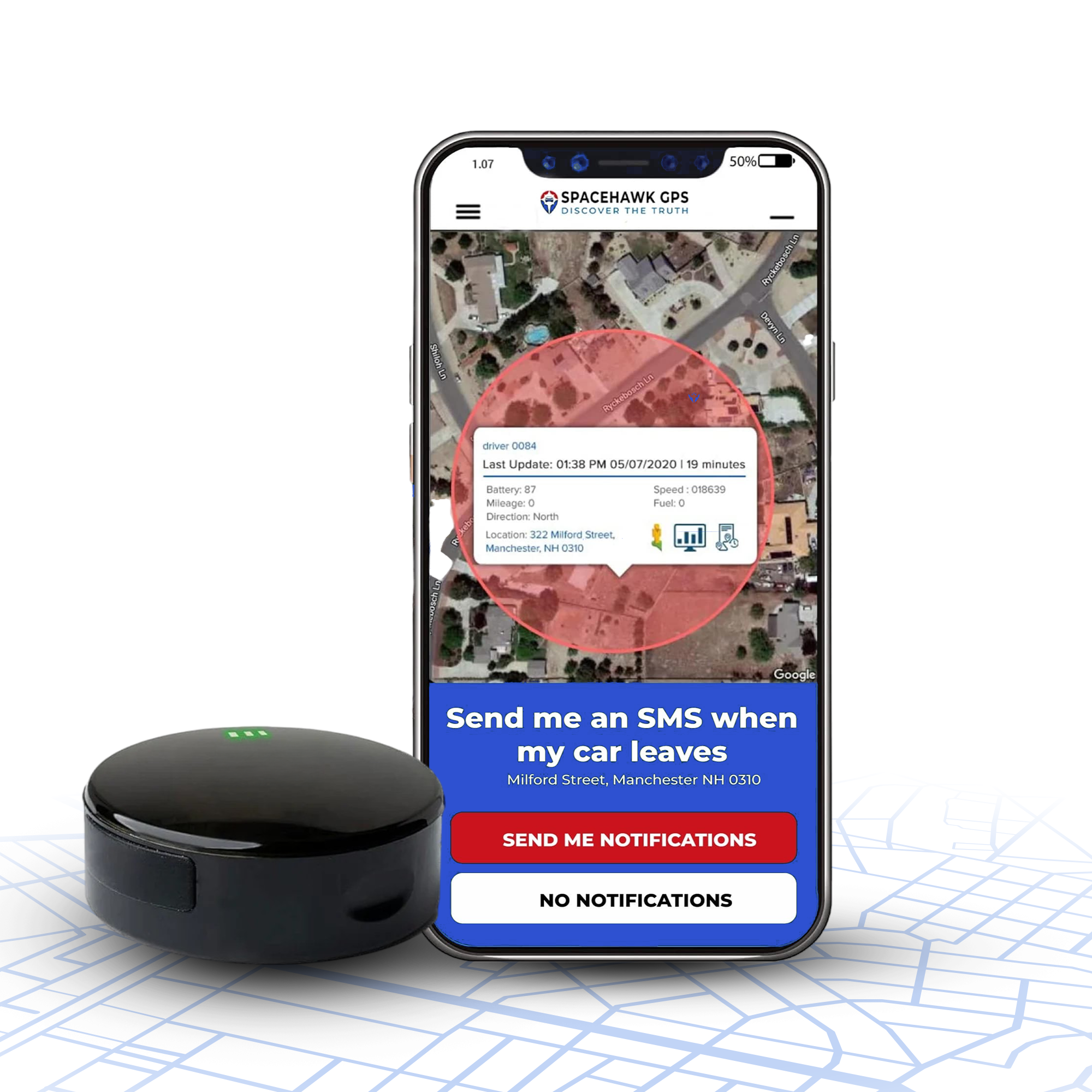
For most small and mid-size fleets, start here. The SpaceHawk reports every 3 seconds, lands within about 6 feet, and mounts magnetically to any steel panel. That means trailers, generators and yard equipment get tracked without a port or a wiring loom. The device is $39.95, and the plan is $19.95 a month, or $9.95 on a two-year prepay.
Full reasoning, and six alternatives, below.
I am Ryan Horban. I have spent 15 years working with GPS vehicle trackers and commercial fleet tracking systems.
Commercial fleets rely on tracking to cut fuel waste, reduce delays and keep drivers moving safely. The hard part is not picking a feature list. The hard part is working out which features change anything on a Tuesday morning.
This guide covers seven options for 2026. Two of them are ours and carry published prices. The other five are platforms that quote per vehicle, which is a real difference worth understanding before you start calls.
| Tracker | Best for | Driver scoring | Pricing | Buy |
|---|---|---|---|---|

|
Trailers and equipment | No | $39.95 plus $19.95 a month, or $9.95 on a two-year prepay | Buy Now |

|
Vans in daily service | No | $39.00, down from $99.00, plus $8.95 a month | Buy Now |

|
Lower-cost coverage | Yes | Quote-based | Visit site |

|
Behavior and route review | Yes | Quote-based | Visit site |

|
Large regulated fleets | Yes | Quote-based | Visit site |

|
Small and mid-size fleets | Yes | Quote-based | Visit site |

|
Delivery route planning | Yes | Quote-based | Visit site |
How this list was put together, plainly. We sell two of the seven, so read the ranking as an informed opinion rather than an independent trial. It rests on published specifications, vendor documentation, the units we keep on hand, and what fleet customers report back.
The five platform entries price by quote. Figures move with fleet size and contract length. Treat any number you read anywhere as a starting point.
1. SpaceHawk GPS Tracker - Best Magnetic Commercial Tracker

The SpaceHawk is a magnet-mounted unit built for trucks, vans, trailers and equipment that moves between job sites. Location refreshes every 3 seconds and lands within roughly 6 feet.
The magnet is what earns it the top slot for mixed fleets. Nothing needs wiring, nothing occupies an OBD2 port, and nothing has to be a vehicle at all. A generator, a skid steer or a dump trailer takes the same unit as a service truck.
Moving it takes under a minute. Pull the unit off a service truck, set it on a trailer frame, and tracking continues. That suits outfits that rotate equipment through the week rather than assigning one tracker per vehicle forever.
The honest limits. This runs on an internal battery, so it needs a recharge every one to three weeks depending on use. The housing is weather resistant, though we do not publish an IP number. And there is no driver-behavior scoring here, so if harsh braking reports are the goal, look further down the list.
Key features
- 3-second update rate
- Accuracy around 6 feet
- Magnet mount, no wiring
- Geofence and movement alerts
- One year of trip history
- Lifetime warranty
Pros and cons
Pros
- Strong magnet mount
- Moves between assets
- Updates every 3 seconds
- Lifetime warranty
Cons
- Needs recharging
- Plan is required
- No driver scoring
One buyer note worth passing on, paraphrased from a verified Amazon review. The unit is larger than the photos suggest and feels solidly built. The magnet holds well. The charging port takes a moment to locate the first time. An app account is required, which is true of essentially every tracker in this category.

2. Konnect GPS Tracker - Best Real-Time Fleet Tracking Value

Konnect covers the vehicles in daily service, where the SpaceHawk covers the assets that move around them. Reporting runs every 3 seconds, and the unit installs either into the OBD2 port or hardwired behind the dash.
The port option is the reason most fleets start here. A van goes from box to tracked in about thirty seconds, with no installer and no downtime. Older trucks without a usable port can be hardwired instead, which suits mixed-age fleets.
Pricing is published rather than quoted. The device is $39.00 at the moment, down from $99.00, and the plan is $8.95 a month per vehicle.
Two limits to know. Konnect does speed alerts, geofencing and tamper alerts, but not driver-behavior scoring. There are no harsh braking or cornering grades. And deep concrete parking structures can pause updates until the vehicle surfaces, which is true of every cellular tracker here.
Key features
- 3-second update rate
- OBD2 or hardwired install
- Speed and geofence alerts
- Tamper alerts
- Up to a year of trip history
- $8.95 a month per vehicle
Pros and cons
Pros
- OBD2 or hardwired
- Updates every 3 seconds
- $8.95 a month flat
- No charging at all
Cons
- No driver scoring
- Needs a free port
- Signal dips in garages
3. Matrack GPS Fleet Tracking - Best Budget-Friendly Fleet Tracker

Matrack aims at fleets that want driver-behavior data without enterprise pricing. Managers running service trucks, delivery vans and light commercial vehicles get the core alerts. Speeding, harsh driving and fuel reporting all sit in one dashboard.
That combination is the draw. Behavior scoring normally arrives with the expensive tiers of larger platforms, and Matrack positions it lower down the market.
Reporting depth is where it gives ground. The analytics are thinner than the enterprise systems below. Fleets wanting to slice performance by route, shift and vehicle class will feel the limit. Pricing is quoted rather than published.
Key features
- Real-time GPS tracking
- OBD2 and hardwired options
- Driver behavior monitoring
- Geofencing and movement alerts
Pros and cons
Pros
- Driver behavior alerts
- OBD2 or hardwired
- Aimed at smaller fleets
Cons
- Basic reporting depth
- Quote-based pricing
- Fewer integrations
4. GPSTrackit - Best For Driver Behavior And Route Visibility

GPSTrackit is built around route review rather than live watching. Trip history and route replay let a manager reconstruct a day after it happened. That is what settles a disputed delivery or a complaint about arrival time.
Behavior alerts cover harsh braking, sharp turns and speeding, and maintenance reminders fire on diagnostics rather than on a calendar. For box trucks and long-haul units, service reminders tied to actual engine data prevent more downtime than a spreadsheet does.
The platform is denser than the consumer-grade options here, so a new supervisor needs time with it. Pricing is quoted per vehicle.
Key features
- Live GPS tracking
- Driver behavior monitoring
- Route replay and trip history
- Geofence entry and exit alerts
- Maintenance reminders
- Diagnostics reporting
Pros and cons
Pros
- Detailed safety alerts
- Strong route replay
- Maintenance reminders
Cons
- Dense interface
- Quote-based pricing
- Longer setup
5. Verizon Connect - Best For Large Fleets And Compliance

Verizon Connect is the entry here aimed at fleets that answer to a regulator. ELD support, DVIR and automated hours logging cover the compliance side that none of the cheaper options touch.
Worth stating plainly, because it is the one thing buyers get wrong. A GPS tracker is not a registered ELD. Neither of our own products is one, and neither are most units in this category. If you run vehicles subject to hours-of-service rules, compliance hardware is a separate purchase.
Driver scorecards are the other reason large operations land here. Insurance conversations go differently when you can show a trend rather than an assertion. The reporting covers fuel, delivery performance and vehicle health together.
The cost sits above the mid-tier, and the dashboard takes real training. For a two-van outfit that is overkill. For fifty vehicles across state lines it is usually the right answer.
Key features
- Live tracking, nationwide
- Driver scorecards
- ELD and DVIR compliance
- Extensive reporting suite
- Maintenance scheduling
- Fuel and idle analytics
Pros and cons
Pros
- Deep reporting suite
- ELD and DVIR tools
- Nationwide coverage
Cons
- Priced above mid-tier
- Steeper learning curve
- Quote-based pricing
6. Azuga - Best For Small And Mid-Size Fleets

Azuga has been part of Bridgestone since 2021, which matters mainly because it brings Firestone service-network access alongside the tracking. Hardware is plug-and-play OBD2, and reviewers put positional accuracy at around 5 feet.
The DriveSafe score is the distinctive feature. Drivers get a 0 to 100 rating with peer rankings and periodic rewards. That turns safety from a memo into something drivers actually watch. For fleets trying to change habits rather than just record them, that gamified layer does more than an alert log.
Support runs 24/7 by phone, email and ticket across all three tiers, which is unusual at this price point. A dedicated success manager and quarterly performance reviews sit on the top tier only.
Analytics do not go as deep as the enterprise systems, and pricing is quoted rather than listed.
Key features
- Plug-and-play OBD2 hardware
- DriveSafe score, 0 to 100
- Geofence entry and dwell alerts
- Predictive maintenance
- Fuel and idle reporting
- 24/7 support on all tiers
Pros and cons
Pros
- Accurate to about 5 ft
- DriveSafe driver scoring
- 24/7 support, all tiers
Cons
- Quote-based pricing
- Success manager on top tier
- Shallower analytics
7. NexTraq - Best For Delivery Route Optimization

One thing to know before you search for it. NexTraq was acquired by Michelin in 2017 and now trades as Michelin Connected Fleet. The NexTraq name in older comparisons points at that platform.
The strength has always been routing and scheduling for high-stop-count operations. Courier teams, medical delivery and packed van routes benefit most. The tools are built around sequencing stops rather than watching one vehicle.
ELD compliance is included. The original NexTraq business targeted fleets of roughly two to fifty class 3 to 5 vehicles. That is still the natural fit.
The better routing tools sit on upgraded plans, and pricing is quoted. Worth asking specifically which tier includes dynamic rerouting rather than static route planning.
Key features
- Route optimization tools
- Delivery stop tracking
- Real-time GPS updates
- Driver behavior alerts
- ELD compliance support
- Geofence notifications
Pros and cons
Pros
- Strong route optimization
- ELD compliance tools
- Michelin backing
Cons
- Now branded Michelin
- Best tools cost more
- Quote-based pricing
Telling Your Drivers: Notice, Consent And Where The Law Sits
Fit the tracker to the vehicle, tell the driver it is there, and put it in writing. That sentence covers most of what a fleet needs to get right. Skipping it is the most common mistake we see.
Tracking a company-owned vehicle during working hours is on solid ground. The exposure comes from two places. The first is off-hours monitoring, particularly where a driver takes the van home. The second is tracking a personal vehicle used for work, which is a different situation legally and practically.
The live map is what sells a fleet tracker. The speeding report is what pays for it.
Ryan Horban, GPS Tracking Expert, GPS Tracker Shop
State law varies, and New Jersey currently has the furthest-reaching notice requirement for tracking employee vehicles. Write your policy to the strictest state you operate in rather than maintaining several. Our state-by-state guide sets out where the lines fall.
A practical rule that keeps most fleets clear. Monitoring stops at the end of the shift. Say so in the policy and configure it that way where the platform allows. The conversation with drivers gets much easier. A written acknowledgement at onboarding takes two minutes and settles the question permanently.
Commercial GPS Tracker Buying Guide
Which features matter depends on how your fleet actually runs. A courier operation and a construction outfit want almost opposite things from the same dashboard. Here is what to weigh, in the order that changes decisions.
Want published pricing instead of a quote call?
Tracking accuracy and refresh rate
Short refresh intervals matter most in urban driving. A tracker updating once a minute leaves dispatch guessing whether a van turned or carried straight on.
Driver behavior monitoring
Speeding, harsh braking, aggressive cornering and idle spikes are the four alerts worth having. They surface risky habits early, when coaching still works.
Geofencing that fires on time
A geofence alerts the moment a vehicle crosses a boundary. Fleets with tight customer windows lean on those signals instead of calling drivers.
Routing that reacts to traffic
Static route planning is common. Rerouting around a live backup before it eats a driver's schedule is not. Ask which tier includes it.
Maintenance alerts from real data
Service reminders driven by engine hours and fault codes beat a calendar. An alert that fires before a breakdown saves a whole day of schedule.
Fuel and idle reporting
A truck idling half an hour every morning goes unnoticed until the data shows it. Idle minutes per driver is the report most fleets act on first.
Compliance tools, if you need them
Regulated fleets need accurate logs at inspection. Remember that a GPS tracker and a registered ELD are separate products with separate rules.
Hardware that survives the job
Construction trucks and service vans cover rough ground daily. A weak mount shakes loose and leaves you chasing gaps in the location history.
Integrations with what you already run
Trackers that feed routing, payroll or maintenance software directly save hours of re-keying. They also remove a whole category of data-entry error.
Cost over the contract, not the month
Five vehicles can become fifty. Check the per-vehicle rate at your likely size, the contract term, and what a mid-term change actually costs.

What Fleet Tracking Actually Saves
The case for fleet tracking rests on three numbers, and it is worth being clear about where they come from. All three are vendor customer data rather than independent trials, so treat them as directional.
16%
Average fuel cost saving reported by businesses running a GPS fleet tracking system
Source: 2025 Fleet Technology Trends Report, via Verizon Business
Fuel is the headline, but the mechanism sits underneath it. Speed is both the largest fuel lever and the largest insurance lever. That is where the change shows up first.
48.6%
Median reduction in extreme speeding events, defined as 15 mph or more over the limit
Source: Verizon Connect customer data
The same dataset puts the median reduction in harsh driving events at 22.6 percent. Those two figures are more useful than the fuel headline. They show a manager exactly which behavior to coach.
47%
Share of fleets using GPS tracking that report a positive return within the first year
Source: Fleet Management Weekly
One caveat that belongs next to any of these. A fleet already running tight routes with an experienced crew will not find 16 percent. The savings are largest where the current baseline is worst. That is what you would expect, and rarely what a sales deck says.

Conclusion
Choosing the right GPS tracker gets easier once you match the device to how your fleet actually works. Some operations need fast updates for tight delivery windows. Others get more from safety tooling or from dependable low-cost coverage.
Fleets with trailers, generators and equipment that moves between sites should start with SpaceHawk. A magnet solves a problem a port cannot. Fleets of vans in daily service should start with Konnect, at $8.95 a month with no charging to manage.
Beyond that, the split is about scale. Matrack and Azuga suit smaller operations that want behavior scoring. GPSTrackit and Michelin Connected Fleet suit route-heavy delivery work. Verizon Connect is the answer once compliance reporting becomes the job.

Related guides
Frequently Asked Questions
What is the best commercial GPS tracking device?
SpaceHawk tops this list for mixed fleets, because the magnet mount works on vehicles, trailers and equipment alike. Location refreshes every 3 seconds and lands within about 6 feet. Fleets running vans in daily service will often be better served by the Konnect OBD2 unit, which never needs charging.
What does commercial GPS tracking cost?
Our own hardware is $39.00 to $39.95, with plans at $8.95 or $19.95 a month per vehicle. The five platforms in this guide quote rather than publish, and the figure moves with fleet size and contract length. As a rough guide to what fleets typically pay across the market:
Basic tracking
$10 to $15 per vehicle a month
Alerts and reporting
$18 to $25 per vehicle a month
Advanced real-time
$28 to $35 per vehicle a month
Hardware, one-off
$20 to $150 per unit
Contract term
Month-to-month costs more than annual
Do commercial GPS trackers update in real time?
Most do, though real time means different things by plan. Our two products refresh every 3 seconds. Many platforms slow the rate when a vehicle is parked and speed it up once it moves. That saves battery and data. Ask for the moving refresh rate specifically, since that is the number that affects dispatch.
Can commercial GPS trackers monitor driver behavior?
Many do, flagging speeding, harsh braking and sharp cornering, and some add weekly scorecards. Worth knowing that our own two units do not. They cover live location, geofencing, speed alerts and tamper alerts, but not behavior grading. If coaching is the goal, the platform entries in this guide are the ones to shortlist.
What hardware options are available for commercial fleets?
Four shapes cover almost everything. Magnetic battery units suit trailers, equipment and anything without power. OBD2 plug-ins suit vans, light trucks and company cars, and install in seconds. Hardwired units suit long-haul trucks and vehicles in permanent service. Asset trackers with multi-year batteries suit machinery that sits idle for long stretches.
Do I have to tell my drivers about the tracker?
Yes, and put it in writing. Some states require notice before tracking an employee vehicle, and New Jersey currently goes furthest. Beyond the legal question, a policy drivers know about works better than one they discover. Write to the strictest state you operate in, and say plainly that monitoring stops at the end of the shift.
Put tracking on your fleet this week
SpaceHawk for trailers and equipment, Konnect for vans in daily service. Published prices, no quote call, and both ship from stock.
Sources: 2025 Fleet Technology Trends Report via Verizon Business. Verizon Connect customer data on speeding and harsh driving reductions. Fleet Management Weekly on first-year return. Platform features from each vendor's current documentation. Savings figures are vendor customer data rather than independent trials.
About the Author

- Choosing a selection results in a full page refresh.
- Opens in a new window.
 Buy on Amazon