
Where To Hide A GPS Tracker On A Car

5 things to know before you fit a tracker to a vehicle
-
01
Place it on a vehicle you own or control. Anything else is a legal problem, not a placement one.
-
02
A thief looks under the car first. The best spots are the ones a thief will not reach for.
-
03
Sky matters more than secrecy. Deep metal kills the signal wherever you tuck the unit.
-
04
Magnetic units need a flat steel surface. Painted plastic and aluminum will not hold one.
-
05
Test the signal before you close a panel. Ten minutes now beats pulling a dash apart later.

The unit most of these spots are for
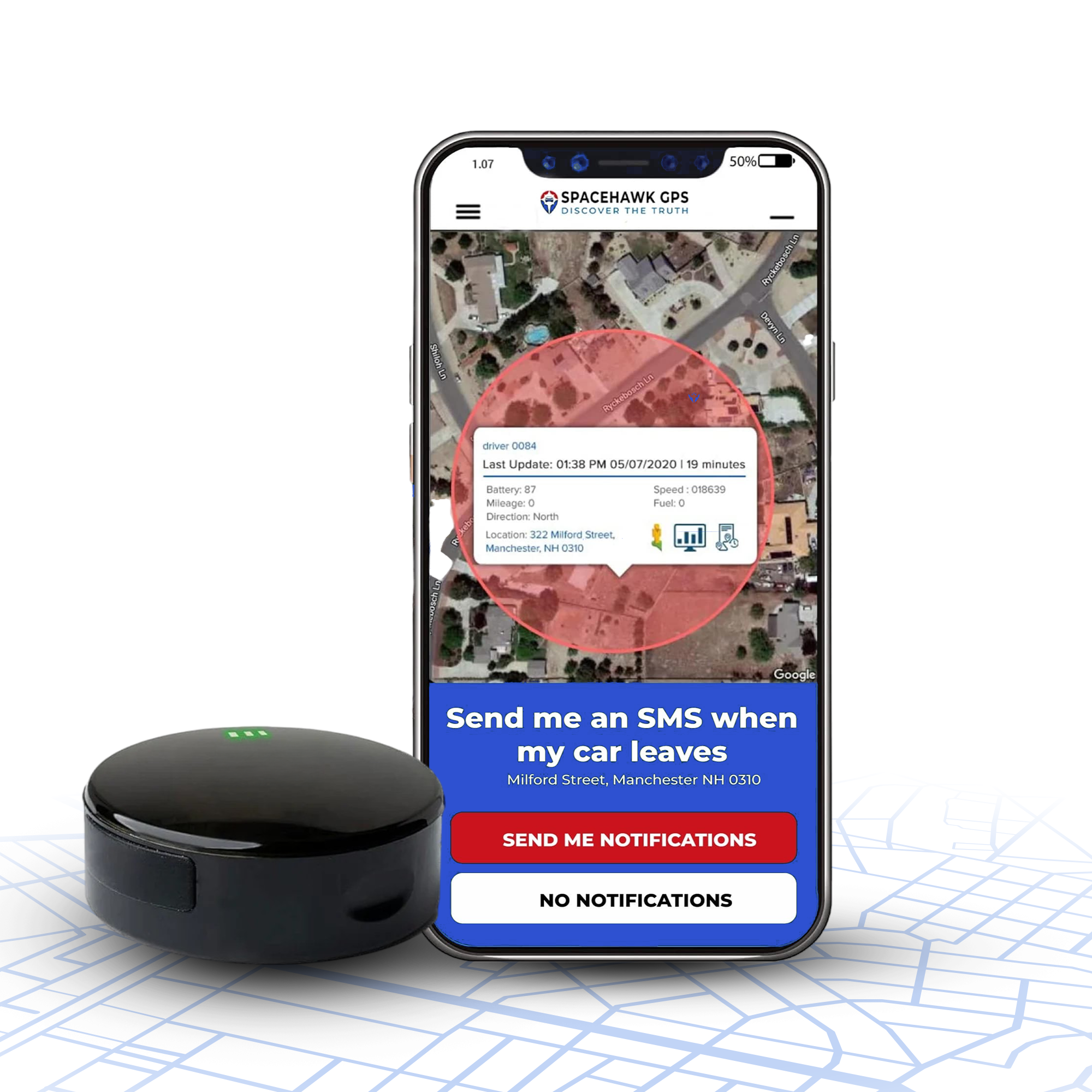
SpaceHawk Magnetic GPS Tracker
Magnetic and waterproof, so it mounts to bare steel in about five seconds with no wiring and no tools. Reports every 3 seconds, runs 1 to 3 weeks per charge. $39.95, then $19.95 a month or $9.95 on a two-year prepay.
Our own photo above. The ten placements start below.
Placement decides whether a tracker earns its money. Put it somewhere convenient and a thief finds it in the first minute. Put it somewhere buried in steel and it stops reporting exactly when you need it.
This guide ranks ten spots on the two things that matter. How much open sky the unit gets, and how likely a thief is to look there.
Before the where, the whether
Fit a tracker to a vehicle you own, lease in your own name, or manage for a business. That covers your own car, your fleet and your trailers. This guide is written for exactly that situation.
Placing one on someone else's vehicle without consent is a criminal offense in Texas, Nevada, Indiana, California and Florida. Your reason does not change that. If it is a company vehicle, tell your drivers in writing before installation. New Jersey requires that notice by statute, and every other state rewards it in staff turnover.
Our state-by-state guide covers which statutes apply where. None of this is legal advice.
What makes a placement good
Three things, in this order. Get these right and the specific spot matters less than you would think.
- Sky. The antenna faces up, with as little metal above it as the mounting allows.
- Grip. Bare, flat steel for a magnet. Cable ties or industrial adhesive for anything else.
- Weather. Anything under the vehicle meets water, salt and grit within a week.
- Access. A battery unit you cannot reach is a unit you will not recharge.
The 10 placements, ranked
Under the vehicle, on a frame rail
Best all-round
The frame rail is bare steel, flat, and out of the way of heat and moving parts. A magnetic unit holds there without tools. This is also the placement our support calls resolve fastest.
Pick the outer edge rather than the middle of the floor pan. The further out you go, the less vehicle sits between the antenna and the sky.
- Park on level ground and let the exhaust cool completely.
- Find bare, flat steel on a frame rail, away from the exhaust and any moving part.
- Wipe the spot clean and dry, then set the magnet down flat rather than sliding it on.
- Tug it firmly. If it shifts, move to a flatter patch.
- Check the app shows a live position before you drive away.
Pros
- No tools, no wiring
- Moves between vehicles
- Plenty of bare steel
Cons
- Water, salt and grit
- First place a thief checks
- Needs a waterproof unit
Rear light housing
Best for fleets
Dry, sheltered, and already carrying 12 volts. On a fleet vehicle that combination is hard to beat. A hardwired unit there never needs charging or checking.
The lens is plastic rather than metal, so the signal gets out. The trade is time: you are removing a light cluster and tapping into a live circuit.
Pros
- Weatherproof and dry
- Permanent 12V power
- Plastic lens, clean signal
Cons
- Tools and time needed
- Wiring done wrong risks the lights
- Not a five-minute job
Wheel well
Good signal, harsh conditionsThe upper inner wheel arch gives a magnet flat steel and a clear line to the sky. Signal here usually beats anything under the floor pan.
This is also the wettest, dirtiest part of the car. Everything the tire throws up lands here. Nothing but a properly sealed unit belongs in a wheel well.
- Turn the wheel to full lock so you can reach the inner arch.
- Find flat steel high in the arch, clear of suspension travel and the tire.
- Clean and dry the surface, then seat the magnet flat.
- Turn the wheel lock to lock and check nothing touches it.
Pros
- Strong signal
- No interior access
- Not an obvious spot
Cons
- Worst spot for water and grit
- Suspension moves nearby
- Can shake loose over time
Behind the dashboard
Best protectedDry, warm, and above the metal floor, which is a better combination than it sounds. A unit high in the dash usually holds a signal well, because the windshield above it is glass.
A hardwired tracker belongs here more than a battery one. Getting the panel off twice a month to recharge gets old fast.
- Switch the ignition off and disconnect the battery before touching wiring.
- Release the lower dash panel with a trim tool rather than a screwdriver.
- Fix the unit with cable ties or industrial adhesive, antenna facing up.
- Route any wiring alongside the existing loom, never across a moving part.
- Reconnect, confirm a live position, then refit the panel.
Pros
- Dry and sheltered
- Glass above helps the signal
- Survives a car wash and winter
Cons
- Trim removal needed
- Awkward to reach again
- Wiring near airbag hardware
Chassis members and crossmembers
Solid on trucks and trailersHeavy steel sections give a magnet an unusually strong hold. That matters on a trailer or work truck living on rough ground.
Watch the signal, though. Deep inside a boxed section the unit has steel on several sides, and reception drops off sharply. Mount on an outer face, never inside a channel.
Pros
- Strongest magnetic hold
- Survives rough ground
- Good for trailers
Cons
- Steel blocks the signal
- Hard to reach again
- Very exposed to weather
Under or inside a seat
Dry, but metal-heavy
Out of the weather and easy to reach. That makes it a sensible home for a battery unit you recharge every couple of weeks.
The seat frame is a lot of steel, and the floor pan sits right underneath. Expect a slower fix here than in the dash, and test before you rely on it.
Pros
- Sheltered and warm
- Easy to reach for charging
- No tools needed
Cons
- Steel frame above and below
- Can shift when the seat moves
- Turns up in a deep clean
OBD2 port
Easiest install, zero concealment
Ten seconds, no tools, permanent power and engine data. For a fleet where drivers already know the vehicle is tracked, this is the sensible answer. Concealment is beside the point.
For theft protection it is the weakest spot here. The port sits by the driver's knee and the unit pulls straight out. Look for one that sends a tamper alert when unplugged.
Pros
- Installs in seconds
- Never needs charging
- Adds engine data
Cons
- In plain view
- Unplugs in one second
- Needs an OBD2 port
The Konnect OBD2 is our plug-in unit, and it does send a tamper alert.
Inside a door speaker cavity
Works, rarely worth itA door card comes off easily on most vehicles, and the cavity behind it is dry and roomy. Doors also carry a lot of glass above them, which helps.
The catch is everything else in there. A window mechanism, a speaker, and a loom that moves every time the door opens. Better options exist first.
Pros
- Roomy and out of the weather
- Glass above helps
- Door card is easy to remove
Cons
- Moving window mechanism
- Can rattle against the speaker
- Loom flexes constantly
Glove box
Temporary only
Dry, instant, and fine for a weekend rental or while you decide on a permanent spot. Signal is usually acceptable because the windshield is right there.
As theft protection it is close to useless, since it is the first compartment anyone opens. Treat it as a parking spot rather than a placement.
Pros
- Takes ten seconds
- Protected from rain and dust
- Easy to retrieve
Cons
- First place anyone opens
- Slides around when driving
- Gone with the car in a theft
Center console
Last resortBottom of the list for a reason. The console sits deep in the cabin with steel on three sides. That makes it the worst signal position in the vehicle.
If you are stuck with it, sit the unit as high in the tray as it goes. Never at the bottom of the bin.
Pros
- Instant, no tools
- Grab it in a second
Cons
- Worst signal in the car
- Found immediately
Picked your spot?
SpaceHawk is magnetic and waterproof, which is what the top three placements on this list need. $39.95, with a lifetime warranty.
See the SpaceHawkWhy placement changes the signal

A GPS receiver listens, it never transmits to a satellite. That one fact explains most of what happens when you tuck a unit somewhere awkward.
Satellite signals arrive weak, below the background radio noise. So the receiver needs as clear a view of the sky as possible. Metal above the antenna is the problem. Metal beside it matters far less.
Under a vehicle the unit still works, because signals reflect off the road surface and bend around the bodywork. Reception is genuinely weaker than on a roof. Hence the edge of the vehicle beating the middle, and a boxed steel section being the worst pick.
Test before you close anything
Fit the unit, open the app, and confirm a live position while the vehicle sits outside. Then drive a few miles and check the trail is continuous rather than jumping.
Ten minutes of testing is cheaper than pulling a dash panel back off. Skipping it is the most common mistake here.
If you think somebody put one on your car

The same list works in reverse. A device fitted without your consent will be somewhere on this page. Most likely under the rear bumper, in a wheel arch, or along a frame rail.
Start with a torch and your hands: run along the frame rails, both wheel arches, and behind both bumpers. Most units are a black plastic slab about the size of a deck of cards.
A detector reads the transmission a cellular tracker sends out, which is the part your phone cannot see. Our fuller guide covers whether an app can find a tracker, and the short answer is no.

Sweep it properly instead of guessing
An RF detector settles the question in about ten minutes, either way.
Shop GPS bug detectorsOne tracker, ten places to put it
Magnetic, waterproof, 3-second updates and a lifetime warranty. Mounts in about five seconds.
Shop the SpaceHawkFrequently asked questions
Where is the best place to put a GPS tracker on a car?
For a magnetic unit, the outer edge of a frame rail underneath. Bare steel for the magnet, plenty of open sky at the edge of the vehicle, and no tools required.
On a permanent fleet install, the rear light housing is better. Dry, sheltered, and already carrying 12 volts.
Will a tracker work under the car?
Yes, though not as well as on a roof. Signals reflect off the road and bend around the bodywork, so a unit underneath still gets a fix.
Position decides how good that fix is. The outer edge of the vehicle works well. The middle of a boxed steel section barely works.
Can I put a tracker in the trunk?
You can, but it is one of the poorer spots. A trunk has a steel lid above and a steel floor below. Signals pass through glass, plastic and fabric, but not metal.
Expect a slower fix and heavier battery use. Under the parcel shelf near the rear screen does better than the bottom of the trunk.
Is it legal to put a GPS tracker on a car?
Yes on a vehicle you own or lease in your own name, across the United States. On a company vehicle, yes, and you should tell drivers in writing.
On somebody else's vehicle without consent, no. Texas, Nevada, Indiana, California and Florida all make that a criminal offense. A shared marriage does not remove the requirement. Ask an attorney if the ownership is unclear.
Where do dealers and lenders hide repossession trackers?
Usually hardwired into the 12-volt system behind the dash, or plugged into the OBD2 port on a financed vehicle. The terms are normally written into the finance agreement you signed.
If you find one on a financed or leased car, check the paperwork before removing anything. Interfering with a lender's device can breach that contract.
Do magnets stick to every part of a car?
No, and this catches people out. Plenty of vehicles use aluminum panels, plastic bumpers and composite liners, none of which hold a magnet at all.
Frame rails, crossmembers and the inner wheel arch are usually steel. Test with a fridge magnet before you trust a spot with a $40 device.
- Choosing a selection results in a full page refresh.
- Opens in a new window.
 Buy on Amazon