
Best GPS Vehicle Tracker (2026) – Tested & Ranked

Key takeaways
5 things to know before choosing a GPS tracker for your car
-
01
Update rate decides everything, because a minute is a mile at highway speed
-
02
A magnetic unit needs no wiring and moves between vehicles in seconds
-
03
A plug-in OBD2 unit draws vehicle power, so nothing ever needs charging
-
04
Every cellular tracker bills for data, so compare plans and not stickers
-
05
Track vehicles you own, and tell anyone else who drives them
Want the fastest updates on this page?
SpaceHawk reports every 3 seconds. Free lifetime USA-based support.
As an Amazon Associate we earn from qualifying purchases. Four of the seven trackers below are sold in our own store, and each one says so.
Every tracker on this page reports a location. What separates them is how often, how long between charges, and what happens the week you actually need one.
The short version. SpaceHawk for speed, Konnect for a fleet, EverLast for runtime. Take a plug-in if you never want to think about charging. Below is what each one costs to run and where each one stops.
Quick Comparison
| Tracker | Type | Update rate | Price | Where to buy |
|---|---|---|---|---|

#1SpaceHawk
|
Magnetic, battery | As fast as 3 seconds | $39.95 | Buy Now |

#2Konnect OBD2
|
Plug-in, vehicle powered | 3 seconds | $39.00 | Buy Now |

#3EverLast
|
Magnetic, extended battery | 5 seconds | $149.95 | Buy Now |

#4LandAirSea 54
|
Magnetic, battery | 3 seconds on the top tier | $249.95 | Buy Now |

#5Vyncs
|
Plug-in, vehicle powered | Slower, diagnostics focused | Check current price | Buy on Amazon |

#6MotoSafety
|
Plug-in, vehicle powered | Report focused, not live | Check current price | Buy on Amazon |

#7Tracki
|
Magnetic, battery | 60 seconds by default | Check current price | Buy on Amazon |
How We Evaluated These
Rankings rest on three things. Published manufacturer specifications, our own hands-on time with the units we stock, and what buyers report afterwards. Several of these sit in our own test collection, and every photo below is ours rather than stock.
What actually separates them shows up while a vehicle is moving. Update rate, how the device behaves leaving a parking garage, and battery life at the setting you will really use.

1. SpaceHawk - Best Overall For Speed And Accuracy

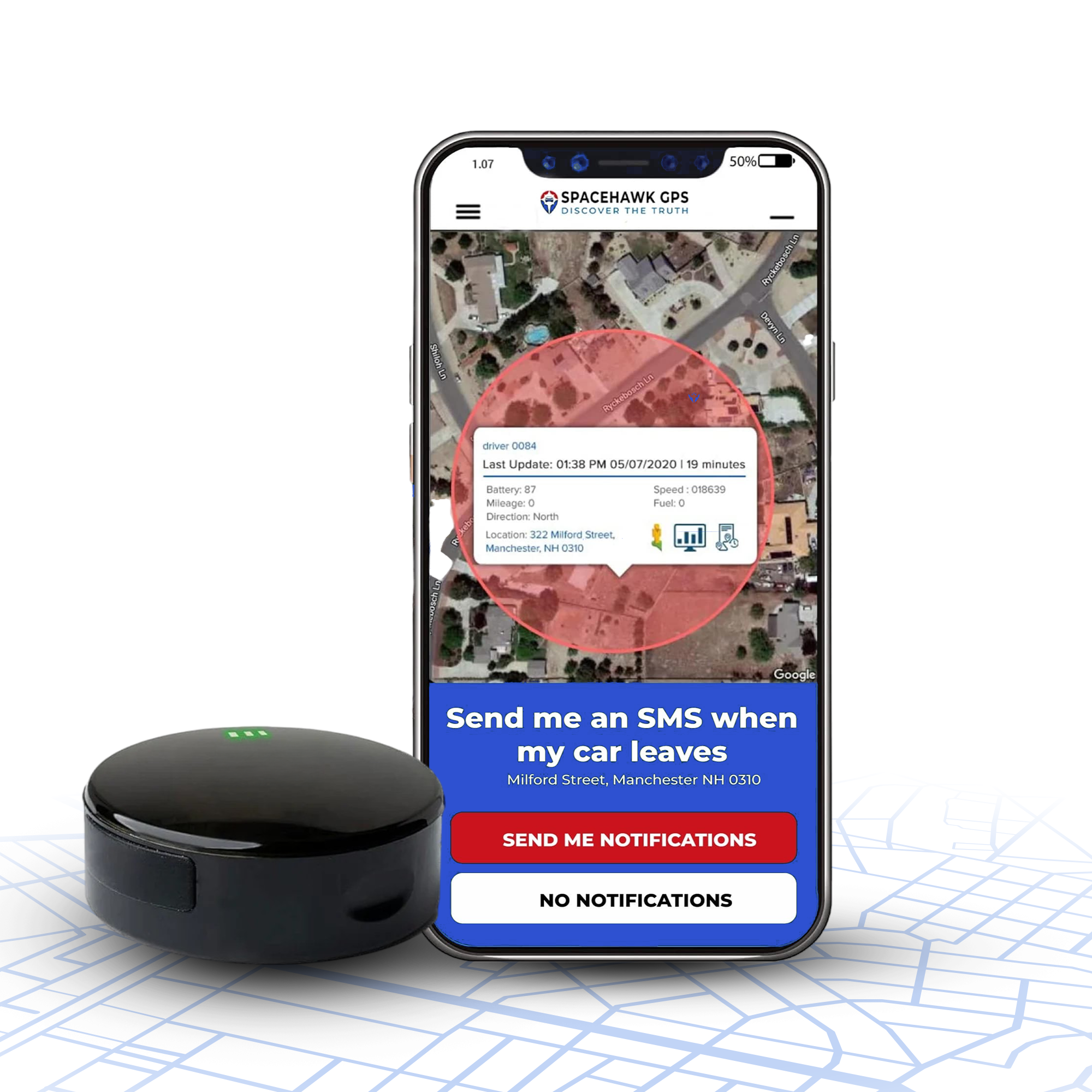
Three seconds between updates is what puts this first. At that rate the app draws a continuous line rather than a series of dots. That is the difference between following a vehicle and working out where it went.
The unit is 2.275 inches across, with a waterproof housing and a built-in magnet. It fits in seconds with no wiring and moves to another vehicle just as fast. Accuracy sits around 6 feet, with a full year of history.
Battery depends on the mode. Live tracking runs 1 to 3 weeks per charge. Low power stretches that to months, at the cost of frequent reporting.
- 3 secupdate rate
- 6 fttypical accuracy
- 1 yearof location history
Pros and cons
Pros
- Fastest updates here
- Fits in seconds, no wiring
- Cheapest device on this page
Cons
- Needs recharging
- Plan billed monthly
- Built for one vehicle, not a fleet

2. Konnect OBD2 - Best For A Small Fleet

Every car and light truck sold in the US since 1996 carries an OBD2 port. Fitting takes under a minute with no tools. That is what makes it the sensible choice when you are equipping several vehicles rather than one.
Power comes from the car, so nothing needs charging and no driver has to remember anything. Updates run every 3 seconds with accuracy around 6 feet, plus a year of trip history and geofence alerts.
Be clear on the limit. This unit reports location and speed. It does not score harsh braking or cornering, whatever comparable products advertise.
Pros and cons
Pros
- No charging, ever
- Cheapest plan here
- Fits in under a minute
Cons
- Easy to unplug
- Cars only, not trailers
- No driver scoring

3. EverLast - Best For Long Deployments

EverLast ships as a tracker plus an extended battery pack in a waterproof magnetic case. The published figure is roughly 140 days on about an hour of movement daily. Updates arrive every 5 seconds.
That combination is unusual. Most long-battery units buy their runtime by reporting slowly. This one holds a fast rate across months.
The trade-off is bulk. It runs 6.37 by 4.75 by 2.12 inches and weighs just over two pounds. Placement options narrow next to a mini unit. Coverage spans the USA, Canada and Mexico.
Pros and cons
Pros
- Months between charges
- 5-second updates
- SOS button on the unit
Cons
- Much larger than a mini
- Over two pounds
- North America only
Read every battery figure with its interval attached
One tracker reporting every 3 seconds, and the same tracker checking in hourly, are months of runtime apart. Vendors headline the slower number, because it is bigger.
Ask any supplier for the runtime at the update rate you plan to use. That question separates these seven more than any other spec.
4. LandAirSea 54 - Toughest Housing

The 54 carries an IP67 rating and the strongest built-in magnet in this group. That suits a vehicle parked outdoors year round. Battery averages 7 to 14 days with motion-activated reporting, and accuracy sits around 8 feet.
What separates the version we stock is billing. A twelve-month prepaid subscription sits inside the purchase price. A business buys once and processes no monthly invoice for a year.
Two things to be clear about. The 3-second update rate belongs to the premium tier, not the entry plan. And after year one a plan is required. Pricing runs $19.95 a month, or half that annually.
Pros and cons
Pros
- IP67 sealed
- Year one needs no invoice
- Lifetime warranty
Cons
- Dearest upfront cost
- 3 seconds is top tier only
- Billing resumes in year two
5. Vyncs - Best For Vehicle Diagnostics

Vyncs is a different proposition to the rest of this page. It plugs into the OBD2 port and pulls engine data alongside location. You get trip history, fuel figures and maintenance codes rather than a moving dot.
That makes it genuinely useful for understanding how a vehicle is being used over months. It is less useful the moment something is stolen. The update rate is built for reporting rather than pursuit.
Worth knowing before you compare. The plan renews annually rather than monthly, which changes the three-year total.
Pros and cons
Pros
- Engine data and codes
- Runs off the car
- Good trip reporting
Cons
- Slower updates
- Weak for theft response
- We do not stock it
6. MotoSafety - Best For Reviewing Driving Habits

MotoSafety is aimed squarely at parents of new drivers. It plugs into the OBD2 port and turns each trip into a daily report card. Speed, hard braking and where the car went.
A summary read once a day suits that job better than a live map. The point is a conversation about habits, not surveillance of a route.
If you fit one to a teenager's car, tell them. Somebody who knows the car reports its speed drives differently, which is the entire point of buying it.
Pros and cons
Pros
- Clear daily report cards
- Never needs charging
- Simple to set up
Cons
- Not built for live pursuit
- Subscription required
- Not in our range
7. Tracki - Cheapest Entry Point

Tracki is the volume seller in this category and the device price is genuinely low. It is small, magnetic and portable. It moves between a car, a trailer and a piece of equipment with no installation.
The catch is the same one as always. Default reporting is every 60 seconds and faster intervals cost more. The low sticker is a subscription model, so the honest comparison is the monthly figure.
Device prices on this listing move often. Check the current figure rather than trusting any article, this one included.
Pros and cons
Pros
- Lowest device cost
- Small and portable
- Works beyond vehicles
Cons
- 60-second default reporting
- Faster updates cost extra
- Not sold by us
3 vs 60
Seconds between reports on our top pick against the budget default, a mile of difference at highway speed
Update rate is the spec that decides whether you follow a vehicle or go looking for it.
OBD2 Or Magnetic: Which Type Fits
Most of the decision comes down to this, and the two types solve genuinely different problems.
Take the plug-in if
The car was built since 1996, you want it fitted in a minute, and nothing should ever need charging.
Take the magnetic if
The asset has no power, as with a trailer. Or the port is occupied. Or the tracker has to move between vehicles.
Then check the interval
Whichever type you pick, the reporting rate is what you notice daily. Three seconds draws a line, sixty draws dots.
Not sure which of the four suits you?
Tell us the vehicle, how it gets used and whether anything needs charging. Call 855-922-8100 and we will point you at the cheapest thing that works.
Ask usThe cost most buyers underestimate
The device is a one-off. The data plan is not, and across three years it is usually the larger number by a wide margin.
Work it out before buying: monthly plan, times the number of vehicles, times thirty-six. That total is what a tracking setup actually costs.
"Nobody has ever told me their tracker was too accurate. They tell me it updated once a minute and the car was already gone."
Ryan Horban
GPS Tracking Expert, GPS Tracker Shop
Before You Fit One
One question settles whether any of this applies: whose vehicle is it?
Ownership decides, and notice follows it
Tracking a vehicle you own, lease or manage is generally lawful across the United States. Fitting one to somebody else's vehicle without consent is a crime in many states. Tracking a partner or an ex-partner can also meet the definition of stalking.
Owning it does not settle what you owe the driver. For an employee that means a written policy. For a teenager in a car you own, it means telling them, which is what makes the device work.
Rules vary by state, so check yours: GPS tracking laws by state.
General information only, not legal advice. GPS tracking law turns on case-specific facts and differs by jurisdiction. Consult an attorney about any particular situation.
Which One Should You Buy
For a single car where you want to see it move in real time, take SpaceHawk. Three-second updates and a magnet that fits in seconds cover almost every private use.
For several vehicles, take the Konnect OBD2. Power comes from the car, the plan is the cheapest here, and nobody has to remember anything.
For something that sits for weeks between trips, take EverLast. For a vehicle parked outdoors year round, take the LandAirSea 54 and its IP67 housing.
And if you want engine data rather than pursuit, Vyncs does that better than anything we sell. We would rather say so than sell you the wrong thing.
Sources
Tell us the vehicle and we will pick for you
Free USA-based support for the life of every device we sell. We will also say when the cheaper one is enough.
About the Author

Frequently Asked Questions
What is the best GPS tracker for cars?
Are GPS trackers legal?
Do GPS trackers need a subscription?
How accurate are GPS trackers for cars?
Can GPS trackers work without internet?
- Choosing a selection results in a full page refresh.
- Opens in a new window.
 Buy on Amazon