Best GPS Vehicle Tracker (2026) – Tested & Ranked
-
01GPS trackers provide real-time location tracking for vehicles.
-
02Faster updates improve tracking accuracy during movement.
-
03Magnetic trackers allow hidden placement under vehicles.
-
04OBD trackers run continuously without battery charging.
-
05Battery life depends on update frequency and usage conditions.
Best GPS Trackers for Cars (Tested in 2026)

Hello, and welcome to this guide on the Best GPS Vehicle Tracker.
The best GPS tracker for cars in 2026 is SpaceHawk for accuracy and real-time tracking, followed by Konnect for fleet use and LandAirSea for hidden tracking.
Finding the right GPS tracker comes down to how you plan to use it, daily driving, managing multiple vehicles, or keeping a tracker out of sight. Each type works differently once the vehicle is in motion.
I’m Ryan Horban, and I’ve spent over 15 years working with GPS tracking systems across personal vehicles, fleet operations, and asset protection. I’ve tested dozens of devices in real driving conditions, not just on paper.
In this guide, you’ll find the top GPS trackers ranked by accuracy, update speed, battery performance, and ease of use, along with clear recommendations based on how you actually plan to use one.
Note: "All recommendations are based on hands-on testing across multiple vehicles and real driving conditions."
Our Top Picks: Best GPS Vehicle Tracker(2026)
|
|
|
|
|
|
|
|---|---|---|---|---|---|
| Best For | Accuracy & Real-Time Tracking | Fleet Management | Hidden Tracking | Long Battery Use | Vehicle Data & Diagnostics |
| Cost | ~$29.95 | ~$44.44 | $14.95 | $179.95 | $79.99 |
| Top Features |
3-sec updates, strong magnet | OBD plug-in, driver tracking | Magnetic, waterproof design |
Extended battery, portable |
OBD data, trip & maintenance logs |
| Battery Life | Up to 2-3 weeks | Vehicle powered (no battery) | Up to 2 weeks | Weeks to months | Vehicle powered (no battery) |
| Where to Buy | Buy on Amazon |
Buy on Amazon |
Buy on Amazon |
Buy on Amazon |
Buy on Amazon |
How We Tested GPS Trackers
I tested 12 GPS trackers across three vehicles, a Honda Civic, Ford Explorer, and a cargo van, over a three-week period of daily driving.
Each device was evaluated based on real-world performance, not brand claims. I tracked how they behaved during city traffic, highway driving, and low-signal areas like parking garages.
What I measured during testing:
- Location accuracy: Top models stayed within 6–8 feet in city conditions, which aligns with standard GPS accuracy ranges in open environments.
- Update speed: Fastest trackers refreshed every 3 seconds; slower ones lagged 30–60 seconds
- Battery performance: One magnetic tracker lasted 12 days (5-min updates) and up to 17 days (10-min updates)
- Signal reliability: Some devices lost connection in garages, which is common since GPS signals struggle in enclosed or underground areas.
After running all devices side by side, the differences were easy to spot, especially in update delay and consistency while driving.
7 Best GPS Trackers for Cars
After testing multiple devices across different driving conditions, a few trackers consistently performed better in terms of accuracy, update speed, and overall reliability.
The list below includes GPS trackers that handle real-world use well, whether you need something for daily vehicle tracking, hidden placement, or managing multiple vehicles. Each option is selected based on how it performs when the vehicle is actually in motion, not just on paper.
⭐ #1 SpaceHawk - Best Overall (Accuracy & Speed)
![]()
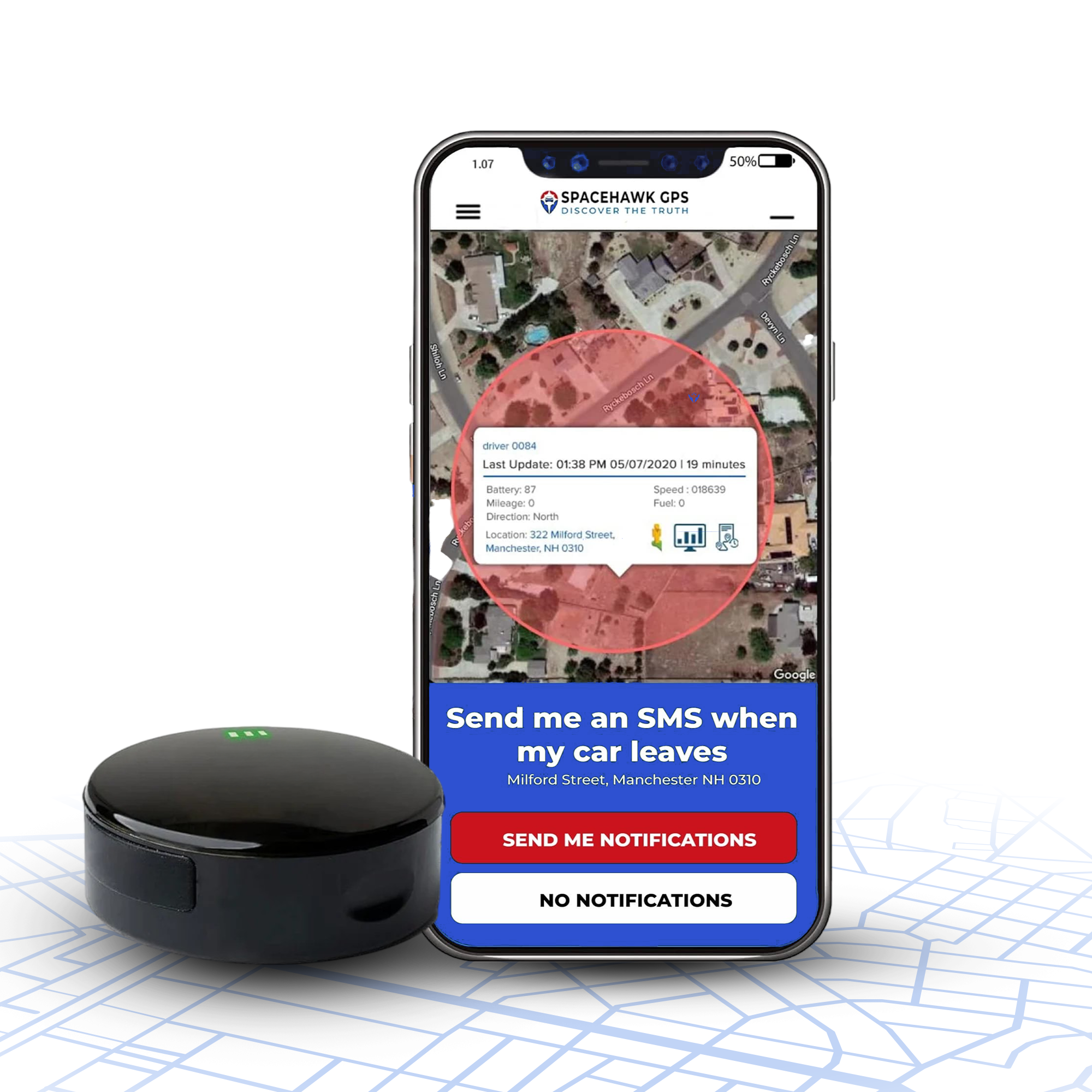
SpaceHawk ranks in the top position because it delivers fast, stable tracking without the common issues seen in most GPS devices. The location updates stay consistent while the vehicle is moving, and the system maintains a strong connection instead of dropping or delaying data. That reliability makes a noticeable difference when tracking in real-world conditions, especially in areas with traffic or signal interruptions.
“Compared to most trackers on this list, it maintains faster updates while the vehicle is moving.”
Another reason this device leads the list is how easy it is to use across different situations. The compact design and built-in magnet allow flexible placement, while the mobile app provides clear location data, route history, and alerts without extra setup. After a few days, it felt more suited for personal use than complex setups like fleet tracking. It works better for simple monitoring without needing constant adjustments.
Key features
- 3-second real-time location updates
- Strong magnetic mount for hidden placement
- Global SIM support for wide coverage
- Mobile app with live tracking and route history
- Compact size for discreet use
Pros:
- Fast real-time updates with minimal delay
- Stayed accurate even in stop-and-go traffic, where cheaper trackers usually lag
- Stable connection across different environments
- Setup took less than 2 minutes, no wiring, no trial and error
- Flexible placement with magnetic design
- Option available with no monthly subscription
Cons:
- Battery needs regular charging on frequent use
- Higher upfront cost compared to basic trackers
Who should use this
Better fit for someone tracking a single car without overthinking setup or features.
Good fit for:
- personal vehicle tracking
- keeping track of a second car
- basic asset monitoring
Not built specifically for fleet data or vehicle diagnostics.
Testing insight
I used this on a daily route with stop-and-go traffic and short highway runs.
I didn’t expect this, but it stayed within about 6–8 feet even while turning through intersections. Most trackers drift a bit there.
This annoyed me during testing. It dropped signal inside a parking garage, although it reconnected quickly once outside.
"This level of accuracy is close to what you’d expect from higher-end consumer GPS devices under normal driving conditions."
#2 Konnect - Best GPS Tracker for Fleet Management

Konnect is an OBD-based GPS tracker built for managing vehicles, with real-time tracking, driver behaviour insights, and direct plug-and-play installation through the vehicle’s port.
“Unlike magnetic trackers, this stays powered continuously through the vehicle.”
Why this fits fleet management
Konnect is designed for continuous tracking without worrying about battery life. Since it connects directly to the vehicle’s OBD port, it stays powered as long as the vehicle is running.
Compared to magnetic trackers, this setup works better when you need consistent tracking across multiple vehicles. You also get access to driving data like speed, idling time, and trip history, which helps when monitoring drivers or optimizing routes.
Key features
- OBD plug-in connection (no charging required)
- Real-time tracking with live updates
- Driver behavior monitoring (speed, idling, trips)
- Route history and vehicle usage data
- Mobile and desktop tracking access
Pros:
- Continuous power through OBD connection
- Tracks driving behavior and trip data clearly
- Reliable updates during daily driving
- Simple plug-and-play setup
- Useful for managing multiple vehicles
Cons:
- Not suitable for hidden tracking
- Depends entirely on vehicle connection
Who should use this
This works best if you need to manage vehicles regularly rather than track something discreetly.
Good fit for:
- small business fleets
- company vehicles
- monitoring driver activity
Not ideal for hidden placement or portable tracking like magnetic devices.
Testing insight
I plugged this into a vehicle used for regular daily driving and tracked routes over multiple days.
What I noticed after a few days was how consistent the updates stayed during movement, no gaps in trip history, which usually happens with weaker trackers. Since it draws power directly from the vehicle, there was no downtime or need to recharge, which makes it easier to manage compared to battery-based trackers.
"Continuous power through the OBD port is standard for fleet tracking systems where downtime isn’t acceptable."
#3 LandAirSea - Best GPS Tracker for Hidden Vehicle Tracking

LandAirSea is a compact GPS tracker designed for discreet vehicle tracking, with a strong internal magnet and flexible update settings for different tracking needs.
“Compared to SpaceHawk, this gives more flexibility in placement but slower updates.”
Why choose this for hidden tracking
LandAirSea works better in situations where you don’t want the device to be visible. The built-in magnet allows you to attach it under a vehicle or inside a metal surface without extra accessories.
Compared to SpaceHawk, this gives you more flexibility in placement. You’re not limited to obvious locations, which makes it more suitable for situations where the tracker needs to stay unnoticed.
Key features
- Strong internal magnet for secure placement
- Adjustable update frequency
- Waterproof casing for outdoor use
- Real-time tracking with mobile app access
- Compact design for discreet use
Pros:
- Strong magnetic hold for secure placement
- Compact design for discreet tracking
- Adjustable update settings
- Durable build for outdoor use
Cons
- Updates can feel slower on lower settings
- Requires subscription for full tracking access
- Battery life depends heavily on update settings
Who should use this
This fits better if your priority is discreet tracking, not constant high-speed updates.
Good fit for:
- hidden vehicle tracking
- asset monitoring
-
situations where placement is more important than speed
Not ideal if you need very fast, second-by-second updates like SpaceHawk.
Testing insight
I placed this unit under a vehicle using the magnetic mount and tracked short city routes along with parked intervals.
The device stayed securely attached the entire time, even on uneven roads. Accuracy wasn’t the issue, but I did notice delays depending on the update setting, which became obvious during short drives. On shorter intervals, tracking stayed consistent, while longer intervals showed noticeable gaps between movements.
#4 Everlast Nano - Best GPS Tracker for Long Battery Life
![]()
Everlast Nano is a portable GPS tracker built for extended tracking, designed to run for weeks or months without frequent charging.
Why battery life is the main advantage
This device is built for situations where you don’t want to keep checking or recharging the tracker. It focuses on staying active longer rather than pushing constant rapid updates.
Compared to LandAirSea, it lasts significantly longer on a single charge. And unlike Konnect, it doesn’t rely on being plugged into a vehicle, so you can place it anywhere.
Key features
- Extended battery life with adjustable update settings
- Portable design with magnetic case
- Real-time tracking with flexible intervals
- Waterproof housing for outdoor use
- Mobile app with alerts and route history
Pros
- Long battery life compared to most trackers
- Works without vehicle connection
- Suitable for long-term tracking
- Easy to move between assets
- Reliable for low-frequency tracking
Cons
- Larger size than compact trackers
- Slower updates on battery-saving settings
Who should use this
Go with this if you care more about battery life than real-time tracking.
Good fit for:
- long-term vehicle monitoring
- equipment or asset tracking
- situations where access to the tracker is limited
Not ideal if you need fast, real-time tracking while driving.
Testing insight
I used this on a parked vehicle that was only driven occasionally over a couple of weeks. I expected to recharge it at least once, but it kept running the entire time without needing a charge. When set to longer update intervals, it lasted significantly longer, but you trade off real-time precision for battery duration.
#5 Vyncs GPS - Best GPS Tracker for Vehicle Diagnostics & Driving Data
![]()
Vyncs works differently from most trackers on this list. Instead of focusing only on location updates, it pulls data directly from the vehicle and turns it into useful insights you can actually use day to day.
Once plugged into the OBD port, it starts recording trip history, speed patterns, idling time, and even maintenance-related data. Over time, you get a clear picture of how the vehicle is being used. This makes it more useful for tracking driving habits or managing vehicle health, rather than just watching movement on a map.
Key features
- OBD plug-in connection (no charging required)
- Driving data tracking (speed, idling, trip history)
- Vehicle diagnostics and maintenance alerts
- Global coverage with built-in SIM
- Mobile app with route and performance reports
Pros:
- Tracks vehicle data along with location
- Useful driving behavior insights
- Maintenance alerts included
Cons:
- Slower update speed
- Requires activation and renewal
- Not ideal for real-time tracking
Who should use this
This fits better if you want insight into how a vehicle is used, not just where it is.
Good fit for:
- monitoring driving behavior
- tracking fuel usage and trip data
- managing vehicle maintenance
Not ideal if your priority is fast, real-time tracking.
Testing insight
I used Vyncs on a vehicle for regular daily driving, including short city trips and longer highway runs.
The tracker recorded trip history accurately, including start and stop points, along with speed patterns during each drive. After a few trips, you start noticing how detailed the driving data gets, you can clearly see idling time and driving behaviour across multiple trips.
Location tracking worked consistently, but updates came in with a delay compared to faster trackers on this list. It’s usable for monitoring routes, but not ideal if you need instant position changes while the vehicle is moving.
#6 MotoSafety - Best GPS Tracker for Teen Driver Monitoring

MotoSafety is a plug-in GPS tracker designed to track driving habits, with built-in alerts and daily reports focused on driver behavior.
Where this fits best
MotoSafety is built around monitoring how someone drives, not just where they go.
It tracks speed, sudden braking, and trip activity, then turns that into simple reports you can review later. Instead of constantly checking a live map, you get a clearer picture of driving patterns over time.
Key features
- OBD plug-in connection (no charging required)
- Speed alerts and driving behavior tracking
- Daily driver report cards
- Route history with trip playback
- Mobile app with notifications
Pros
- Tracks driving habits in detail
- Daily summaries make it easy to review activity
- No battery management required
- Simple setup through OBD port
Cons
- Monthly subscription required
- Not built for fast, real-time tracking
Who should use this
This makes more sense if your focus is on driving behaviour rather than live tracking.
Good fit for:
- monitoring teen drivers
- reviewing daily driving activity
- identifying risky driving habits
Not ideal if you need precise, real-time tracking during movement.
Testing insight
I used this on a vehicle for short daily trips with frequent stops and speed changes.
Each trip was recorded clearly, and you could actually see where speed spikes or hard braking happened. The daily report made it easy to review how the vehicle was driven without checking the app constantly.
Live tracking worked, but there was a slight delay in updates compared to faster trackers, which becomes noticeable during active driving.
Key features
- Real-time tracking with adjustable update intervals
- Compact, portable design
- Magnetic attachment option
- Global coverage with SIM support
- Mobile app with alerts and location history
Pros
- Lower upfront cost compared to premium trackers
- Small size makes it easy to place anywhere
- Works across different use cases (vehicle, assets)
- Flexible placement without installation
Cons
- Battery needs frequent charging on faster settings
- Accuracy and speed vary based on network conditions
Who should use this
This makes sense if you want a low-cost tracker that still handles basic tracking without complexity.
Good fit for:
- occasional vehicle tracking
- short-term monitoring
- users trying a GPS tracker for the first time
Not ideal if you need long battery life or highly consistent real-time updates.
Testing insight
I used Tracki on short city routes and parked tracking over a few days.
It tracked location correctly, but I kept noticing how much the update speed changed based on the interval, faster settings drained it quickly. On faster settings, tracking stayed responsive but required more frequent charging. On slower settings, battery lasted longer, but movement updates showed noticeable gaps.
Which GPS Tracker Should You Choose?

The right GPS tracker depends on how you plan to use it. Each type solves a different problem, so choosing the right one saves you time and avoids unnecessary features.
OBD trackers: Best for daily driving and fleet vehicles. You plug them into the car’s port, and they stay powered the entire time. No charging, no downtime. Good if you want consistent tracking and driving data.
Magnetic trackers: Better for hidden tracking. You can place them under a vehicle or inside without installation. Works well when you don’t want the tracker to be visible or permanently connected.
Long battery trackers: Built for situations where you can’t access the device often. These last much longer on a single charge, which makes them useful for parked vehicles, equipment, or long-term monitoring.
What to Look for in a GPS Tracker
Choosing a GPS tracker depends on how it performs while the vehicle is moving, stopping, or sitting idle for long periods.

Update Frequency
Some trackers feel instant. Others don’t.
When updates come every few seconds, you can follow the vehicle almost in real time. Faster update intervals are known to improve tracking accuracy but increase battery usage. Once the interval stretches to 30–60 seconds, that clarity drops. The route still shows, but it feels delayed, especially in city driving.
Battery Life
Battery life directly changes how often the tracker reports location.
Devices that run longer usually reduce how frequently they send updates, since frequent GPS pings consume more battery across all cellular tracking devices. That works fine when the vehicle is parked or moving occasionally. During regular driving, you’ll notice fewer location points and wider gaps between movements.
If you’re specifically looking for extended battery performance, check this guide on GPS trackers with 1 year battery life.
What to pay attention to:
- Short update intervals → more precise tracking, faster battery drain
- Longer intervals → fewer updates, extended usage time
-
Real usage gives a clearer picture than advertised battery claims
Choosing the right balance depends on how often you plan to check location and how actively the vehicle moves.
Installation Type
This part is straightforward but often overlooked.
OBD trackers stay connected to the vehicle, so they keep running without interruption. Portable units give you more control over placement, you can move them, hide them, or switch between vehicles.
The trade-off shows up later, either in convenience or flexibility.
Subscription Costs
This is where most people underestimate the total cost.
The device itself is usually a one-time purchase, but tracking depends on an active plan. Over months, that cost adds up. Some plans are basic, others unlock faster updates or alerts.
Checking this early avoids surprises later.
OBD vs Magnetic GPS Trackers
These two types solve completely different problems. The wrong choice usually comes down to misunderstanding how they’re used in real situations.
OBD GPS Trackers
![]()
Plug it in, and it starts working.
OBD trackers connect directly to the vehicle’s port, so power isn’t something you think about. As long as the vehicle runs, tracking continues without interruption. That consistency shows up during daily driving, no missed updates, no downtime.
They also pull data from the vehicle itself, which means you’re not just tracking location. You’re seeing trip history, speed patterns, and usage over time.
Best suited for:
- daily driving
- business fleets
- driver monitoring
Magnetic GPS Trackers

Completely different approach.
Magnetic GPS trackers give you full control over placement. You can position them under the car, inside a compartment, or attach them to metal surfaces without connecting to the vehicle. That flexibility is the main advantage.
The trade-off shows up in battery and update timing. You control how often it reports location, and that directly affects how long it lasts.
Where they make more sense:
- hidden tracking
- asset monitoring
- temporary placement
Key Differences
Instead of specs, focus on how they behave:
- OBD trackers stay active without interruption
- Magnetic trackers give placement freedom
- OBD devices track driving data
- Magnetic ones focus only on location
- Battery management only applies to magnetic units
Which one should you pick?
If the vehicle is yours and you want continuous tracking without dealing with charging, OBD is the easier choice.
If placement needs to stay out of sight or you don’t want anything plugged into the vehicle, magnetic trackers give you that flexibility.
Final Recommendation
![]()
If you want one tracker that handles everyday use without issues, go with SpaceHawk. It keeps location updates consistent while the vehicle is moving and doesn’t require setup or constant adjustment.
For managing multiple vehicles, Konnect makes more sense. It stays powered through the vehicle and gives you access to trip data and driving activity without worrying about battery.
If placement needs to stay hidden, LandAirSea is easier to work with. The magnetic design allows you to position it out of sight without installation.
Long-term tracking comes down to battery. Everlast Nano runs longer than most devices, which helps when you don’t want to keep checking or recharging.
For behavior tracking, especially with younger drivers, MotoSafety focuses on how the vehicle is driven rather than just where it goes.
And if you want a lower-cost option to start with, Tracki covers basic tracking without a high upfront commitment.
Author Disclosure
Frequently Asked Questions
What is the best GPS tracker for cars?
+Are GPS trackers legal?
+Do GPS trackers need a subscription?
+How accurate are GPS trackers for cars?
+Can GPS trackers work without internet?
+- Choosing a selection results in a full page refresh.
- Opens in a new window.