
GPS Tracker With Battery Life of 1 Year

Key takeaways
5 things to know about long battery GPS trackers
-
01
A battery figure means nothing until you know the reporting rate behind it
-
02
EverLast runs about 140 days on roughly an hour of movement per day
-
03
Outlaw Trailer GPS carries a 4240 mAh cell in a magnetic IP67 housing
-
04
Motion-activated sleep is what turns days of runtime into months
-
05
Heat, cold and weak signal all shorten runtime more than buyers expect
Tired of charging a tracker every week?
Long-battery units for vehicles, trailers and equipment, with free lifetime support.
Two of the four trackers below are sold in our own store, and each one says so. The other two are competitors we do not sell.
Most trackers sold online last a few days between charges. That is fine for a car you park at home every night. It is useless for a trailer sitting in a yard three counties away.
The problem is that battery claims mean little without the reporting rate attached. One device can honestly advertise five days or two years, depending how often it checks in.
120 hrs vs 2.5 yrs
Outlaw's published runtime on one charge: reporting every 3 minutes in motion, against once a day at rest
Same battery, same device. The reporting interval is doing all the work.
So read every figure here with its interval attached. Below are four trackers that genuinely last, what each is for, and where each one stops.
Quick Comparison
| Tracker | Battery | Best for | Price | Where to buy |
|---|---|---|---|---|
LongestEverLast
|
About 140 days at an hour of movement daily | Long surveillance and recovery work | $149.95 | Buy Now |

Best for trailersOutlaw Trailer GPS
|
Up to 2.5 years on daily reporting | Trailers, plant and parked assets | $99.95 | Buy Now |

CompetitorTrak-4
|
12 to 18 months, per the maker | Equipment needing indoor positioning | Check current price | View Specs |

CompetitorLogistimatics Asset-432
|
Up to 36 months on one report a day | Ten or more static high-value assets | Check current price | View Specs |
How We Picked These
Rankings rest on three things. Published manufacturer specifications, our own hands-on time with several of these units, and what buyers report afterwards. Several of the trackers here sit in our own test collection. Every photo on this page is ours rather than stock.

EverLast - Longest Runtime On This List
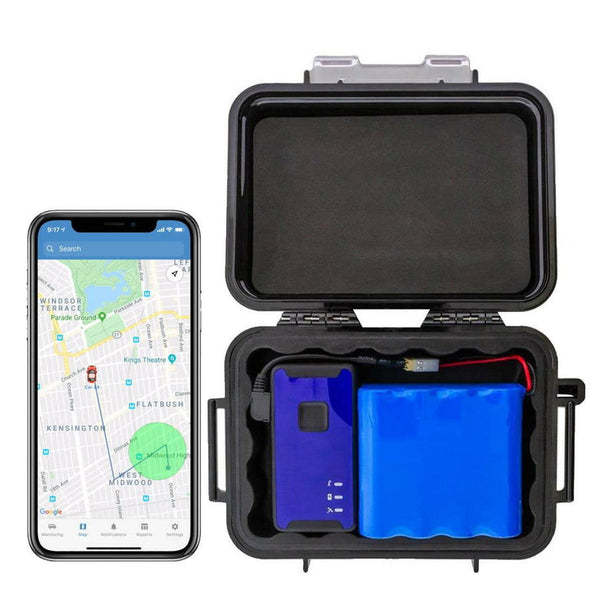
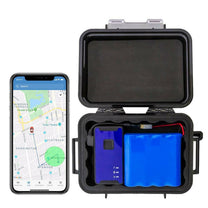
EverLast ships as a tracker plus an extended battery pack in a waterproof magnetic case. The published figure is roughly 140 days on about an hour of movement daily. Updates run every 5 seconds.
That combination is unusual. Most long-battery units buy their runtime by reporting slowly. This one holds a fast update rate across months.
The trade-off is bulk. EverLast runs 6.37 by 4.75 by 2.12 inches and weighs just over two pounds. That suits a vehicle or a large asset rather than a tight spot. Coverage spans the USA, Canada and Mexico.
- 140 daysat an hour of movement daily
- 5 secupdate rate
- 3countries covered
Pros and cons
Pros
- Months of runtime
- Fast 5-second updates
- SOS button on the unit
Cons
- Much larger than a mini
- Over two pounds
- North America only
Outlaw Trailer GPS - Best For Trailers And Parked Assets

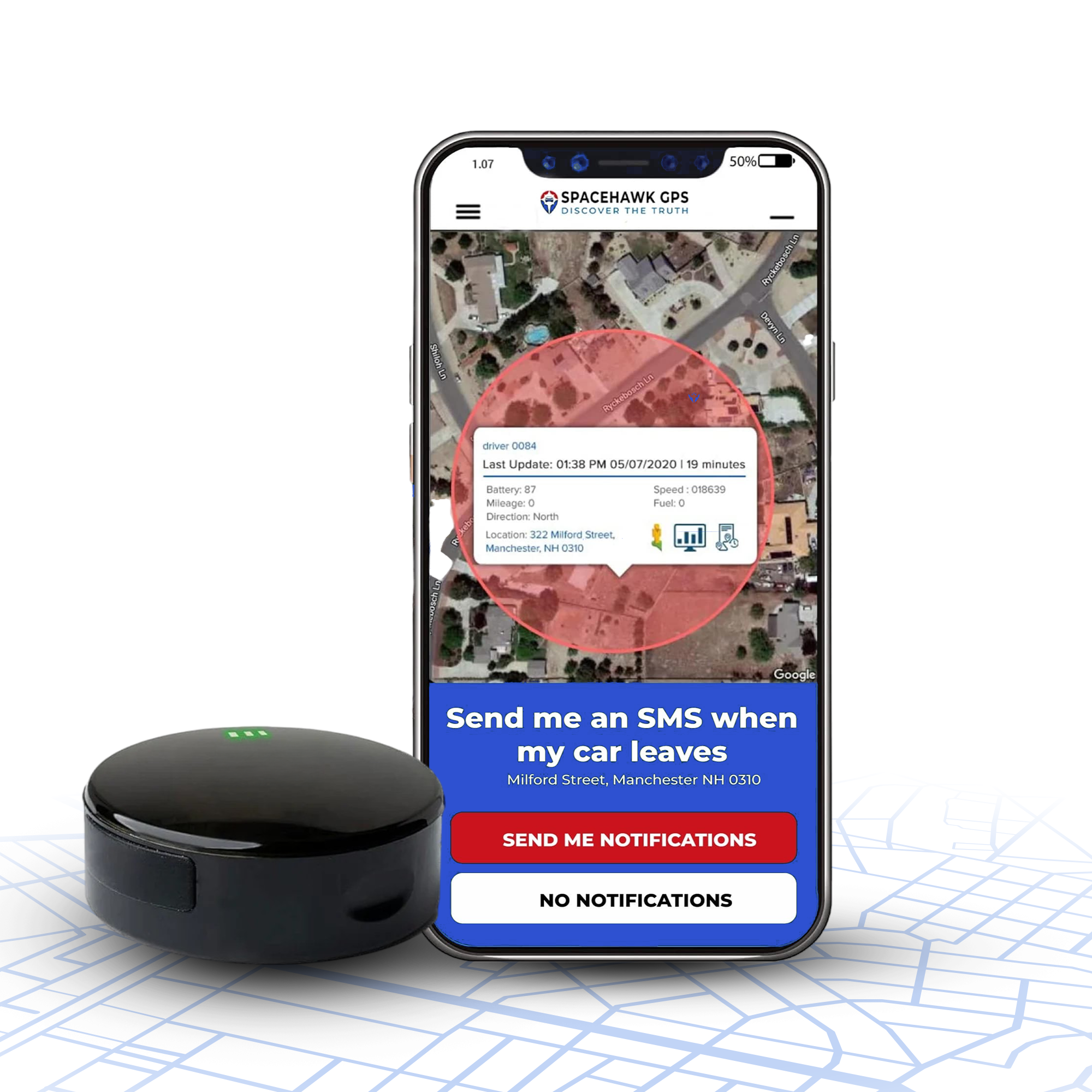
This is a magnetic unit built for things that sit still for long stretches. It goes under a trailer tongue or inside a fender well. The 4240 mAh cell is what buys the runtime.
The published figures are worth reading in full, because they show the interval doing the work. Reporting every 3 minutes in motion gives about 120 hours of movement time. Switch to energy-saver and one report a day runs about 2.5 years. An hourly report lands around 90 days.
A trailer moving an hour a day is therefore months rather than days between charges. Updates go as fast as every 3 seconds when you need them. Coverage spans 155 countries, and the IP67 housing measures 2.8 by 2.8 by 1 inch.
- 4240 mAhbattery
- 3 secfastest update rate
- 155+countries covered
Key features
- 4240 mAh rechargeable cell
- IP67 sealed against dust and water
- Built-in magnet, or hardwire it
- Sleeps when the asset is still
- Geofence and movement alerts
- Lifetime warranty, made in the USA
Pros and cons
Pros
- Years at rest, minutes to fit
- Pocket-sized and IP67
- Cheapest plan here
Cons
- Fast updates drain it quickly
- Needs recharging eventually
- Magnet needs a steel surface
The number to ask any supplier for
Ask for the runtime at the update rate you actually plan to use. A headline figure almost always describes the slowest reporting mode. That is not the mode you will run during a theft.
Outlaw publishes the whole curve, from 3-minute reporting down to once a day. That transparency beats a single big number on a box.
Trak-4 - Strong Indoor Positioning

Trak-4 quotes 12 to 18 months on a charge, with ping rates adjustable from every minute to every hour. As always, the long figure belongs to the slow interval.
The genuinely useful feature is falling back to Wi-Fi and cell positioning when satellites are blocked. For equipment inside a warehouse or a container, that matters more than raw runtime.
There is also a REST API and webhooks, unusual at this price. Worth knowing if you plan to pull tracking data into your own systems.
Pros and cons
Pros
- Wi-Fi and cell fallback
- REST API and webhooks
- Adjustable ping rate
Cons
- We do not stock it
- Long figure needs slow pings
- Pricing not published


Logistimatics Asset-432 - Longest Figure Of All

The Asset-432 quotes up to 36 months, on one firm condition. That is one location report per day. Increase the rate and the number falls sharply.
For static high-value assets checked once daily, that is the right trade. For anything you might need to chase live, it is the wrong one.
The unit is about the size of a bar of soap, IP67 rated and magnetic. Wi-Fi positioning covers indoor use. The battery is replaceable, which matters over three years.
Pros and cons
Pros
- Up to 36 months quoted
- Replaceable battery
- Wi-Fi indoor positioning
Cons
- We do not stock it
- One report a day only
- Wrong fit for live chases
Not sure which runtime you actually need?
Tell us what the asset is and how often it moves, and we will tell you which unit fits. Call 855-922-8100 or send us a note.
Ask us
What Actually Drains A GPS Tracker Battery
Five things account for almost every complaint about runtime falling short of the box.
Reporting interval
By far the biggest factor. Each report means waking up, fixing a position and transmitting. Three-second updates cost vastly more than daily ones.
Temperature
Lithium cells lose capacity in the cold and age faster in the heat. A tracker wintering on a trailer will not match its rated figure.
Weak signal
A unit struggling for reception transmits at higher power and retries. Deep inside a steel container is the worst case.
Cell capacity
More milliamp-hours means more runtime, and usually more bulk. Outlaw's 4240 mAh cell is why a unit that small lasts so long.
Sleep mode
The feature that changes everything. A tracker sleeping while parked spends nothing on the days an asset sits, which is most days.
Extra features
Anything with a camera or continuous sensing draws far more than a location report. Those devices normally need vehicle power.
"Nobody has ever complained to me that a tracker lasted too long. They complain it died on the week that mattered, and the cause is usually the update rate rather than the battery."
Ryan Horban
GPS Tracking Expert, GPS Tracker Shop
Frequently Asked Questions
How long does a GPS tracker battery actually last?
Anywhere from a couple of days to several years, and the reporting interval decides which. A budget tracker reporting every minute lasts two or three days. The same hardware checking in daily can run for months.
The useful question is how long it lasts at YOUR interval. Outlaw publishes about 120 hours of movement at 3-minute reporting, and roughly 2.5 years at one report a day. Same device, both figures true.
What should I look for in a long battery asset tracker?
Sleep mode first, because an asset sitting still should cost nothing to watch. Then a sealed IP67 housing and a magnet strong enough to hold at highway speed. A configurable reporting rate lets you trade runtime against detail.
Check the plan as carefully as the hardware. A cheap device on a dear plan costs more across three years than the reverse.
How can I make my tracker's battery last longer?
Slow the reporting interval and turn on power-saving or motion-activated mode. Those two settings separate a device that lasts a week from one that lasts a season.
Placement helps too. Somewhere with a clear view of the sky needs less transmit power than a spot buried in steel. Keeping the unit out of direct summer heat protects the cell too.
Can I get an alert when the battery runs low?
On every tracker on this page, yes. Low-battery alerts arrive by app notification, email or text. Setting one up is the first thing to do after activation.
On a long deployment that separates a planned recharge from finding out the device died weeks ago.
Sources
Tell us what you need to track
We will match the runtime to how the asset actually moves. Free USA-based support for the life of every device we sell.
- Choosing a selection results in a full page refresh.
- Opens in a new window.
 Buy on Amazon