
Benefits of GPS Tracking for Small Businesses in 2026

-
01
SpaceHawk updates every 3 seconds with accuracy to around six feet, which is enough to name a parking spot.
-
02
Fuel is where the money is. Idling and loose routing cost more than most owners realize.
-
03
Geofence alerts are the ones you act on. A boundary crossed after hours is worth a phone call.
-
04
Hardware alone saves nothing. Field studies put the fuel gain near 12 percent, and only alongside coaching.
-
05
Tell your drivers. A written tracking policy is what keeps the policy legal and the team on side.
Small businesses have the same problem as big fleets and none of the staff to solve it. Vehicles, tools and people are all moving, and nobody has time to watch any of it.
A tracker is the cheapest way to get that visibility back. What it will not do is save money on its own. That is the part most articles on this subject skip.
Here is what tracking changes for a two-van operation, what it costs, and where the savings come from.
-
01Where the money leaksFuel, idle time, theft and the hours spent chasing people by phone.
-
02What the research supportsThe honest savings range, and the condition attached to it.
-
03Features that matterThe handful worth paying for on a small fleet.
-
04Choosing a trackerHardwired against portable, battery life, update rate and support.
-
05Our pickSpaceHawk, with the specs and the trade-offs stated plainly.
-
06Rolling it outA pilot, a written policy, and a weekly review that survives month two.

Our pick for small fleets
SpaceHawk GPS Tracker
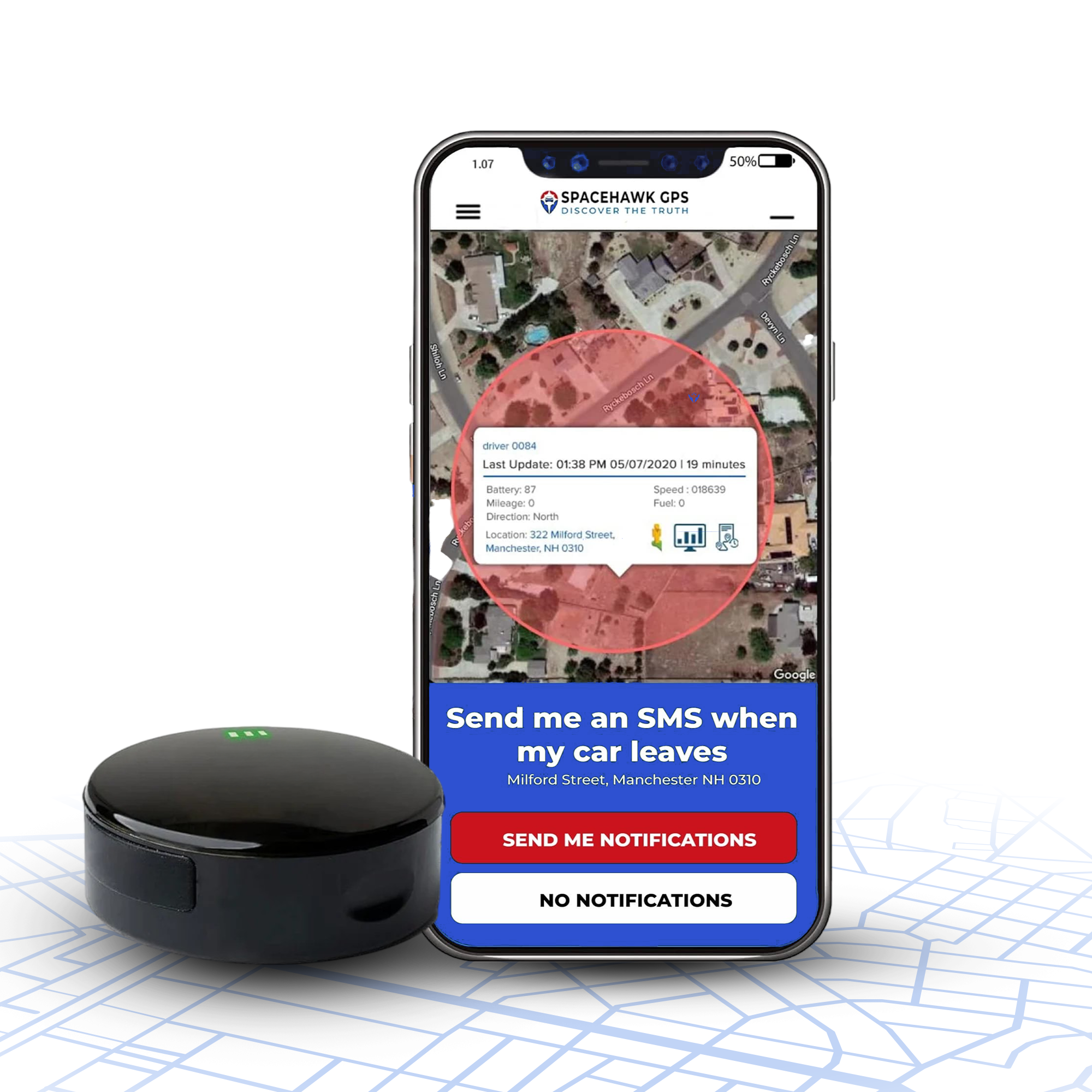
Magnetic, waterproof and fitted in seconds with no installer. Made by LandAirSea, and the closest thing here to a one-device answer for a mixed fleet.
- 3-second updates
- IP67 waterproof
- 1 year trip history
- Lifetime warranty
Where a Small Business Actually Loses Money
Every vehicle has a name and a cost
Enterprise fleets have dispatch departments. A small operator is the operator, the accountant and sometimes the driver. One idle van shows up in the month-end numbers immediately.
The losses are rarely dramatic. They are small, repeated, and invisible without data.

-
Idle time
Engines running through stops and waits. Fuel burns and the odometer never moves, which is why it hides so well.
-
Loose routing
Detours, backtracking and badly ordered stops. All of it costs both hours and gallons on the same trip.
-
Theft and unauthorized use
One stolen generator, or a van taken home overnight, can wipe out a week of margin.
-
Time spent chasing people
Phoning drivers for an ETA is a job nobody is paid to do. The answer is a guess anyway.
What the Research Actually Supports
Telematics marketing quotes fuel savings anywhere from 15 to 25 percent. The government field studies that measured it land lower, and they agree with each other.
The same report found something more useful than the number. Installing the devices changed no driver behavior on its own, which it notes contradicts what some providers claim.
A U.S. Department of Transportation study of 46 trucks reached the same place. Fuel economy improved only once feedback and coaching were added. Sleeper-cab drivers gained about 5 percent, day-cab drivers about 9.
Where the numbers get larger is driving style, which is the thing coaching actually changes.
What Tracking Changes Day to Day
The gap between what is happening and what you think is happening
That gap is where the cost sits. Closing it is the whole product, and everything else is a feature list built on top.

-
Live position
Reassign the nearest van instead of the one you remembered. Answer a customer without phoning a driver first.
-
Trip history
Proof of arrival and departure. Settles a billing dispute in a minute rather than an afternoon.
-
Geofences
A boundary around a yard or job site, and an alert when something crosses it outward after hours.
-
Service on real hours
Maintenance scheduled on run-time rather than the calendar, so a van is off the road less often.
Choosing a Tracker
Five things decide it
A delivery startup wants live routing. A contractor wants a rugged unit that survives a season in a truck bed. The same tracker rarely suits both.

-
Hardwired or portable
Wired units suit company vehicles and never need charging. Magnetic units move between assets and cover anything without power.
-
Battery and power
Look for two weeks or more on a portable unit, plus motion-based sleep. A wiring option helps if you would rather stop thinking about it.
-
Update rate
A one-minute refresh is fine for daily logistics and useless during a theft. Adjustable intervals matter more than the headline number.
-
Software you will open
Clean dashboards, mobile access, trip playback and exportable reports. A clunky app means the reports stop being read.
-
Support and warranty
You have no IT team. Check whether a person answers, and what the warranty actually covers.
| Factor | What to look for | SpaceHawk | Why it matters |
|---|---|---|---|
| Mounting | Portable or magnetic | Magnetic, no installer | Move it between vehicles and assets in seconds |
| Battery | Two weeks or more | 1 to 3 weeks, depending on update rate | Frequent reporting is what drains it |
| Update rate | Under 10 seconds | 3 seconds | Fast enough to follow a vehicle in motion |
| Accuracy | Within 10 feet | Around 6 feet | Enough to identify a specific parking spot |
| History | Months, not days | 1 year of trip history | Insurers and disputes look backwards, not forwards |
| Warranty | Clear and stated | Lifetime, with free US support | No IT team means support is the real spec |
Our Pick: SpaceHawk GPS Tracker
Built by LandAirSea, sized for a small fleet
Magnetic mount, IP67 housing, three-second updates and a full year of trip history. One device type covers vehicles, trailers and equipment.
The device is $39.95. Plans run $19.95 a month, or $9.95 a month on a two-year prepay.

-
What it does well
Fast updates, a strong magnet, and a housing that survives a job site. The app opens and closes in under a minute.
-
What it costs you
A subscription, like every cellular tracker. Battery life shortens at the fastest update rate, so a hardwire kit suits vehicles that run daily.
-
Who it suits
Operators with a mix of powered and unpowered assets who want one device type and no installer.
-
Who should look elsewhere
Anyone needing engine diagnostics, ELD compliance, or dash cameras. Those are a different class of system.
Rolling It Out Without a Mutiny
The rollout decides whether it works
Most tracking rollouts fail in month two, when the reports stop being opened. The hardware is rarely the problem.

-
1. Name the goal
Fuel, theft or scheduling. That one answer decides which alerts you switch on and which you ignore.
-
2. Pilot two or three
Two weeks on representative vehicles tests placement, battery and signal without disrupting the business.
-
3. Tell the drivers first
Pushback comes from surprise, not tracking. Explain the reason, and reward the good numbers rather than punishing the bad.
-
4. Write the policy down
What is tracked, who can see it, and how long it is kept. State plainly that it covers vehicles, not people.
The owners who save money are the ones who open the report on Monday. The tracker is just what makes that report worth opening.
The Short Version
Tracking gives a small business the visibility a big fleet buys a department for. That part is real and it is cheap.
What it will not do is save fuel by existing. The savings arrive when someone acts on what the dashboard shows. That is a management habit, not a purchase.
Start with the two vehicles you would notice missing. Expand once the reports have earned it.
See your fleet, however small it is
SpaceHawk mounts magnetically in seconds and reports position every three seconds, with a year of trip history behind it.
Check PriceFrequently Asked Questions
Is GPS tracking legal for a small business?
Yes, for company-owned vehicles and equipment used for work. Tell employees it is happening and put it in writing. Write a short policy covering what is tracked, who sees it, and how long it is kept. That keeps you compliant and the team on side.
How accurate are these trackers?
SpaceHawk lands within roughly six feet under open sky, which is enough to identify a parking spot. Accuracy drops near tall buildings and inside structures, where signals bounce or get blocked. That is true of every GPS device, not just this one.
What does it cost to run?
The SpaceHawk device is $39.95. Plans are $19.95 a month, or $9.95 a month if you prepay two years. Compare the two-year total rather than the monthly figure, because the subscription outweighs the device several times over.
Does it need professional installation?
No. Charge it, then mount it magnetically somewhere clean and out of sight. Activate it in the app and confirm live updates before you rely on it. A hardwire kit is available if you would rather never think about charging.
Will tracking improve productivity?
Usually, though not for the reason people expect. The gain comes from better dispatch decisions and fewer phone calls rather than from drivers working harder. Logged trips also tend to change habits without anyone being confronted about them.
How soon will it pay for itself?
That depends entirely on whether anyone acts on the data. Field research supports roughly 5 to 12 percent off fuel where tracking is paired with driver coaching. Set expectations there rather than at the figures vendors quote.
Author Disclosure

Ryan HorbanVerified Expert
Fifteen years helping parents, fleet managers and small business teams choose GPS setups that hold up in use.
A car, a trailer or a whole fleet. The focus is simple, legal and effective, without the tech headaches.
Hands-on with real users and dozens of devices. That is where a spec sheet and a working setup part company.
Sources
- Caltrans Division of Research, Innovation and System Information, Fleet In-Vehicle Data Acquisition System final report, CA16-2516, 2015.
- U.S. Department of Transportation, Study of the Impact of a Telematics System on Safe and Fuel-Efficient Driving in Trucks, technology brief, 2014.
- U.S. Department of Energy, Driving More Efficiently, fueleconomy.gov.
Some images in this article were generated using AI.
As an Amazon Associate, GPS Tracker Shop earns from qualifying purchases.
- Choosing a selection results in a full page refresh.
- Opens in a new window.
 Buy on Amazon