
GPS Tracker For Air Conditioning Unit

-
01
A magnetic GPS tracker attaches to an outdoor AC unit in under a minute.
-
02
Geofence alerts fire the second a unit moves off the property.
-
03
The copper inside a stolen unit scraps for $30 to $40. Replacing the unit costs thousands.
-
04
Stolen equipment is rarely recovered once it leaves a site without a tracker on it.
-
05
Real-time location gives police something to act on while the trail is still warm.
As an Amazon Associate, GPS Tracker Shop earns from qualifying purchases.
Yes, a GPS tracker protects an air conditioning unit from theft. A small waterproof tracker with a magnetic mount attaches to the outdoor unit's metal housing. The moment the unit crosses a boundary you set, an alert lands on your phone. That gives you a live location to hand police, often before the unit is stripped for copper or resold.
I'm Ryan Horban, and I've spent the last 15 years working with GPS vehicle trackers, asset tracking hardware, and real security setups rather than spec sheets. Construction sites losing units before the drywall goes up. Homeowners who lost a condenser twice in one summer. Property managers wanting a straight answer before buying trackers for a dozen rentals.
This guide covers how GPS tracking protects an outdoor AC unit or condenser. Then what a real setup looks like, and what it costs against what theft costs. The last section covers where tracking fits alongside cages, bolts and cameras rather than replacing them.

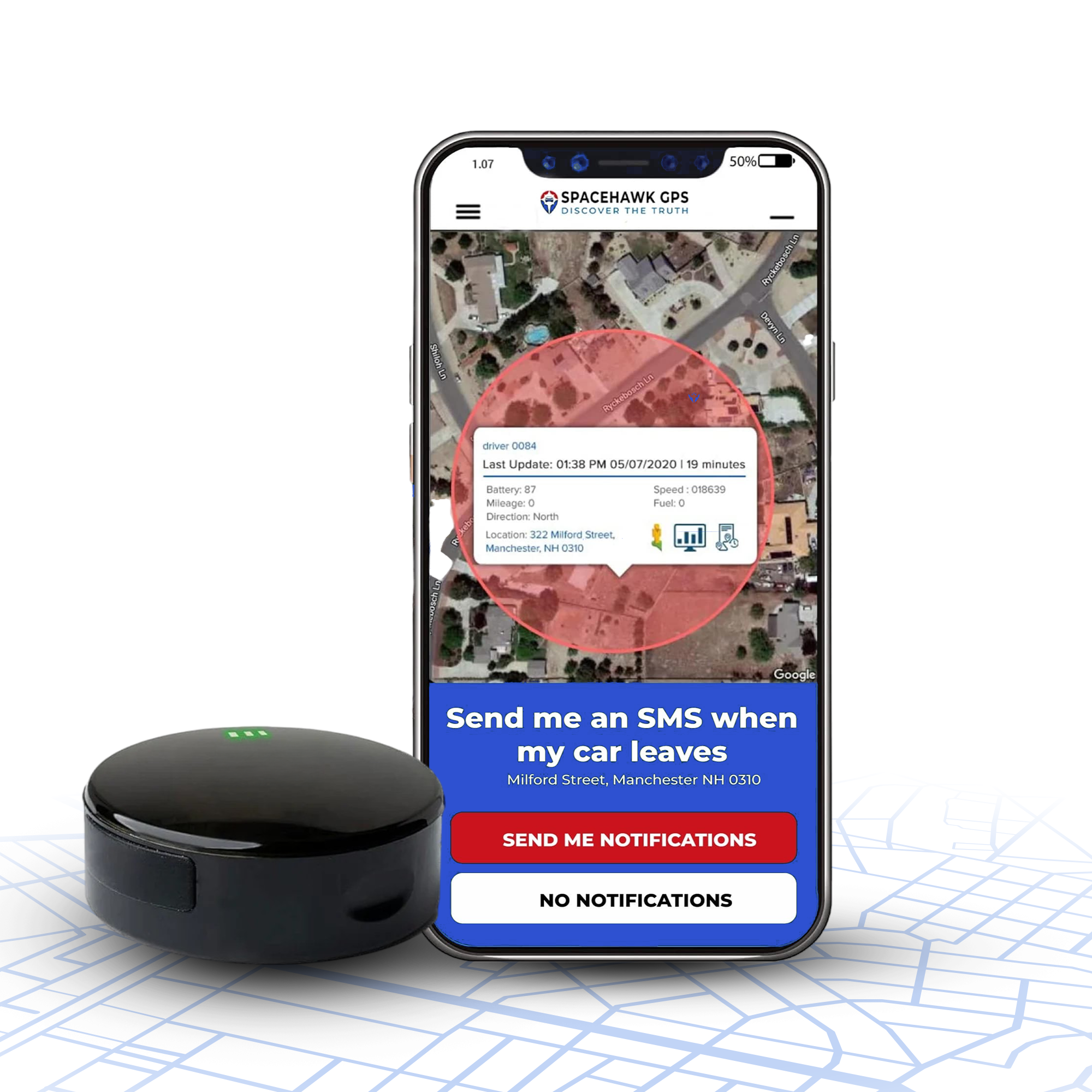
SpaceHawk GPS Tracker
Magnetic, waterproof, built for an asset that sits outside all year.
- Waterproof housing rated for year-round outdoor exposure
- GNSS satellite positioning paired with a cellular connection
- Magnetic mount holds to metal housing in seconds, no drilling
- Geofence alerts by text, email or push notification
Why AC units get stolen so often

An outdoor unit is unattended metal with copper inside it.
An AC unit gets stolen because it sits outside, unattended, packed with copper. Scrap yards buy that copper without asking questions. HVAC theft and condenser theft in local police reports are copper theft wearing a different name.
The coils, the refrigerant lines and the wiring are all copper. All of it sits in a box a thief opens with a wrench and cutters. The payout is tiny. The damage to the owner is not.
$30 to $40
What the copper in a stolen residential AC unit fetches at a scrap yard. Replacing that same unit runs owners $4,000 to $5,000.
Figures reported by security contractors during a 2026 surge in metro Atlanta AC thefts. A central AC unit alone typically replaces for $2,500 to $4,500.
That asymmetry is the whole problem. A thief risks a felony charge for the price of a tank of gas. The owner covers a four-figure bill nobody budgeted for.
Insurance does not soften it much either. The Insurance Information Institute puts the average paid homeowner theft claim near $4,000. Roughly one household in 235 files one each year. Against a typical deductible, a stolen condenser is largely money out of pocket.
Construction sites take the harder hit. A new unit sitting on a job site before the home is finished is an easy target. Weekends are worst, with nobody around to notice.
$300M to $1B
Estimated annual cost of construction and heavy equipment theft in the US. Around 21 percent of stolen machines are ever recovered.
National Equipment Register and NICB, Heavy Equipment Theft Report. Covers machines rather than HVAC specifically, and detailed public reporting stopped after 2016.
That recovery figure is the real issue. Once a unit is gone, most owners never see it again unless something on it can be traced.
How a GPS tracker actually protects an AC unit
A tracker reports its exact location the second it moves. That gives you time to respond before the unit is gone.

Mount, activate, fence, respond. Four steps, about ten minutes.
-
1
Mount the tracker
Stick the waterproof tracker to the unit's metal casing with its magnet. No drilling and no wiring. Pick a spot low and out of sight, such as the back panel or the underside.
-
2
Activate and connect the app
Turn the tracker on, then scan the code or enter the serial number. Confirm the unit appears on the map. That usually takes a few minutes.
-
3
Set a geofence
Draw a boundary around where the unit is supposed to stay. Cross that line and the app fires an alert by text, email or push notification.
-
4
Respond fast
Pull up the live location and call police straight away. Real-time coordinates give officers something solid, rather than a cold trail hours later.
Miami-Dade police broke up a ring stealing AC units from homes in the Cutler Bay area. The investigation started when detectives recovered one stolen unit from a housing development.
Most of those charged worked in the air conditioning trade. Removing and reselling units was straightforward for them. The developer, Lennar, put its losses above $1.5 million.
One recovered unit is what opened the case. That is the practical argument for putting something traceable on equipment sitting outdoors.
What to look for in an AC unit GPS tracker

Four things to check before buying anything.
Not every tracker is built for a condenser sitting exposed to weather for years. Four things decide whether one is.
-
A real waterproof rating
Look for IP65 at minimum, ideally IP67. The unit sits through rain, snow and direct sun all year, and a splash rating will not survive that.
-
Cellular, not Bluetooth only
A Bluetooth tag needs another phone nearby to relay its signal. Once a stolen unit leaves that range, the trail dies. Satellite positioning on a cellular network keeps reporting regardless.
-
A magnetic mount
Skip anything needing drilling, adhesive or wiring. A strong magnetic mount holds through vibration and weather without damaging the housing.
-
Battery life for a stationary asset
An AC unit does not move daily like a vehicle. Look for a low-power mode that stretches battery life into months, then wakes up when movement starts.
Do not use a Bluetooth tag for this
An AirTag or similar tag has no satellite receiver and no cellular link. Location depends on other people's phones passing close enough to relay it.
A unit heading out of a neighborhood in a truck outruns that relay network quickly. The trail stops there.
A tracker that fits this job
SpaceHawk is the one I have mounted and tested most on outdoor units. All four criteria above are covered. Magnetic mount, waterproof housing, satellite positioning on a cellular network. Plus a low-power mode for an asset that stays put.
| Feature | SpaceHawk GPS Tracker |
|---|---|
| Mounting | Magnetic, no wiring or tools |
| Waterproof rating | Rated for continuous outdoor mounting |
| Battery life | One to three weeks active, up to six months in low power mode |
| Location technology | GNSS satellite positioning plus a cellular network |
| Geofencing | Yes, with instant alerts |
| Device cost | $39 |
| Monthly plan | $19.95, or $9.95 on a 2-year prepay, no contract required |
SpaceHawk is not the only tracker that clears that bar. Run any alternative against the same four-point checklist before you buy.
A cage buys you time. A tracker buys you the address. Most owners who lose a unit had neither, and that is why they never see it again.
Ryan HorbanGPS Tracking Expert
What tracking costs against what theft costs
| Cost type | Amount |
|---|---|
| GPS tracker device | $39 one time |
| Monthly tracking plan | $9.95 to $19.95 |
| First-year total | About $158 to $278 |
| Replacing one stolen AC unit | $4,000 to $5,000 |
A full year of tracking runs well under a tenth of what one stolen unit costs to replace. For a contractor with units across several job sites, that math gets more lopsided with every unit added.
One tracker costs less than the deductible on a single stolen unit. SpaceHawk mounts magnetically, survives outdoors, and sends the alert while the unit is still in the truck.
Check SpaceHawk pricing7 ways to stop AC unit theft beyond GPS
Tracking works best as one layer in a wider setup, not the only line of defense.
- Bolt the unit to a concrete pad so it cannot be lifted or dragged off quickly.
- Install a locking metal cage or enclosure around the outdoor unit.
- Add motion-activated lighting or a camera covering the unit.
- Engrave your name, phone number or a serial number into the housing.
- Keep photos and written serial records for every unit on site.
- Place units in well-lit, visible spots instead of hidden side yards.
- Tell your local police department the equipment carries GPS tracking.
An affordable housing development in Oak Park, Michigan lost 22 air conditioners in a single month. All were taken before the grand opening.
The operator estimated about $80,000 to replace them, a figure that included fitting security cages to the rest. Police had no witnesses and appealed to the public for tips.
Twenty-two units and no trail is what happens when nothing on the equipment reports its own position.
GPS tracker against other AC theft prevention methods
| Method | Prevents theft | Helps recover the unit | Setup effort |
|---|---|---|---|
| GPS tracker | Some deterrent | Yes, real-time location | Low, magnetic mount |
| Metal cage or enclosure | Strong deterrent | No | Moderate, needs installing |
| Security cameras | Moderate deterrent | No | Moderate |
| Engraving and serial records | Reduces resale value | Helps police identify it | Low |
| Concrete pad and bolts | Strong deterrent | No | Higher, needs installing |
Cages, bolts and cameras mostly stop theft before it happens. A tracker is the one item here built to get the unit back afterward. Running two or three together beats picking one.
Common mistakes when protecting AC units with GPS

Three mistakes that quietly cancel out the tracker.
-
Skipping the geofence
A tracker with no boundary set just logs location nobody checks until it is too late. Set the fence the same day you mount the device.
-
Mounting it somewhere visible
Stick a tracker on top of the unit and it gets found and thrown in a ditch. Nothing useful ever reaches your phone. Keep it low, on the back panel or underside.
-
Never checking the battery
A dead tracker is a silent tracker. Check the app monthly, especially on units running in active mode rather than low power mode.
A tracker is not a lock
Tracking tells you a unit is gone. Nothing about it stops someone taking the unit in the first place.
Pair it with a locked cage or a bolted pad. Deterrence and recovery are two different jobs, and you want both.
Who actually needs this
Anyone with an outdoor unit a stranger could walk up to unnoticed benefits from a tracker. The return is biggest for three groups.
Homebuilders and contractors running units on active sites carry the most exposure. Nobody is there overnight to notice movement. Property managers with units across multiple rentals get the same benefit at scale. Homeowners in neighborhoods with a known history of AC or copper theft are the third.
Final thoughts
An outdoor AC unit is a low-risk, low-effort target for anyone after the copper inside it. A magnetic tracker will not stop someone trying. What it does is give you a real chance of getting the unit back. Police also get something they can act on.
Whatever tracker you land on, check it against the four criteria above. Waterproof rating, cellular connection, magnetic mount, and battery life built for a stationary asset. The checklist matters more than the brand.
Mount it and set the geofence. You have closed the biggest gap in AC unit security for less than one deductible.
Check before you mount on property you do not own
This guide is general information rather than legal advice. Tracking equipment you own is straightforward almost everywhere.
Leased, shared or tenant-occupied property is different. Confirm local law and get the owner's agreement in writing before fitting a device.
Get the alert while the unit is still in the truck
SpaceHawk mounts magnetically to the housing in under a minute and survives outdoors year-round. The cellular link keeps reporting from wherever the thief takes it.
About the Author

Frequently Asked Questions
Can you put a GPS tracker on an AC unit?
How much does AC unit theft cost?
Does GPS tracking actually help recover a stolen AC unit?
Do GPS trackers for AC units need a monthly fee?
Where should you mount a GPS tracker on an AC unit?
Is a GPS tracker enough to stop AC unit theft on its own?
- Choosing a selection results in a full page refresh.
- Opens in a new window.
 Buy on Amazon