
How Do You Know If Your Body Has An RFID Chip?

5 things to know about RFID chips and your body
-
01
An implantable RFID chip cannot report your location. There is no battery and no transmitter.
-
02
Implant chips only answer a reader held within a few centimeters of the skin.
-
03
An X-ray or ultrasound is the only way to settle the question properly.
-
04
Never cut anything out yourself. Removal belongs in a clinic, under sterile conditions.
-
05
If the real worry is being followed, look for a GPS tracker on the car instead.
This page contains an Amazon affiliate link. We earn from qualifying purchases at no extra cost to you.

If the real worry is being followed
RF bug detector
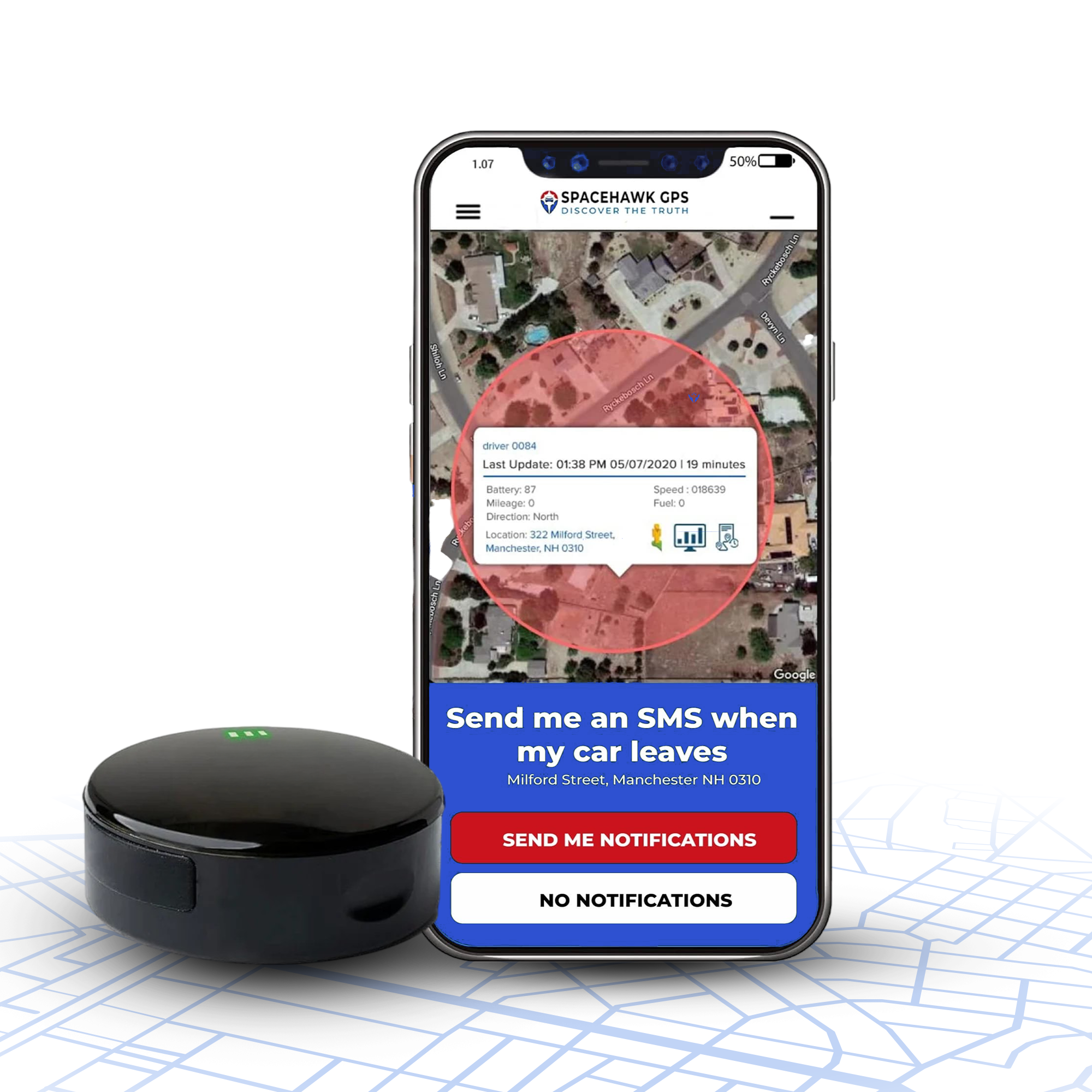
An implant cannot report your position. A GPS tracker on your vehicle can, and that is the realistic explanation worth ruling out. This detector reads the live transmission a cellular tracker sends. A phone app cannot do that.
Current price on the product page. The RFID explainer starts below.
Short answer. A passive RFID implant has no power source and no transmitter, so it cannot broadcast your position to anyone. The chip only answers a reader pressed within a few centimeters of the skin.
To settle the question for certain, ask a doctor for an X-ray or ultrasound. No other method reliably shows whether anything sits under the skin. Do not attempt to remove or destroy anything yourself.
This question usually comes from a real worry about being followed. So let us take the technology seriously and answer it properly.
The short version is that RFID and GPS are not the same category of thing at all. Confusing them is what makes implants sound far more capable than they are.
What an RFID chip actually is
An implantable RFID tag is a passive device about the size of a grain of rice, sealed in glass. Passive means no battery.
The chip does nothing at all until a reader's magnetic field passes close enough to power it. Then it wakes, returns a fixed identification number, and goes back to being inert. That number is all it contains.
The same technology sits in pet microchips, building access badges and tap-to-pay cards. Range is a matter of physics rather than secrecy. Implant-grade tags run at low frequencies that only couple over a few centimeters.
One technical caveat, stated honestly
Not all RFID is short range. Warehouse UHF tags can be read across several meters. That is how pallets scan without anyone touching them.
Implants are not those tags. A small antenna sealed in glass under skin and tissue cannot do better than low frequency. Range is still centimeters, not rooms, and never miles.
What it cannot do, and what can
A passive RFID implant
- No battery and no transmitter
- Answers only a reader a few centimeters away
- Returns one fixed ID number, nothing else
- Holds no position, no history and no map
A GPS tracker
- Has its own battery and cellular radio
- Reports from anywhere with a signal
- Sends a live position every few seconds
- Usually hidden on a vehicle, not on a person
That difference matters more than any detection technique on this page. If somebody genuinely knows where you are going, an implant is not how. A tracker on your vehicle is the realistic explanation, and unlike an implant it is easy to find.
Check the car before you check yourself
An RF detector reads the live transmission a cellular tracker sends out. A ten-minute sweep of a parked car answers the question either way.
Shop GPS bug detectorsHow to check for an implant, in three steps
- Look and feel first.An implant sits just under the skin and is usually palpable as a small hard grain. Common sites are the thumb webbing, or the back of the upper arm. There is normally a small scar. Feeling nothing is a meaningful result on its own.
- A handheld reader can confirm a compatible chip, not rule one out.Pet scanners read the common 134.2 kHz pet standard and little else. A beep tells you something is there. Silence tells you very little, because the reader may simply not speak that chip's frequency.
- Ask a clinician for imaging.An X-ray or ultrasound shows any foreign object under the skin. Frequency does not matter, and neither does whether it still works. This is the step that actually settles it, and it is a routine request.
Why a negative scan is not proof
Most articles skip this part, and it matters. A consumer reader covers one or two frequencies out of many. So a silent scanner is weak evidence at best.
If you want a real answer rather than a partial one, go straight to imaging. Imaging is faster, cheaper than repeated scanning, and definitive.
Never remove anything yourself
Cutting into your own hand or arm risks nerve damage, tendon injury and infection. The object also sits deeper than it feels.
A clinician can remove an implant in minutes under local anesthetic and sterile conditions. Where a chip sits in a card, fob or equipment tag, the issuer can deactivate or replace it.
One more thing, said plainly and without judgement. If this worry has been running a while and is affecting your sleep, raise that with a doctor too. A physician can give you a definitive answer about your own body. No gadget on the internet can do that.
Are humans actually being chipped?
Worth answering with history rather than reassurance, because the record here is unusually clear.
One implantable human chip has ever held FDA clearance in the United States. The VeriChip received it in October 2004. The pitch was letting emergency staff pull up a patient's medical record.
The year the company behind VeriChip stopped marketing the implant, after poor public acceptance.
Uptake was tiny throughout. The company reported roughly 200 people implanted worldwide by 2006. Animal studies published in 2007 then raised tumor concerns.
People implanted worldwide with the only FDA-cleared human chip, per the company's own 2006 figure.
VeriChip Corporation renamed itself PositiveID in late 2009. The implant technology was sold on to another firm in 2012. There has never been a US government program to implant chips in people.

Who does have them
Implants persist in a small hobbyist community. Kevin Warwick ran the first documented experiment in 1998. Amal Graafstra has been a well-known self-experimenter since the mid 2000s.
The security research is genuine and worth knowing. In 2010, Mark Gasson showed a computer virus could infect an implant in his own hand. From there it passed to other systems. Cloning of access-control tags has also been demonstrated repeatedly.
None of that turns an implant into a locator. The documented risks are about copying an identity number, not about following someone down a street.
If you would rather rule out a pet chip or a tagged item
Handheld pet microchip scanner
For pets, livestock and tagged property
- Reads the common pet microchip standards, including 134.2 kHz
- Rechargeable, so it holds a charge between occasional checks
- Confirms a rescue animal's chip, or whether an item carries a tag
Being straight about the fit. We earn a commission on this, and it is a pet scanner. That makes it the right tool for an animal or an object. For a question about your own body, treat it as a first pass at best. Imaging is what actually answers that.
Sources
FDA clearance of the VeriChip, October 2004, and subsequent coverage of the product's withdrawal.
Mark Gasson's 2010 implant virus demonstration, University of Reading.
Answer the question that actually matters
If you think you are being followed, the device to look for is on the vehicle. An RF detector finds it in minutes.
Shop GPS bug detectorsFrequently asked questions
Can an RFID chip track my location?
No. A passive implant has no battery and no transmitter, so there is nothing to send a position with. Passive tags answer a reader a few centimeters away and do nothing the rest of the time.
A chip can log that you passed one specific reader, the way a badge logs a door. Note that a record of one doorway is not a trail.
How do I scan my body for a microchip?
Ask a doctor for an X-ray or ultrasound. Imaging shows any foreign object regardless of frequency, or whether the chip still functions. No other method gives a clear answer.
A handheld reader can confirm a compatible chip but cannot rule one out. Those readers listen on one or two frequencies only.
What destroys an RFID chip?
Crushing or strong electromagnetic pulses will kill a tag in a card or a label. Neither is safe or sensible to attempt on something under skin.
For an implant the answer is surgical removal by a clinician. For a card or fob, ask whoever issued it to deactivate the credential.
Are implanted RFID chips safe?
The main documented risks are security rather than medical. An ID number can be cloned, much like a copied key. Animal studies published in 2007 also raised tumor questions that contributed to the commercial decline of human implants.
Anyone considering one should talk to a qualified practitioner. Placement matters, and existing scar tissue or implanted medical devices can complicate it.
Could I have been chipped without knowing?
Implantation uses a wide-bore needle and leaves a mark, and the capsule is usually palpable afterwards. Nothing about it is subtle.
Should the question still bother you, imaging removes the doubt entirely. Asking a doctor for it is reasonable, and worth doing rather than wondering.
What are RFID chips actually used for?
Inventory and supply chains, livestock and pet identification, building access badges, library books, event wristbands and contactless payment cards.
Every one of those works by bringing a tag close to a fixed reader. Close range is the whole design. Not one of them involves tracking anyone between readers.
- Choosing a selection results in a full page refresh.
- Opens in a new window.
 Buy on Amazon