
Best Personal GPS Trackers

5 things to know before buying a personal GPS tracker
-
01
Two of the five devices here are Bluetooth tags, not GPS trackers. Know which you are buying.
-
02
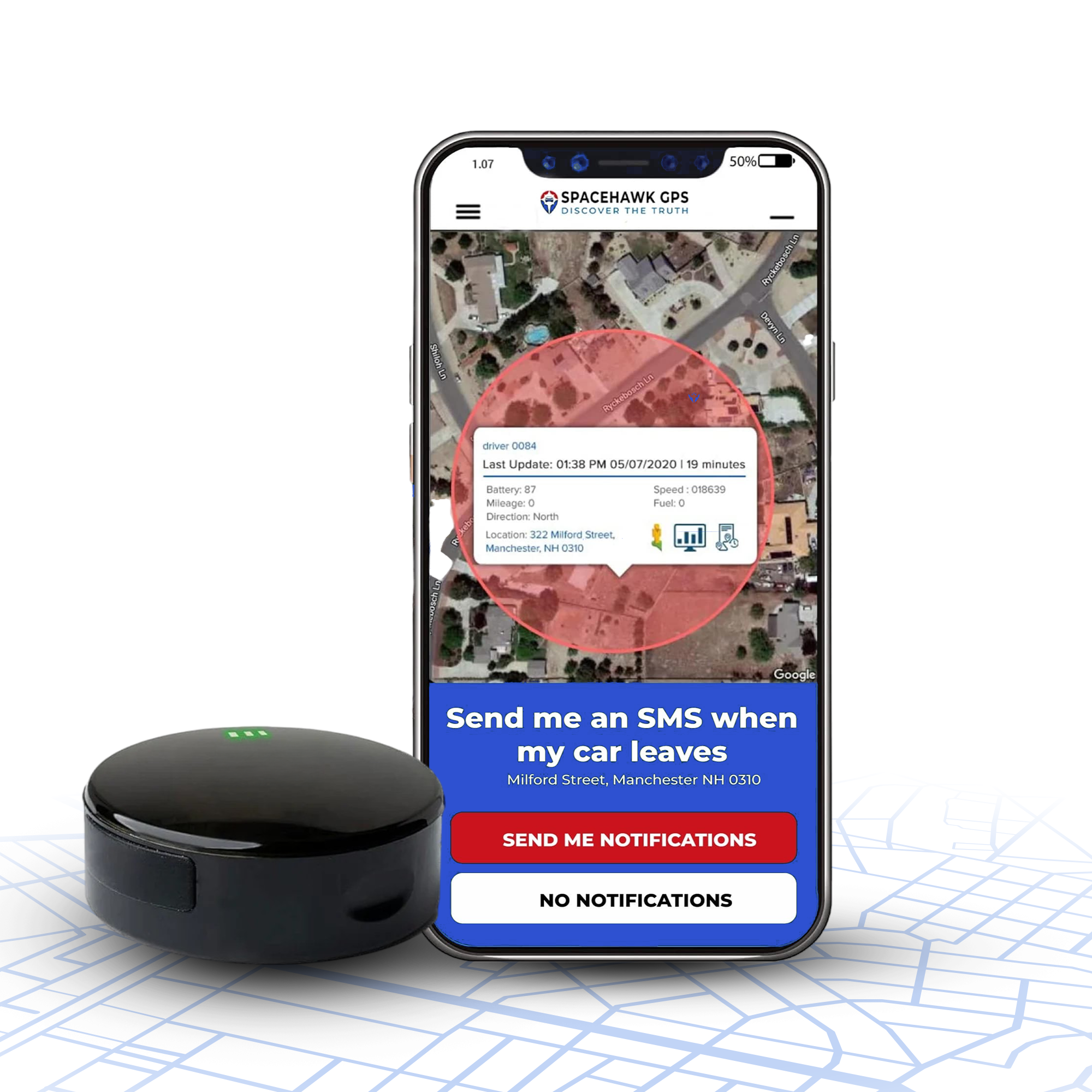
SpaceHawk updates location every 3 seconds with a waterproof magnetic mount.
-
03
BrickHouse Spark Nano 7 covers the United States, Canada and Mexico on one SIM.
-
04
Samsung SmartTag runs up to 500 days on a single battery.
-
05
SPOT Gen4 sends SOS alerts worldwide without any cell service needed.
Ready to find the right personal GPS tracker?
Magnetic, waterproof, three second updates, lifetime warranty and US based support.
Affiliate disclosure: This article contains Amazon affiliate links. As an Amazon Associate, GPS Tracker Shop LLC earns from qualifying purchases at no extra cost to you. The tracker ranked first is also sold in our own store.

Our pick for vehicles and assets
SpaceHawk GPS Tracker
Magnetic and waterproof, so it attaches to a vehicle or an asset in seconds with no wiring. Updates land every three seconds, accuracy sits around six feet, and there is a year of trip history.
The plan is $19.95 a month, or $9.95 on a two year prepay. Lifetime warranty with US based support.
This is the device we sell. For a person on foot, for keys, or for the backcountry, the picks below suit better.
Is your teenager taking a solo trip somewhere and you want to know they arrived safely? Maybe you have a child who gets lost, or a senior family member with dementia who wanders.
A personal GPS tracking device can close that gap. This article covers five of them. Each entry says plainly whether it is a real GPS tracker or a Bluetooth tag.
Tracking a person is different from tracking a thing
Every device here is small enough to slip into a bag unnoticed. Against a thief that is the point. Against a person it is a different question entirely.
- A child in your custody. Generally lawful, and it works far better when the child knows. A device found hidden gets left at home.
- An adult relative. Parental authority ends at eighteen. A senior with dementia is usually a conversation with family and a doctor, not a device fitted quietly.
- An employee. Track the company vehicle, not the person, put it in writing, and stop at the end of the shift.
- Anyone else. A tracker on another adult without their agreement can fall under state stalking statutes.
The 5 Best Personal GPS Trackers Compared
The Type column is the one to read first. A cellular tracker reports on its own from anywhere with signal. A Bluetooth tag depends on other people's phones. A satellite messenger works where neither has coverage.
| Device |

|

|

|

|

|
|---|---|---|---|---|---|
| Type | Cellular GPS | Cellular GPS | Bluetooth, not GPS | Bluetooth, not GPS | Satellite |
| Best for | Vehicles and assets | Travel across North America | Luggage and bags | Keys and phone finding | Off grid emergencies |
| Running cost | $19.95 a month | From $17.99 a month | None | None for the basics | Subscription required |
| Buy | Buy Now | Buy on Amazon | Buy on Amazon | Buy on Amazon | Buy on Amazon |
What Is A Personal GPS Tracker?
A personal GPS tracker works out its position from satellites. That position then goes over a cellular network to a server you can reach.
93,000
Active missing person records in the FBI's national database at the end of 2024, the most recent year published.
FBI National Crime Information Center, 2024 Missing and Unidentified Person Statistics.
That second half is why most of them carry a monthly fee. The satellites are free to use. The cellular data and the app behind it are not.
Here are the most common reasons people buy one:
A child who wanders
Parents of younger children, and families managing autism or another condition where leaving without warning is a real risk.
An older relative still driving
A tracker on the car answers whether they arrived, without anyone having to phone and ask.
A teenager with a license
Arrival alerts and trip history give you something specific to discuss, rather than a general worry.
Company vehicles
Fleet operators tracking vans and equipment, with drivers told in writing before anything is fitted.
Luggage and gear
A bag in an airport, a bike, a tool case. Often the cheapest problem on this list to solve.
Going off grid
Hikers and solo travellers who need an emergency signal where no cellular network reaches at all.
Top 5 Personal GPS Tracking Devices 2026
We have sold SpaceHawk to thousands of customers and fielded the support calls. We know that one inside out. Several units also sit in our own test collection. Every first party photo and clip below is ours rather than stock.
The other four made this list on published specifications, manufacturer documentation and public feedback. We have not field tested a SPOT Gen4 in the backcountry and we are not going to pretend otherwise.

1. SpaceHawk - Best Overall Personal GPS Tracker

Our own pick, so weigh it accordingly
SpaceHawk is a magnetic tracker with a waterproof housing. The magnet is the part that matters. Rivals like the Spark Nano 7 need a separate case to live outside on a vehicle.
Updates land every three seconds at the fastest setting and accuracy sits around six feet. You also get speed alerts, unlimited geofences, low battery warnings and a year of trip history.
Battery runs one to three weeks depending on the reporting interval, from three seconds up to three minutes. Free technical support runs for the life of the device, and the warranty is lifetime.
Best here for a vehicle or an asset you own. For a person on foot, or for keys, the picks below fit better.
View Key Features
- Powerful magnet mount, no wiring or case needed
- Waterproof housing for outdoor mounting
- Updates as fast as every three seconds
- Speed and unlimited geofence alerts, plus a year of history
- Lifetime warranty and free technical support for the life of the device
View Pros & Cons
Pros
- Three second updates
- Waterproof, no case needed
- Lifetime warranty
- A year of trip history
Cons
- Needs recharging
- A plan is required
- Small enough to misplace

2. BrickHouse Security Spark Nano 7 - Best For North American Travel

Best for crossing borders
The Spark Nano 7 runs on an international roaming SIM covering the United States, Canada and Mexico. If your travel crosses a border, that single feature is the reason to pick it.
An SOS panic button is built in. A child or a teenager can press it to fire an alert by text or email. Few trackers at this size include one.
Two things to budget for. The waterproof case is an accessory, so outdoor mounting costs extra. The plan starts at $17.99 a month.
A strong pick when the trip leaves the country. Add the case if it is going anywhere weather can reach.
View Key Features
- About 3.0 by 1.58 by 1.0 inches, 3.3 oz
- 4G coverage across the US, Canada and Mexico on a roaming SIM
- Up to 15 days of battery in sleep mode
- SOS panic button with text and email alerts
- Waterproof case with magnet mount sold as an accessory
View Pros & Cons
Pros
- Three country coverage
- SOS panic button
- Cancel any time
Cons
- Case costs extra
- Metal blocks the signal
- Depends on 4G coverage
3. Samsung SmartTag - Best Lightweight Tracker For Luggage

Bluetooth tag, not a GPS tracker
SmartTag is tiny at 1.7 inches square and 0.8 oz, and IP67 rated. Battery runs up to 500 days. In continuous tracking mode expect closer to ten days.
What it does not have is GPS or a cellular connection. Position comes from Samsung's SmartThings Find network, meaning other Galaxy phones that happen to pass nearby.
In a city that works well. In open country it does not work at all. Setting one up also needs a Samsung Galaxy device.
Excellent on a suitcase, where airports are full of phones. Wrong for a pet or a person.
View Key Features
- About 1.7 by 1.7 by 0.5 inches, 0.8 oz
- Up to 500 days of battery, around 10 days in continuous mode
- IP67 rated against dust and water
- Locates through the SmartThings Find network
- Requires a Samsung Galaxy device, and carries no subscription
View Pros & Cons
Pros
- No subscription at all
- Up to 500 day battery
- Very small and light
Cons
- No GPS, no cellular
- Needs a Galaxy phone
- Useless where nobody is
4. Tile Mate - Best Phone Finder And Locator For Keys

Bluetooth tag, not a GPS tracker
Tile Mate does one job extremely well. Double press the button and your phone rings, even on silent. For anyone who mislays a handset daily, that alone is worth the price.
The unit is about 35mm square and 7 grams, on a replaceable CR1632 coin cell. Tile rates that cell for around a year, not the three years some listings claim.
Range is the limit. Bluetooth reaches roughly 150 feet, and beyond that you are relying on the Tile community network to spot it. Tile is now owned by Life360.
Buy it for keys, a wallet or a phone. The tag cannot track a vehicle, a pet or a person, whatever a listing suggests.
View Key Features
- About 35mm square and 6.2mm thick, around 7 grams
- Replaceable CR1632 coin cell, good for about a year
- Bluetooth range of roughly 150 feet
- Double press to ring your phone, even on silent
- Splash resistant, and works with Alexa and Siri
View Pros & Cons
Pros
- Cheapest option here
- Rings a silenced phone
- Swappable battery
Cons
- About 150 feet of range
- No GPS, no cellular
- Battery lasts about a year
150 feet
Past that, a Bluetooth tag stops knowing where it is. Everything after that depends on a stranger's phone walking by.
This single distinction decides which of these five you should actually buy.
5. SPOT Gen4 Satellite Messenger - Best Personal GPS Global Coverage

The only one that works with no cell signal
Everything else here needs a cellular network or a nearby phone. The SPOT Gen4 uses the Globalstar satellite network instead, so it works where the others go silent.
The SOS button is the reason to own one. Press it and your GPS position goes to an international emergency coordination center, which contacts local rescue services.
Two limits worth knowing before you rely on it. The device is send only and cannot receive messages. Tracking intervals run from 2.5 minutes to 60.
Buy it for the SOS button, not for live tracking. Nothing else here can call for help off grid.
View Key Features
- 3.48 by 2.66 by 0.93 inches, 5 oz with lithium batteries
- Four AAA lithium cells, good for around 1,250 messages
- Tracking intervals of 2.5, 5, 10, 30 or 60 minutes
- IP68 rated against dust and water
- Send only, so it cannot receive replies
View Pros & Cons
Pros
- Works with no cell signal
- Genuine SOS button
- IP68 and rugged
Cons
- Cannot receive messages
- Slowest updates here
- Needs a clear sky view
Key Features Of Personal GPS Trackers
Not every tracker works the same way, and picking the right one matters more than picking the smallest. These are the five features that decide whether a device suits your situation.
Tracking a vehicle or an asset you own?
See the SpaceHawkReal-Time Location Tracking
This matters when you need to know where something is right now rather than where it was. A child walking home, a car on a route, a bag in transit.
Check the update interval, not just the phrase real time. Three seconds and five minutes are both sold under that label, and they are very different products.
Subscription Plans And Technical Support
Most cellular trackers carry a monthly fee, because the data and the platform cost money to run. Work out the twelve month total before you compare sticker prices.
Support matters more than buyers expect. A tracker that will not activate is worth nothing. Getting a human on the phone is the difference between a fix and a return.
SOS Buttons For Emergencies
An SOS button turns a tracker into a two way safety device. A senior can press it, a teenager can press it. The alert reaches you or a rescue service directly.
Only two devices here have one. The Spark Nano 7 alerts your own contacts. The SPOT Gen4 reaches an emergency coordination center anywhere on earth.
Magnet Mount And Compact Design
A magnet is the fastest mount there is, and on a vehicle it means no wiring and no bracket. Test the spot with a fridge magnet first, since plastic and aluminum hold nothing.
Smaller is not automatically better. A smaller device carries a smaller battery. The tiniest tracker on any page is rarely the one that runs longest.

Buy the shape of device the job needs. A tag for keys, a tracker for a car, a messenger for the backcountry.
Ryan Horban
Conclusion
Look at tracking features, battery life and the monthly plan together, then check coverage where you actually are. Good technical support is worth more than one extra feature.
Of the five, SpaceHawk is our pick for a vehicle or an asset. That is also the one we sell. If your problem is keys, a Tile costs a fraction of it. If your problem is the backcountry, only the SPOT Gen4 will call for help.
Not sure which of these fits
Tell us who or what you are tracking and where it goes. We will tell you which one suits, including when the answer is a device we do not sell.
Talk to usSources: Globalstar published specifications for SPOT Gen4. Tile support documentation on battery type and range. Samsung published specifications for SmartTag. FBI National Crime Information Center, 2024 Missing and Unidentified Person Statistics. Manufacturer specifications and current retail listings for each product named.
Frequently Asked Questions
Why Is GPS Personal Safety Important?
The FBI's National Crime Information Center recorded over 93,000 active missing person records at the end of 2024.
A tracker does not prevent any of that. What it changes is the first hour, because you can hand police a live location instead of a description.
How Can I Track My Elderly Loved One With GPS?
If they still drive, a tracker on the car is simplest and least intrusive. If they no longer drive, a small unit carried in a pocket or bag works. Pick one with an SOS button.
Have the conversation first. An adult relative is not a child. A device found hidden damages trust exactly when a family needs it most.
Does GPS Require Cell Service?
The GPS receiver does not. Working out a position from satellites is free and needs no network at all.
Reporting that position needs cell service. That is why most real time trackers carry a monthly fee. Typical plans run about $15 to $30.
Two exceptions on this page. A satellite messenger reports over satellite instead, and a Bluetooth tag reports through other people's phones.
How Long Does A Personal GPS Tracker Battery Last?
That depends almost entirely on the reporting interval, and every headline figure assumes the slowest setting.
SpaceHawk runs one to three weeks between charges, from three second updates up to three minute ones. Slow it down and you get closer to a month.
Most trackers drop into low power mode when the motion sensor says nothing has moved. That is where the long standby numbers come from.
Do I Have To Tell Someone I Am Tracking Them?
Tracking property you own is straightforward. Your car, your bag, your equipment is your business.
People are different. A parent tracking a minor in their own custody is generally lawful. Even so, it works better when the child knows.
For an employee, tell them in writing and track the vehicle rather than the person. For any other adult, tracking without agreement can fall under state stalking statutes.
Who Uses Personal GPS Safety Devices?
- Parents of a child walking to and from school
- Families managing a relative who wanders
- Parents of a newly licensed teenage driver
- Businesses running vehicles, with drivers told in writing
- Owners protecting a car, a bike or tools
- Hikers and solo travellers heading beyond cell coverage
About the Author

Frequently Asked Questions
Why Is GPS Personal Safety Important?
How Can I Track My Elderly Loved One With GPS?
Does GPS Require Cell Service?
How Long Does A Personal GPS Tracker Battery Last?
Do I Have To Tell Someone I Am Tracking Them?
Who Uses Personal GPS Safety Devices?
- Choosing a selection results in a full page refresh.
- Opens in a new window.
 Buy on Amazon