
Three Decades of GPS Tracking: Recovery Rates, Real Results & 2026 Updates

-
01
GPS became practical after accuracy improved in 2000.
-
02
Real-time tracking significantly increases vehicle recovery rates.
-
03
Modern trackers update faster and improve real-time response.
-
04
GPS technology is now accessible with simple plug-and-play devices.
-
05
Tracking cost is small compared to vehicle value and potential loss.
Three Decades of GPS Tracking: Vehicle Recovery Stats, Real Results & What Changed

GPS tracking has been publicly accessible for more than 30 years, and if you still think it's "new tech," we need to talk.
I'm Ryan Horban. I've spent over 15 years working hands-on with vehicle tracking systems — installing them, testing them, helping customers recover stolen cars, and watching this industry grow from clunky wired boxes to real-time tracking you can check from your phone in seconds.
Vehicle theft isn't slowing down. According to the National Insurance Crime Bureau, more than one million vehicles were stolen in the United States in 2022, marking a 7% increase over 2021 and the highest total since 2008.
In this guide, I'll break down how GPS tracking evolved since 1993, what changed after civilian accuracy improved in 2000, what recovery data shows, and what modern systems can actually do for you today.
Let's get into it.
When Did GPS Tracking Become Publicly Accessible?

GPS tracking became publicly accessible in 1993, when the satellite network reached full operational capability for civilian use. Accuracy improved dramatically in May 2000 after the U.S. government removed Selective Availability, reducing location error from roughly 100 meters to about 10–20 meters.
GPS tracking didn't start with delivery vans or vehicle tracker apps. The system began as a U.S. military navigation project in 1973. Public access came later, and that shift changed everything for asset tracking, fleet management, and equipment security.
I've had customers assume GPS tracking showed up in the 2010s. Not even close. Civilian access opened in the 1990s, and once accuracy improved in 2000, commercial GPS systems moved from experimental tech to practical tracking solutions. That turning point laid the foundation for modern GPS tracking devices, vehicle GPS systems, and today's real-time GPS trackers used across job sites and fleets.
If you're curious how real-time GPS trackers work, check out this article: How Real-Time GPS Trackers Work
Let me break down the timeline clearly.
GPS Origins (1973–1993)

The U.S. Department of Defense launched the GPS project in 1973. Over the next two decades, satellites were placed into orbit to form a global positioning network. By 1993, the system reached full operational capability with 24 active satellites.
Civilian users technically had access before 1993, but accuracy was intentionally limited. Location errors could reach as much as 100 meters. For navigation, that was acceptable. For asset security or equipment tracking, that level of error created real problems.
During this phase, GPS systems were mostly military or research tools. No one was installing a battery-powered GPS tracker on power equipment or heavy machinery yet. The commercial world had to wait.
Civilian Accuracy Improvement (2000)

May 2000 changed the industry.
The U.S. government removed Selective Availability, a policy that had reduced civilian GPS precision. Accuracy improved almost overnight — from roughly 100 meters down to about 10–20 meters under open sky conditions, according to the U.S. Department of State.
That upgrade unlocked real commercial use.
A GPS locator could now reliably pinpoint vehicles, tools and equipment, and even cold chain shipments with far greater confidence. Asset managers finally had usable positioning data. Early GPS asset tracking programs began gaining traction because tracking devices could now deliver dependable real-time location data instead of rough estimates.
Without that 2000 milestone, modern real-time GPS tracking simply wouldn't exist.
Commercial Vehicle Tracking Growth

Once accuracy improved, commercial adoption followed.
In the late 1990s and early 2000s, fleet tracking became the first major use case. Large delivery companies and logistics operators invested in wired GPS tracker units connected to 2G cellular networks. Updates came every 60 to 120 seconds, slow by today's standards, but revolutionary at the time.
Hardware wasn't cheap. Installation required wiring expertise. Monthly service plans carried enterprise-level pricing. Small contractors weren't buying GPS tool tracking systems yet.
Fleet management companies saw immediate value, though. Route monitoring reduced fuel waste. Equipment tracker units helped manage heavy machinery across job sites. Early asset trackers began appearing in construction and transportation sectors.
Over time, hardware shrank. Costs dropped. 4G GPS networks replaced 2G. Battery-powered tracker devices became common. Bluetooth integration added short-range tool locator options inside warehouses.
That commercial expansion set the stage for today's low-cost GPS asset tracking, equipment management systems, vehicle GPS tracking, cold chain monitoring, and global coverage tracking solutions used worldwide.
And that growth story is only getting started.
Vehicle Theft Over the Past 30 Years

Vehicle theft hasn't disappeared with better alarms or smarter keys. GPS tracking grew because theft never stopped, it shifted. The 2022 NICB numbers cited above were among the highest totals in decades, and I've watched theft patterns change over the years. Older models used to be easy targets. Now push-to-start systems and keyless entry get exploited just as fast.
Vehicle values increased. Power equipment and tools became more expensive. Heavy machinery at job sites became attractive targets. Criminals adapted, and so did tracking solutions.
Without proper asset security, recovery often depends on luck.
If you don't want to depend on luck, read this guide to learn how to recover your assets faster: What Is GPS Asset Tracking? Prevent Loss & Track in Real Time
Let's look at what happens when no GPS tracker or vehicle tracker is installed.
Recovery Rates Without GPS Tracking

Without a tracking device, recovery depends almost entirely on police reports, license plate scans, and chance sightings: no live location data, no alerts, no geofence trigger to work from. That gap matters most for tools and equipment, which don't have anything like a VIN system behind them: a stolen skid steer or a truckload of power tools has none of the reporting infrastructure that helps track down a car, so recovery odds are far worse than they are for vehicles.
Time works against you. The first few hours are critical. Once a vehicle crosses state lines or gets stripped for parts, recovery chances drop sharply. I've had customers call me the morning after a theft, and by that point the vehicle could already be inside a shipping container.
Traditional methods rely on police reports, license plate scans, and chance sightings. No real-time location data. No alerts. No geofence trigger. Just paperwork and waiting.
For tools and equipment, the numbers look worse. Power tools and equipment stolen from job sites often vanish completely because they lack dedicated tracking devices.
That gap between theft and detection creates the real problem.
Vehicle Recovery Rates With GPS Tracking

Add an active GPS tracker — especially a real-time tracker running on a 4G network — and recovery outcomes change dramatically.
Industry and insurance data back this up. The National Insurance Crime Bureau identifies tracking devices as one of the most effective tools for helping authorities recover a stolen vehicle, and its latest theft trends report found more than 85% of reported stolen vehicles are eventually recovered, with 34% recovered the same day. I've seen similar patterns in my own work with fleet tracking and GPS asset tracking systems — the vehicles that come back fastest are almost always the ones sending live location data.
The reason is simple: immediate location data.
A vehicle GPS doesn't wait for someone to notice something missing. A properly configured tracking solution sends alerts the moment movement begins. Asset trackers mounted on heavy machinery or battery-powered equipment start transmitting location updates instantly.
Speed shifts the odds.
Faster Recovery Time

Without tracking devices, recovery may take days, if it happens at all.
With real-time GPS systems, recovery often happens within hours.
Modern GPS tracking devices use geofence alerts, ignition triggers, and real-time location updates every few seconds. An asset manager can log in, see movement outside an approved zone, and contact law enforcement immediately.
That time difference changes everything.
Instead of filing a report and hoping, you provide coordinates. Instead of guessing direction, officers follow live updates. Instead of losing a vehicle across state lines, you intercept it before resale or dismantling.
Even Bluetooth-based tracker integration adds short-range tool-locator capability inside warehouses or job sites, helping recover smaller stolen assets before they disappear.
Real-World Example
Portland, Oregon: A Portland man who had his BMW stolen outside his apartment in the Pearl District said a GPS tracking device helped him find his car before police could. Jonah Herman woke up one morning and couldn't find his keys, he believes someone snatched them the day before while he was heading into his building.
Source: KGW News, Portland
Burbank, California: A man and woman suspected of stealing thousands of dollars' worth of perfume in a smash-and-grab burglary at a Burbank beauty store were captured with the help of GPS tracking devices.
Source: CBS News Los Angeles
Then vs Now: What Changed in 30 Years?

GPS tracking from the late 1990s barely resembles what you can install today. I've worked with early wired GPS tracker units that required hours under a dashboard, and I've installed modern real-time GPS trackers in under five minutes.
Back then, updates came slowly. Accuracy drifted. Software felt clunky. Today, GPS systems deliver real-time location, push alerts, and global coverage from a phone in your pocket.
Here's a clear side-by-side breakdown.
Technology Comparison: 1990s vs 2026
| Feature | Late 1990s / Early 2000s | 2026 Modern GPS Systems |
|---|---|---|
| Network | 2G cellular | 4G LTE / 5G |
| Update Speed | 60–120 seconds | 3–10 seconds (real-time) |
| Accuracy | 50–100 meters | 2–5 meters (multi-GNSS) |
| Installation | Hardwired only | OBD plug-and-play, magnetic battery-powered |
| Software | Desktop portals | Smartphone apps + push alerts |
| Asset Coverage | Fleet vehicles | Vehicles, tools, power equipment, heavy machinery, cold chain |
Now let me explain what those changes really mean for you.
Network Technology

Early GPS tracking relied on 2G cellular networks. Coverage gaps were common. Data transmission was slow. Updates every 60 to 120 seconds were considered impressive.
Today's 4G and emerging 5G networks allow real-time GPS tracking with updates every 3 to 10 seconds. That speed difference determines whether you recover a vehicle at the next intersection or lose sight of it across town.
For fleet management, faster updates improve route monitoring. For equipment tracking on job sites, immediate alerts reduce unauthorized movement. For cold chain monitoring, constant data flow protects temperature-sensitive cargo.
Speed now supports serious asset security.
Location Accuracy

Early civilian GPS accuracy ranged between 50 and 100 meters. In dense areas, location pins often jumped around the map.
Modern GPS systems use multi-GNSS support, combining GPS, GLONASS, and Galileo satellite networks. That layered satellite coverage improves precision down to roughly 2 to 5 meters under clear conditions.
For vehicle GPS tracking, that level of accuracy pinpoints exact parking spots. For GPS tool tracking and asset trackers attached to power tools or heavy machinery, precise location reduces search time inside large job sites or industrial yards.
When you're managing tools and equipment across multiple locations, precision saves hours.
Hardware Evolution

Let me be blunt: early hardware was bulky.
A wired GPS tracker required professional installation. Accessing vehicle wiring harnesses took time. Removing the unit meant more labor. Not exactly low-cost or convenient.
Now you have options.
- OBD plug-and-play vehicle tracker units
- Magnetic battery-powered tracker devices
- Compact equipment tracker units designed for harsh environments
- GPS asset tracking units built for heavy machinery
- Bluetooth-powered tool locator devices for short-range tracking
Installation now takes minutes, not hours. That shift opened GPS tracking to small contractors, asset managers, and everyday vehicle owners.
If you're curious about the different types of GPS trackers, check out this link: Types of GPS Trackers: OBD, Magnetic, Hardwired & More
Accessibility expanded the entire market.
Software & Mobile Apps

Twenty years ago, you logged into a desktop portal. That was your tracking solution.
Today, real-time GPS systems send push alerts directly to your phone: movement alerts, geofence exits, ignition triggers, route playback, historical reports.
Fleet tracking dashboards provide route history, idle time reports, and equipment management tools. Asset tracking platforms show real-time location for tools and equipment across multiple job sites. Cold chain systems monitor transport conditions across global coverage zones.
You don't wait for reports anymore. You see live data.
After working with these systems for over 15 years, I can tell you software improvements changed adoption more than anything else. When access became simple, usage skyrocketed.
That transformation from slow, wired GPS systems to fast, mobile-controlled tracking devices defines the last 30 years.
And the next section shows how that evolution changed asset management entirely.
How GPS Tracking Changed Asset Management

GPS tracking started as theft recovery. Today, asset tracking drives operations.
Over the last 15 years, I've watched companies install a GPS tracker after one bad theft, then slowly expand into full GPS asset tracking across vehicles, power equipment, heavy machinery, and even cold chain monitoring. Once you see real-time location data, you don't go back to blind management.
Modern GPS systems now support:
- Equipment tracking across multiple job sites
- Fleet tracking with driver analytics
- Asset security for high-value tools and equipment
- Global coverage monitoring for logistics
The shift moved from "Where is my stolen truck?" to "How do I run my business better?"
Let's break that down by sector.
Fleet Management

Fleet management changed the fastest.
Before GPS tracking, dispatch depended on driver calls and rough ETAs. Now, a fleet manager opens a dashboard and sees every vehicle's GPS location in real time.
Operational gains usually come from small improvements:
- Route optimization reduces unnecessary mileage
- Fuel tracking identifies excessive idle time
- Driver behavior monitoring flags speeding and harsh braking
- Maintenance scheduling improves using mileage data
I've personally seen fleets cut fuel expenses by double digits after analyzing idle reports alone. Ten to fifteen percent savings isn't rare when real-time GPS tracking replaces guesswork.
When updates refresh every few seconds over a 4G network, decisions happen faster. That speed translates into cost control.
And cost control builds long-term business value.
If you're serious about fleet management, head to this link and grab the GPS tracker that fits your setup: How to Choose the Right GPS Tracker for Fleet (2026)
Rental & Logistics

Rental companies worry less about fuel and more about control.
Unauthorized use used to go unnoticed for hours. Now:
- Geofence alerts notify when a vehicle leaves approved zones
- Cross-border movement triggers instant notifications
- Real-time GPS tracking shows exact travel routes
Logistics companies rely heavily on equipment management and tracking solutions that combine vehicle GPS data with shipment oversight. Cold chain systems track both location and temperature, reducing spoilage risk.
For asset managers, control equals accountability.
And accountability builds trust, especially when customers depend on delivery timelines.
Personal Vehicle Protection

On the personal side, GPS tracking feels different.
Business owners look at data. Drivers look for reassurance.
Modern real-time GPS trackers send:
- Instant movement alerts
- Ignition notifications
- Route playback history
- Live map location updates
I've had customers call me laughing with relief after recovering a vehicle within hours. One guy told me he tracked his stolen SUV straight to a parking garage and handed police the coordinates. No waiting. No guessing.
Battery-powered tracker devices made installation simple for everyday drivers. A wired GPS tracker still works great for permanent setups, but plug-and-play options lowered the barrier.
Bluetooth-powered tool locator systems also help inside warehouses or large garages where GPS signals struggle. Short-range Bluetooth tracking fills that gap.
Asset security no longer belongs only to big fleets.
From GPS tool tracking on job sites to fleet tracking across states, the last 30 years shifted control back to the owner.
And once you experience that level of visibility, operating without GPS systems feels outdated.
Why GPS Tracking Is More Effective in 2026

GPS tracking today performs on a completely different level compared to early systems. I've installed wired GPS tracker units from the early 2000s that updated once every minute, and back then, that felt advanced. Today, real-time GPS trackers refresh every few seconds, store data in the cloud, and send alerts instantly to your phone.
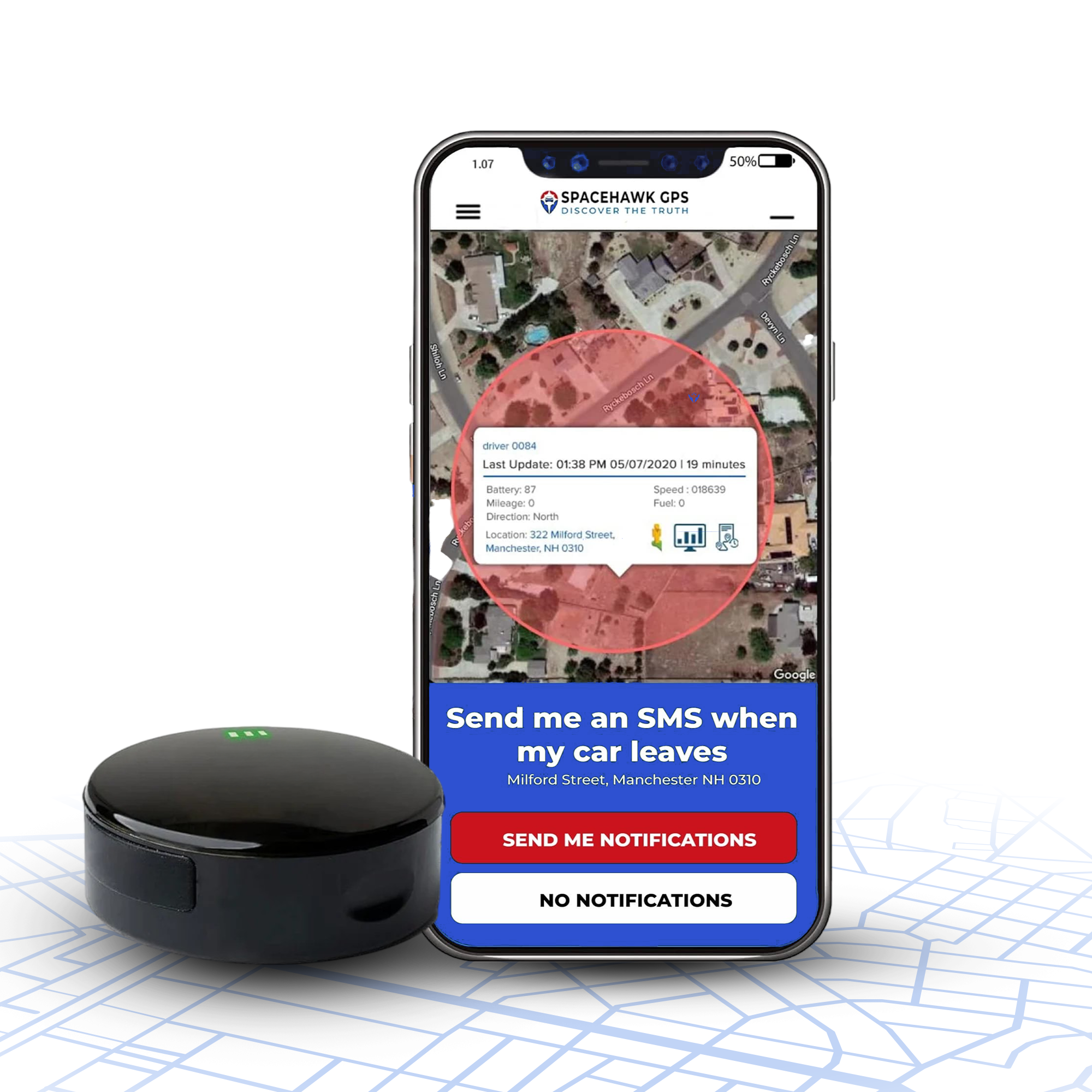
Both our SpaceHawk and Konnect OBD2 GPS trackers are built around that same real-time approach.
Speed improved. Accuracy improved. Coverage expanded. Cost dropped.
Modern GPS systems combine 4G connectivity, cloud storage, real-time location updates, and smarter tracking devices that work across vehicles, heavy machinery, tools and equipment, and even cold chain shipments. You don't log in hoping for data anymore. You see movement as it happens.
That difference changes how you protect assets.
Real-Time Alerts

The biggest upgrade? Alerts that fire immediately.
Modern GPS tracking devices send:
- Movement alerts the second a vehicle starts rolling
- Ignition notifications when the engine turns on
- Geofence alerts when assets leave approved zones
- Tamper notifications if someone tries to disable hardware
Push notifications hit your phone within seconds. No delay. No checking dashboards manually.
With real-time GPS tracking, response time shrinks dramatically. An asset manager overseeing equipment tracking at job sites sees unauthorized movement instantly. A fleet management team tracks vehicles in motion across state lines. A personal vehicle owner receives an alert before the car reaches the next highway exit.
That speed often determines recovery success.
Bluetooth-powered tracking devices also add short-range detection for indoor spaces where satellite signals weaken. GPS handles wide-area tracking. Bluetooth fills the tight-space gap.
Layered systems improve control.
Cost & Accessibility
Early GPS tracking wasn't built for small businesses or everyday drivers.
Twenty years ago, enterprise-level GPS systems required expensive hardware, professional installation, and long-term service contracts. Fleet tracking made sense for large companies, but small contractors couldn't justify the price.
That changed.
Today you'll find:
- Low-cost monthly plans
- Battery-powered GPS asset tracking devices
- Plug-and-play vehicle tracker units
- Affordable equipment tracker solutions
- Scalable tracking solution packages for fleets
You no longer need a massive fleet to justify GPS asset tracking. A small construction team protecting power equipment can deploy GPS tool tracking systems at a fraction of the early pricing. A single vehicle owner can install a real-time GPS tracker without professional wiring.
Affordability expanded adoption.
And once cost stopped being the barrier, GPS tracking moved from "enterprise tool" to standard asset security technology.
That shift explains why today's systems outperform early versions, not just technically, but practically.
Is GPS Tracking Worth It Today?
Yes, especially when vehicle theft remains high and replacement costs keep rising. A modern GPS tracker costs less per month than most people spend on coffee, yet the vehicle sitting in your driveway may be worth $30,000, $50,000, or more.
I've seen theft reports spike in certain cities year after year. Technology inside vehicles improved, but criminals adapted. The question isn't whether GPS tracking works. The real question is whether the cost of not having it makes sense for you.
Let's break that down clearly.
Cost vs Vehicle Loss

Look at the numbers.
Now compare that to losing a vehicle completely.
The National Insurance Crime Bureau reports that more than 85% of stolen vehicles are eventually recovered nationwide, with 34% recovered the same day and 45% within two days. NICB names tracking devices as one of the most effective tools for making that early window count. The gap between a same-day recovery and a vehicle that's already crossed state lines or been stripped for parts represents tens of thousands of dollars.
And theft doesn't only target vehicles. Power equipment, heavy machinery, and tools at job sites all attract attention. A single stolen skid steer or equipment trailer can wipe out months of profit.
A battery-powered GPS asset tracking device hidden inside equipment costs far less than replacing stolen gear.
Simple math usually makes the decision easier.
Fleet ROI

For fleet management, the return goes beyond theft recovery.
GPS systems create measurable savings through:
- Reduced fuel waste from excessive idling
- Route optimization that cuts unnecessary mileage
- Driver behavior monitoring that lowers accident risk
- Misuse reduction during off-hours
- Potential insurance discounts
I've worked with companies that installed fleet tracking purely for asset security. Within months, they realized fuel reports alone justified the investment.
When multiple vehicle GPS units operate under one tracking solution, even small efficiency gains multiply quickly.
For contractors managing equipment tracking across job sites, GPS tool tracking reduces downtime searching for misplaced tools. For logistics companies running cold chain monitoring, real-time GPS updates protect high-value cargo.
Whether you manage one vehicle or fifty, the equation stays consistent.
A low monthly cost protects high-value assets and improves operational control.
From my experience, once someone installs a proper GPS tracker, they don't remove it.
Final Perspective on 30+ Years of GPS Tracking

GPS tracking didn't appear overnight. Public access began in 1993. Accuracy improved in 2000. Since then, the technology evolved from slow wired units into real-time GPS systems that monitor vehicles, tools and equipment, heavy machinery, and entire fleets across global coverage zones.
I've worked with GPS systems long enough to see every phase: bulky hardware, 2G updates, expensive enterprise contracts. Today, you can install a battery-powered tracker device in minutes and monitor real-time location from your phone. Recovery rates improved. Update speeds increased. Costs dropped. Adoption expanded.
Vehicle theft still exists. Asset loss still happens. The difference now is visibility.
Whether you need a vehicle tracker, GPS asset tracking for equipment management, fleet tracking for business operations, or a low-cost real-time GPS solution for personal protection, modern GPS systems give you control that simply didn't exist three decades ago.
If you're ready to protect what you own, explore our range of GPS trackers built for vehicles, tools, power equipment, and fleets.
Frequently Asked Questions
How long has GPS tracking been public?
GPS tracking became publicly accessible in 1993, when the satellite network reached full operational capability. Civilian accuracy improved significantly in May 2000 after the removal of Selective Availability, reducing location error from roughly 100 meters to about 10–20 meters.
What is the recovery rate with GPS?
According to the National Insurance Crime Bureau (NICB), more than 85% of stolen vehicles are eventually recovered nationwide, with 34% recovered the same day and 45% within two days. NICB specifically names tracking devices as one of the most effective tools for helping authorities recover a stolen vehicle quickly, since they provide live location data instead of relying on police reports and chance sightings.
How accurate are modern trackers?
Modern GPS tracking devices typically achieve 2–5 meter accuracy under clear sky conditions. Multi-GNSS support, combining GPS, GLONASS, and Galileo satellites, improves precision and stability in urban and open environments.
Is GPS tracking legal?
GPS tracking is legal when used on vehicles or assets you own. Laws vary by region when tracking vehicles driven by others, so consent requirements should always be reviewed locally.
- Choosing a selection results in a full page refresh.
- Opens in a new window.
 Buy on Amazon