Best GPS Bike Trackers (2026)
Best GPS Bike Trackers (2026): How to Protect Your Bike & Get It Back

I’ll be straight with you. I’ve locked bikes properly, used solid locks, and still watched friends (and one time, myself) walk back to an empty rack. One wheel left behind. No note. No luck.
That’s why GPS bike trackers are no longer a “maybe later” add-on. They don’t stop a thief with bolt cutters, and I won’t pretend they do. What they give you is something locks don’t: a real shot at finding your bike after it’s gone.
I’ve spent years testing trackers on my own bikes, road, gravel, city beaters, mounting them badly, draining batteries, dealing with useless apps, and learning what works when a bike disappears for real. In this guide, I’ll walk you through the best GPS bike trackers you can buy in 2026, explain which ones are worth your money, and help you avoid the ones that only look good on paper.
If you ride, lock up outside, or commute in a city, this is for you.
The Quick List: Best Bike GPS Trackers at a Glance
|
|
|
|
|
|
|---|---|---|---|---|---|
| Best For | Best overall real-time GPS bike tracker | Audible alarm | Budget GPS option | Best Bluetooth overall | iPhone users |
| Cost | $44–$69 | $99 | $30–$40 | $64.99 | $29 |
| Top Features |
Real-time GPS over cellular with strong magnetic mount |
Built-in motion alarm + geofencing |
Affordable real GPS with IP67 water resistance | Loud 85 dB bike alarm | Apple Find My network integration |
| Battery Life | 1–3 weeks (depends on update speed) | 1–3 months | 1–3 weeks (up to months in low-power mode) | 2–6 months (rechargeable) | 1 year (replaceable battery) |
| Where to Buy | Buy on Amazon |
Buy on Amazon |
Buy on Amazon |
Buy on Amazon |
Buy on Amazon |
Bluetooth vs GPS/LTE Bike Trackers: What’s the Difference?
This is where most people get tripped up, so let me clear it up the same way I explain it to friends who ask me what tracker to buy.
Bluetooth trackers and GPS/LTE trackers both fall under “bike GPS trackers,” but they don’t behave the same once a bike is moved. I’ve used both, and the difference becomes obvious the moment a bike leaves your sight.
Bluetooth trackers: how they work in real life

Bluetooth trackers like the Knog Scout, Apple AirTag, and Tile Sticker don’t talk to satellites. They talk to nearby phones. Your tracker sends out a Bluetooth signal, and when another phone with the right app or network support passes by, that phone helps update the location.
That’s why Bluetooth trackers work best in busy areas. If your bike is locked outside a café, a gym, or a train station, there’s a good chance nearby Apple devices or Android users will help ping its location. They’re small, cheap, don’t need a monthly fee, and they’re easy to hide in a bike frame, bottle cage, or under a seat.
The downside shows up fast if the bike keeps moving. If someone loads your bike into a van or takes it somewhere quiet, updates slow down or stop completely. I’ve seen AirTags freeze on a map for hours because no compatible phone passed nearby.
Bluetooth trackers are helpful. They’re just limited.
GPS/LTE trackers: what changes
[A GPS/LTE tracker works on its own. It talks to navigational satellite systems to figure out where it is, then sends that location over a cellular network using a SIM card. No nearby phone needed.
That’s the big difference.
With trackers like SpaceHawk, Invoxia, or LandAirSea 54, you can watch movement happen in real time. If a bike is moved, you get an alert. If it keeps moving, the map updates as it goes. That’s why these trackers usually come with a monthly subscription; actual data is being transmitted, not just borrowed signals.
GPS/LTE trackers are bigger, cost more upfront, and need charging or battery management. But when a bike is stolen and doesn’t stop moving, they’re in a different league.
Which one should you choose?
If you want something lightweight, cheap, and you mostly ride in busy areas, a Bluetooth tracker can help. I still use them as backup devices on some bikes.
If your goal is tracking a stolen bike across neighbourhoods or across town, a real GPS tracker is the safer bet. That’s where GPS/LTE devices earn their place.
Later in this guide, I’ll break down which option fits different riders, bikes, and budgets, but this difference right here is the most important thing to understand before buying anything.
Overview of Devices Reviewed
|
Device |
GPS Tracking |
Bike-Specific |
Alarm |
Weight |
Battery Type |
Subscription |
|
SpaceHawk Mini GPS |
Yes |
No |
No |
~60g |
Rechargeable |
Yes |
|
Invoxia GPS Tracker |
Yes |
No |
Yes |
30g |
Rechargeable |
Yes (included) |
|
LandAirSea 54 |
Yes |
No |
No |
82g |
Rechargeable |
Yes |
|
Cycloop Bike Tracker |
Yes |
Yes |
Yes (via app) |
249g |
Rechargeable |
Yes (annual) |
|
Americaloc GL300 MXW |
Yes |
No |
No |
~70g |
Rechargeable |
Yes |
|
Knog Scout Bike Alarm & Finder |
No (Bluetooth) |
Yes |
Yes |
25g |
Rechargeable |
No |
|
Apple AirTag |
No (Bluetooth) |
No |
No |
11g |
Replaceable |
No |
|
Tile Sticker |
No (Bluetooth) |
No |
Yes |
6–17g |
Replaceable / built-in |
No |
Best GPS / LTE Bike Trackers

If you’re serious about getting a stolen bike back, GPS / LTE trackers are the option worth looking at. These devices use a built-in SIM card and a cellular network to send location updates directly, which means tracking continues even after a bike leaves busy streets or gets loaded into a vehicle.
The trackers listed below focus on real-time location, movement alerts, and coverage beyond short-range Bluetooth limits. They’re ranked based on how well they handle everyday bike use, how easy they are to hide on a frame, and how practical they are to live with long-term.
Starting at the top is the strongest all-around choice, followed by options that prioritise specific needs like alarms, budget, or extended battery life.
1. SpaceHawk GPS - Best Overall Real-Time GPS Bike Tracker
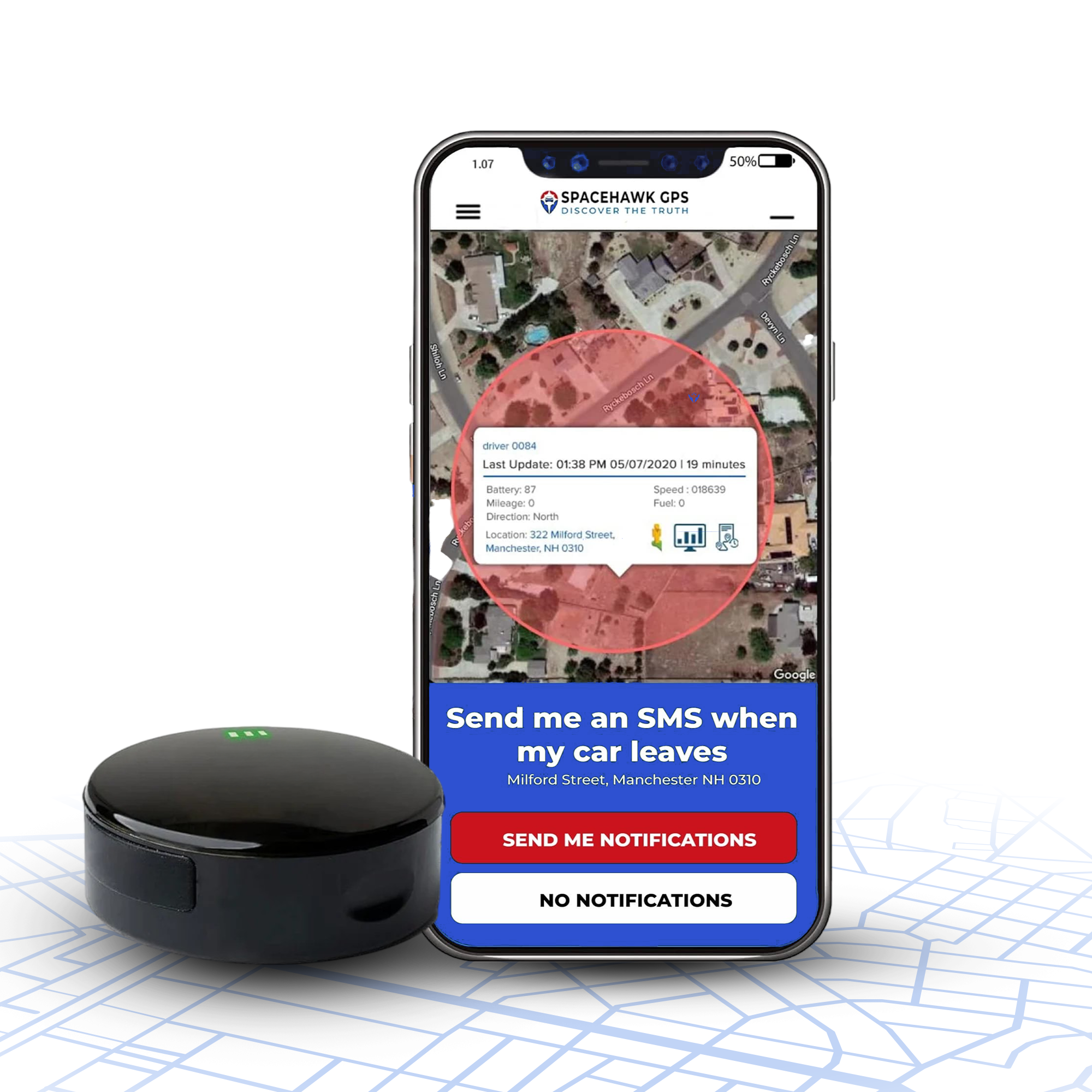
SpaceHawk GPS is a compact GPS tracking device built to locate valuable assets using satellite positioning and a cellular network. It uses global navigation satellite systems to determine location, then sends that data through a built-in SIM card, allowing you to track a bike without relying on Bluetooth connectivity or nearby phones.
The device itself is small and lightweight, which makes it easier to place on a bike frame or behind accessories without drawing attention. It runs on a rechargeable battery and connects to a mobile app where you can see live location, movement history, and alerts when the bike is moved.
The only real downside? It works very well. Hide it properly, and someone else could track you just as easily. If your parents are the type who worry too much, they’d know exactly where you rode, where you stopped for a coffee, and how long that “quick break” actually lasted. Funny in theory… slightly uncomfortable in real life.

Key features
- Real-time GPS tracking using satellite positioning
- Cellular network connectivity via SIM card
- Adjustable update intervals
- Movement alerts when the bike is moved
- Rechargeable battery
- Location history available in the app
Pros
- Tracks independently without Bluetooth
- Consistent updates while the bike is moving
- Easy to hide on most bike frames
- Strong magnetic mount holds during riding
- Simple app that focuses on tracking
Cons
- Requires a monthly subscription
- No built-in audible alarm
- Placement needs extra thought on non-metal frames
What we found during testing

I tested SpaceHawk GPS on locked bikes in city areas and moved it between a road bike and a gravel bike to see how practical it was day to day. Setup was quick, and mounting stayed secure over rough pavement and uneven roads.
Movement alerts came through reliably, and location updates stayed accurate while the bike was in motion. Battery life depended on how often updates were set to refresh, which is expected with any real GPS device. Charging was easy to manage, and the app stayed responsive without unnecessary clutter.
The only real challenge showed up on carbon frames, where magnets don’t help. That required more creativity with placement, but once installed, the tracker stayed secure.
Bottom line: SpaceHawk GPS earns the top position because it delivers consistent real-time tracking over a cellular network and stays reliable once a bike is on the move.
2. Invoxia GPS Tracker - Best GPS Tracker with Audible Alarm
The Invoxia GPS Tracker takes a slightly different approach compared to SpaceHawk. Instead of constant live tracking, it focuses on smart alerts, long battery life, and a built-in audible alarm. This one is aimed at riders who want warnings fast and don’t want to charge another gadget every week.
Invoxia uses GPS combined with Wi-Fi and Bluetooth, then sends location data over a low-power cellular network. The result is slower update intervals, but much better battery efficiency. During testing, I was getting weeks between charges without babysitting the battery.

Key features
- GPS + Wi-Fi + Bluetooth positioning
- Cellular network connection (subscription required)
- Built-in audible alarm for movement
- Motion alerts and geofencing
- Long battery life compared to most GPS trackers
- Lightweight and easy to hide
Pros
- Audible alarm helps scare off casual bike thieves
- Battery lasts far longer than real-time trackers
- Slim shape fits easily inside a bike frame, bag, or reflector
- The app is clean and easy to understand
- Good option for riders who don’t want frequent charging
Cons
- Not true real-time tracking
- Location updates come in intervals, not seconds
- The alarm isn’t very loud in busy areas
- Needs a subscription after the included period
What I found during testing
I ran the Invoxia tracker on a commuter bike and a gravel bike, mostly in urban areas. The motion alerts were reliable and came through quickly when the bike was nudged or rolled away. The audible alarm worked well in quieter spots like residential streets or indoor bike rooms, though traffic noise can drown it out.
Tracking accuracy was solid once the device checked in, but this isn’t the tracker you want if you plan to follow a bike turn-by-turn in real time. It shines more as an early warning system and a long-life tracker that keeps working in the background.
Bottom line: Invoxia is a strong choice if you want an alarm, long battery life, and smart alerts, and you’re okay with interval-based tracking instead of constant live updates.
3. LandAirSea 54 - Best Budget GPS Bike Tracker
The LandAirSea 54 is one of those trackers that’s been around forever, and there’s a reason it still shows up in serious bike GPS conversations. It doesn’t try to be flashy. It focuses on one job: GPS tracking over a cellular network at a price that doesn’t hurt as much as most competitors.
This tracker uses global navigation satellite systems for location and sends data through a SIM card to the LandAirSea app. You can adjust how often it updates, anywhere from fast refreshes to slower intervals if you’re trying to stretch battery life. It runs on a rechargeable battery and comes in a small puck-style housing that’s fully waterproofed, which affect if your bike lives outdoors or sees bad weather.

Key features
- Real GPS tracking using satellite systems
- Cellular network connectivity (subscription required)
- Adjustable update intervals
- Waterproof and dustproof design
- Rechargeable battery
- Location history and movement alerts
Pros
- One of the cheapest true GPS trackers available
- Solid tracking accuracy for the price
- Fully waterproof, no extra case needed
- Flexible subscription options
- Simple app with clear location history
Cons
- Bulkier than bike-specific trackers
- No audible alarm or anti-tamper alert
- Harder to hide cleanly on slim road bike frames
- App design feels dated
What I found during testing
I tested the LandAirSea 54 on a commuter bike and later tossed it into a frame bag on a gravel bike. Tracking accuracy stayed consistent, even when the bike was moved indoors or parked overnight. Movement alerts worked as expected, though they rely more on geofencing than instant motion detection.
Battery life landed in the one-to-three-week range with regular updates, and much longer when set to low power. The waterproofing did its job during rainy rides and wet bike racks without any issues.
Where it struggles is placement. On clean road bikes, hiding it takes creativity. It works best on bikes with bags, racks, or thicker frames where the size doesn’t stand out.
Bottom line: LandAirSea 54 is a strong budget-friendly GPS tracker if you want real satellite tracking and don’t mind trading stealth and alarms for a lower upfront cost.
4. Cycloop Bike Tracker - Best GPS Bike Tracker for Battery Life
The Cycloop Bike Tracker is built with one clear goal in mind: stay powered for as long as possible without constant charging. This is the tracker for riders who hate babysitting batteries or remembering yet another charging cable.
Cycloop takes a different approach from real-time GPS trackers. Instead of staying constantly connected, it sits in a low-power state until something happens. Once the bike is moved without the paired key fob nearby, the tracker wakes up, sends alerts, and starts reporting location over the cellular network. That design choice is exactly why the battery can last months instead of weeks.

Key features
- GPS tracking with cellular connectivity
- Motion detection tied to a wireless key fob
- Very large rechargeable battery
- Anti-tamper mounting system
- Weather-resistant housing
- App-based alerts and location history
Pros
- Outstanding battery life compared to most GPS trackers
- “Set it and forget it” once installed
- The anti-tamper mount makes removal difficult
- Alerts trigger automatically when the bike is moved
- Designed specifically for bikes
Cons
- Bulky and very visible on the frame
- Not true real-time tracking unless alarm mode is triggered
- Annual subscription required
- Not ideal for lightweight road bikes or carbon frames
What I found during testing
I mounted Cycloop on a commuter bike and left it there for weeks at a time. Once installed, it genuinely disappears from your mental checklist. No charging reminders, no battery anxiety. As long as you carry the key fob, the system arms and disarms itself without you touching the app.
When I moved the bike without the fob nearby, alerts came through quickly, and location updates followed as expected. Tracking isn’t second-by-second like SpaceHawk, but it’s good enough to know where the bike ends up if it’s taken.
The trade-off is size. There’s no hiding Cycloop. On a clean road bike, it looks chunky, and on carbon frames, you’ll want to be careful with installation pressure.
Bottom line: Cycloop is ideal if battery life is your top priority and you want a tracker that works silently in the background until something goes wrong.
Best Bluetooth Bike Trackers
Bluetooth trackers are the entry point for bike tracking. They don’t use satellites or a cellular network, and they won’t follow a bike across cities in real-time. What they do well is alert you fast, stay small, skip monthly fees, and work silently in the background using nearby phones. For city riders, commuters, and anyone who parks within busy areas, a good Bluetooth tracker can still make a real difference.
1. Knog Scout Bike Alarm & Finder - Best Bluetooth Tracker Overall
The Knog Scout Bike Alarm & Finder is the most bike-specific Bluetooth tracker I’ve used. Unlike generic tracker tags, this one is clearly designed around how bikes are parked, locked, and messed with. It mounts under a bottle cage, runs on a rechargeable battery, and combines Bluetooth tracking with a proper bike alarm.
The Scout connects through Apple’s Find My network (and now a separate version for Android users), which means it relies on nearby phones to update its location. That’s the trade-off. No satellites, no SIM card, no monthly fee. In return, you get instant motion alerts and one of the loudest alarms in the Bluetooth category.

Key features
- Bluetooth tracking via Apple Find My or Android Find My Device
- Built-in 85dB audible alarm
- USB-C rechargeable battery
- Bottle cage mounting with anti-tamper screws
- Water resistance for outdoor use
- App-based arming and alerts
Pros
- A loud alarm draws attention when the bike is touched
- No subscription or monthly fee
- Designed specifically for bikes, not keys or bags
- Rechargeable battery instead of coin cells
- Clean mounting that blends into the bike
Cons
- Not real-time GPS tracking
- Location updates depend on nearby phones
- Separate models for iPhone and Android users
- The alarm can be disabled if the tracker is found
What I found during testing
I tested the Knog Scout on a road bike locked outside cafés and shops. The alarm triggered fast and was loud enough to draw attention, which is usually enough to stop someone messing with the bike.
The app is simple: arm it, walk away, come back, disarm. Battery life lasted months, and USB-C charging made it easy to top up. Tracking worked best in busy areas; once the bike left phone-dense zones, updates slowed. That’s a Bluetooth limitation, not a Knog issue.
Bottom line: Knog Scout is the strongest Bluetooth bike tracker thanks to its alarm, bike-specific design, and zero subscription.
2. Apple AirTag - Best Bluetooth Tracker for iPhone Users
The Apple AirTag is still the most popular Bluetooth tracker for bikes, and that mostly comes down to how easy it is to use if you already carry an iPhone. Setup takes minutes, the Find My app is already on your phone, and once it’s paired, you don’t really think about it again.
AirTag doesn’t use GPS or a cellular network. It relies on Apple’s Find My network, which means nearby Apple devices anonymously pass along the AirTag’s location. In busy cities, that network is massive. In quieter areas, updates can slow down. There’s no subscription, no SIM card, and the battery is replaceable rather than rechargeable.

Key features
- Bluetooth tracking via Apple’s Find My network
- Replaceable CR2032 battery (around one year)
- Water resistance (IP67)
- Precision Finding with newer iPhones
- No monthly fee
Pros
- Extremely small and easy to hide on a bike
- Seamless setup for iPhone users
- No subscription or ongoing costs
- Huge Find My network in urban areas
- The replaceable battery lasts a long time
Cons
- iPhone only
- No real-time GPS tracking
- Alerts and tracking depend on nearby Apple devices
- Anti-stalking features can expose the tag to thieves
- Requires extra accessories to mount securely
What I found during testing
I hid an AirTag inside a saddle bag and later inside a frame accessory on a road bike. In busy areas, location updates came in regularly and were accurate enough to narrow things down to a street or building. Precision Finding worked well when I was close.
Once the bike moved into quieter areas, updates became less frequent. That’s expected with Bluetooth trackers. The battery lasted months without any attention, and replacing it took seconds.
Bottom line: Apple AirTag works well for iPhone users who want a cheap, lightweight way to locate a lost bike in busy areas. It’s not a replacement for a real GPS tracker, but it’s a solid entry-level option with no monthly fees.
3. Tile Sticker - Best Bluetooth Tracker for Android Users
The Tile Sticker is the Bluetooth tracker I usually point Android users toward first. It doesn’t try to pretend it’s a GPS device, and that honesty works in its favour. This is a simple, lightweight tracker that relies on Bluetooth connectivity and the Tile network rather than satellites or a cellular network.
The Sticker is tiny and comes with an adhesive backing, which makes placement easy. You can stick it under a saddle, inside a frame bag, or somewhere discreet on the bike frame without drilling holes or adding mounts. It connects to the Tile app, which works on both Android and iOS, and updates the tracker’s location whenever another Tile-enabled device passes nearby.

Key features
- Bluetooth-based tracking
- Works with Android and Apple devices
- Adhesive backing for easy placement
- Water resistance (IP67)
- Long-life internal battery
- No required subscription
Pros
- Very small and lightweight
- Easy to stick almost anywhere on a bike
- Works across Android and iPhone platforms
- No monthly subscription needed
- Tile network continues to grow
Cons
- Not a real GPS tracker
- Location updates depend on nearby Tile users
- The battery is not replaceable
- No real-time tracking or live movement map
- Premium features require a paid plan
What I found during testing
I ran a Tile Sticker on a commuter bike and later tucked one under a saddle on a gravel bike. Adhesion held up well through rain rides and rough pavement. In busy areas, location updates came in fairly often, especially near shops and transport hubs.
Once the bike moved away from populated zones, updates slowed noticeably. That’s expected with Bluetooth trackers and not something Tile can really fix. The app itself stayed stable, and pinging the tracker worked reliably when I was nearby.
Battery life lived up to claims. I didn’t think about it for months, which is kind of the point with a tracker like this.
Bottom line: Tile Sticker is a good entry-level tracker for Android users who want something small, affordable, and simple. It won’t help you follow a stolen bike across town, but it can still improve your odds of finding a lost bike in busy areas.
How We Tested These GPS Bike Trackers

I didn’t want this guide to be another spec-sheet roundup. You already get plenty of that on Google. So I tested these GPS bike trackers the way you and I actually use bikes: locking them up, riding them hard, leaving them outside, and seeing what breaks, what annoys me, and what I’d trust if my bike really went missing.
I used real bikes, a road bike, a gravel bike, and a city commuter. No lab benches, no perfect conditions. Each tracker was mounted the way a normal rider would mount it: under a bottle cage, inside a bag, stuck to the frame, or hidden where it wouldn’t be obvious. If something was a pain to mount or felt sketchy, that counted against it.
I locked bikes outside cafés, grocery stores, gyms, and apartment buildings, the same places bikes actually get stolen. I paid close attention to how trackers behaved when the bike was bumped, nudged, or lifted, not just when it disappeared. Alerts mattered. If a tracker stayed silent while the bike was clearly moving, that was a problem.
Tracking performance was the big test:
- GPS / LTE trackers: update speed, map refresh, and consistency once the bike leaves busy areas
- Bluetooth trackers: update frequency and dependence on nearby phones
Battery life was tested in the boring but honest way. I charged devices fully, used them normally, and waited. No special power tricks unless the tracker was designed for it. Anything that needed constant babysitting dropped down the list.
Weather mattered too. I rode in the rain, left bikes outside overnight, and ignored trackers on purpose. If water-resistance claims didn’t hold up, it showed fast.
Finally, I lived with the apps:
- How fast they opened
- How clear the alerts were
- How easy it was to find my bike under stress
When your bike is gone, the last thing you want is to fight software.
That’s it. Real riding, real locking, real tracking. If I didn’t trust a tracker on my own bike, it didn’t earn a spot higher up this list.
How to Choose the Right GPS Tracker for Your Bike

Choosing a GPS tracker is about matching the tracker to how your bike is actually used, where it gets locked, and how much risk you’re willing to accept. I’ve broken this down the same way I did during testing, starting with real-world use, then narrowing choices step by step until the right option becomes obvious.
Start with how your bike gets used
Before comparing brands or prices, you need to look at how your bike spends its time. Where it’s parked, how long it’s left unattended, and how valuable it is all change what type of tracker makes sense.
- Bikes locked outside cafés, offices, gyms, or apartments: A GPS / LTE tracker is the safer choice because it keeps tracking even after the bike leaves busy areas.
- Bikes are stored indoors and parked briefly in crowded places: A Bluetooth tracker can still help thanks to nearby phones.
- E-bikes and expensive road bikes: GPS is the better option. These bikes get moved quickly and often travel farther.
Once a bike keeps moving, Bluetooth slows down. GPS continues reporting location over the cellular network.
GPS vs Bluetooth (be honest with yourself)

This is the decision that removes half the confusion. Both types work, but they solve different problems.
Bluetooth trackers
- No monthly fee
- Smaller and cheaper
- Depend on nearby phones
- Works best in busy areas
GPS / LTE trackers
- Use a SIM card and cellular network
- Track movement in real time
- Work even when no phones are nearby
- Usually requires a subscription
If getting the bike back matters more than saving a few dollars, GPS is the stronger option.
Battery life vs tracking speed
Battery claims only make sense when you understand how tracking speed affects them. Faster updates drain batteries faster, while slower updates extend runtime but reduce detail.
- Faster updates = better tracking, shorter battery life
- Slower updates = longer battery life, fewer location points
Daily riders can manage regular charging. Bikes locked for long periods benefit from longer battery life or sleep modes.
Mounting and hiding affect more than features
You can have the smartest tracker in the world, but if it’s easy to spot, it won’t stay on the bike for long. I learned this quickly. Thieves don’t stand around reading brand names—they do quick visual scans. Anything obvious gets removed first.
What really helps is keeping the tracker low-key and boring.
- Smaller trackers disappear more easily on a bike frame
- Magnetic or concealed mounts make quick removal harder
- Anything mounted in plain sight becomes an easy target
If someone can spot your tracker in a few seconds, it probably won’t last much longer than that.
Don’t overlook the app

This part sounds boring… until your bike is gone. When that happens, the app is everything. A slow or confusing app wastes time when you’re already stressed and trying to act fast.
What you actually want is simple stuff that works:
- Maps that load quickly
- Alerts that clearly tell you the bike moved
- Location history you can understand at a glance
Clean design beats fancy features every time. When adrenaline is high, simple wins.
Subscriptions: read before you pay
Most GPS trackers come with a monthly or yearly fee. That’s normal. What isn’t normal is getting stuck with a bad plan because you didn’t check the fine print.
Before paying, I always look at:
- Can I cancel without jumping through hoops?
- Are faster updates locked behind more expensive plans?
- Does the app still work if I pause the subscription?
Sometimes cheap hardware ends up costing more once subscriptions stack up.
At the end of the day, don’t buy based on flashy marketing or feature lists. Buy based on how your bike actually lives and how you’ll use the tracker when it really counts.
Final Verdict: What Actually Works
After testing all of these trackers the same way you and I actually use bikes, one thing became clear: not all tracking is created equal. Bluetooth trackers are fine for alerts and basic deterrence, especially in busy areas, but they fall apart once a bike keeps moving. That’s just the reality of how they work.
If your goal is recovery, real GPS matters. A proper GPS / LTE tracker gives you live location, faster updates, and a much better shot at knowing where your bike went after it left the rack. That’s why SpaceHawk GPS sits at the top of this guide. It’s discreet, tracks in real time, and stays reliable when it counts.
That said, no tracker replaces a good lock. Think of GPS as your backup plan, the thing that gives you options after something goes wrong. Choose based on how your bike lives, how much risk you face, and how much effort you’re willing to put into tracking. Get that right, and you’re far better prepared than most riders.
Author Disclosure
Written by Ryan Horban, GPS Tracking Specialist with over 15 years of hands-on experience.
I’ve spent more than a decade working with GPS tracking devices across real-world use cases, from bikes and personal gear to vehicles, fleets, and everyday assets. My focus has always been on setups that people can actually use: straightforward devices, reliable tracking, and systems that help recovery instead of creating extra work.
This guide is built from practical experience using GPS and Bluetooth trackers in everyday environments, not just reading product specs. I prioritize tools that are legal, effective, and realistic for normal riders who want better odds of getting their bike back.
When I recommend a tracker here, it’s because I’d trust it on my own bike.
👉 Connect with me on LinkedIn →

FAQs About GPS Bike Trackers
Do GPS bike trackers really help recover stolen bikes?
Yes, when they’re real GPS trackers, not just Bluetooth tags. A GPS bike tracker that uses a cellular network can continue reporting your bike’s location after it’s moved, loaded into a vehicle, or taken out of busy areas. That live location data gives you something concrete to hand over to the police. It doesn’t guarantee recovery, but it massively improves your odds compared to having no tracking at all.
Bluetooth trackers can still help, but mostly in dense areas where lots of phones are around. Once a bike keeps moving, GPS is the stronger option.
What’s the difference between a GPS tracker and a Bluetooth tracker?
A Bluetooth tracker relies on nearby phones to update its location. That means:
- No subscription
- Smaller size
- Limited range
- Slower or spotty updates once the bike leaves crowded areas
A GPS / LTE tracker has its own SIM card and connects directly to the cellular network. That means:
- Real-time tracking
- Works even when no phones are nearby
- Better recovery potential
- Usually requires a monthly or yearly subscription
If recovery is the goal, GPS does the heavy lifting.
Do GPS bike trackers require a monthly subscription?
Most GPS trackers do, yes. The tracker needs cellular data to send location updates, just like a phone. Some brands offer monthly, yearly, or prepaid plans. The price usually depends on how often the tracker updates its location.
Bluetooth trackers don’t require subscriptions, but they come with limits. It’s a trade-off between cost and capability.
Where’s the best place to hide a GPS tracker on a bike?
The best place is anywhere it won’t be spotted quickly. Popular hiding spots include:
- Under a bottle cage
- Inside a frame or saddle bag
- Tucked behind accessories
- On the frame, using a discreet magnetic mount
Avoid obvious placements like exposed seatposts or handlebars. If a thief can see it at a glance, they can remove it just as fast.
Can bike thieves disable or remove trackers?
Yes, if they find them. That’s why size, mounting, and placement affect so much. Thieves often scan bikes. Hidden trackers last longer and keep tracking farther.
Some riders even use two trackers, one obvious deterrent and one hidden GPS, for extra coverage.
How long do GPS bike tracker batteries last?
Battery life depends on update speed and usage:
- Fast real-time updates: around 1–3 weeks
- Moderate updates: several weeks
- Sleep or standby modes: up to a few months
Bluetooth trackers often last longer because they don’t constantly transmit data. Rechargeable batteries are common, and charging every couple of weeks is normal for active GPS tracking.
Are GPS bike trackers waterproof?
Many are, but not all. Always check the IP rating.
- IP65 or higher handles rain well
- IP67 or higher survives heavy rain and splashes
If your bike lives outdoors or you ride year-round, water resistance matters more than most features.
Will a GPS tracker drain my e-bike battery?
Standalone GPS trackers don’t connect to your bike’s battery. They run on their own rechargeable batteries or internal cells, so they won’t affect your e-bike’s range or electronics.
Some trackers can be wired into an e-bike system, but that’s optional and not required.
Are GPS bike trackers legal to use?
Tracking your own bike is legal. You’re allowed to track your personal property. What’s not legal is placing a tracker on someone else’s bike or belongings without permission. Stick to your own gear, and you’re fine.
Are GPS bike trackers worth it?
If your bike has real value, financial or personal, yes. They don’t replace good locks, and they don’t stop theft by themselves. What they do is give you a chance after something goes wrong.
Think of a GPS tracker as your backup plan. Most riders never need it. But when you do, you’ll be glad it’s there.
- Choosing a selection results in a full page refresh.
- Opens in a new window.