
10 Smallest GPS Trackers in 2026 – Tested & Ranked

5 things to know before buying a small GPS tracker in 2026
-
01
Bluetooth trackers rely on nearby devices, while GPS trackers use cellular networks.
-
02
Choose a tracker based on what you actually need to monitor.
-
03
Total yearly cost includes both the device price and the subscription.
-
04
Update frequency affects both tracking detail and battery life.
-
05
Smaller trackers trade compact size for shorter battery runtime.
Not sure which small GPS tracker is right for your situation?
Magnetic, waterproof, three second updates, lifetime warranty and US based support.
Disclosure: This page contains Amazon affiliate links. As an Amazon Associate, GPS Tracker Shop earns from qualifying purchases at no extra cost to you. Product selection and rankings reflect our own editorial evaluation, not paid placement. The tracker ranked first is also sold in our own store.

Our pick for vehicles
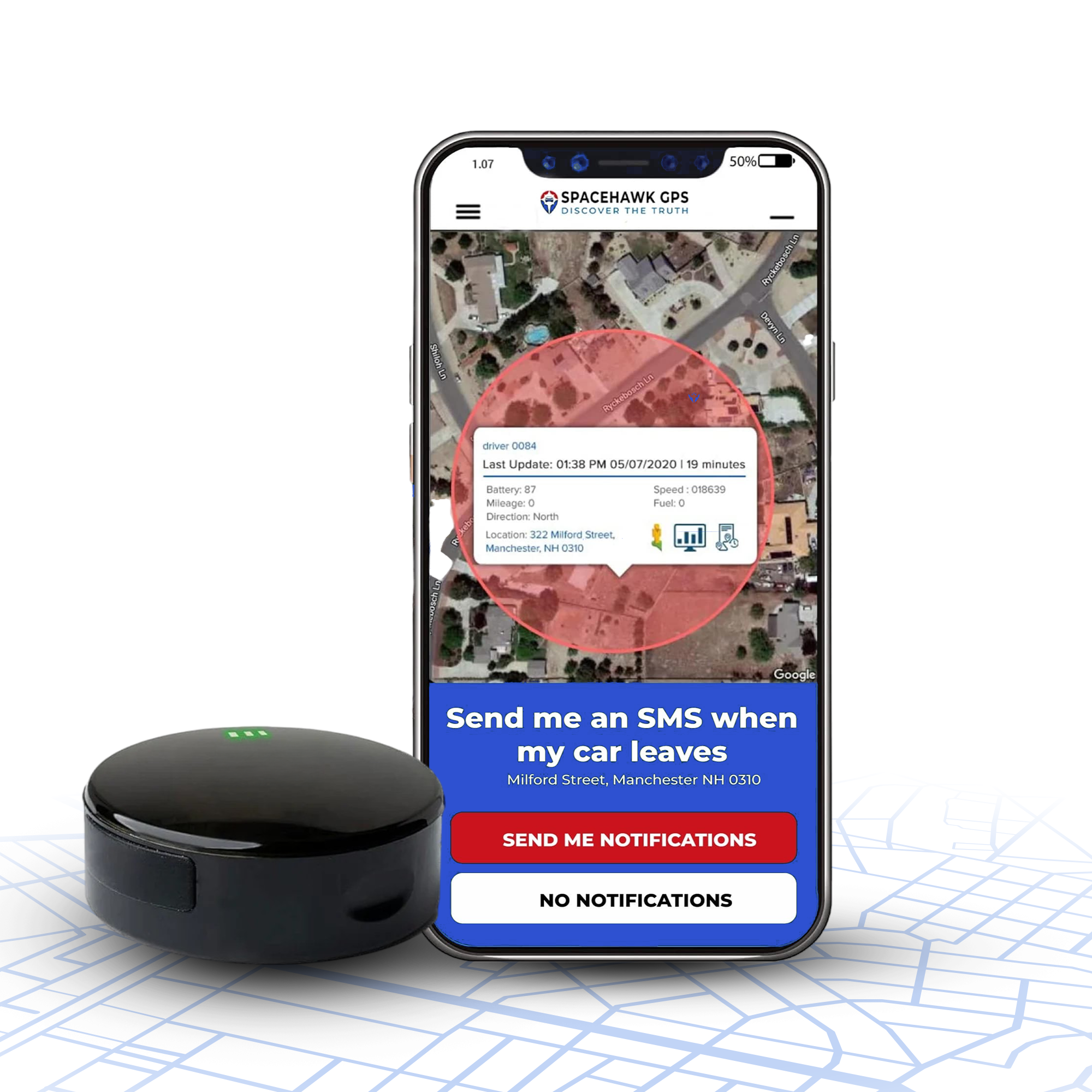
SpaceHawk GPS Tracker
Magnetic and waterproof, so it clamps to a frame rail in seconds with no wiring. Updates land every three seconds and accuracy sits around six feet, with a year of trip history.
The plan is $19.95 a month, or $9.95 on a two year prepay. Lifetime warranty with US based support.
This is the device we sell, so read the rest with that in mind. For a child, a pet or a suitcase, the picks further down suit better and we say which.
Hey, looking for the smallest GPS tracker that actually works? I get it. A lot of devices claim to be mini trackers, but once you start digging, things get confusing fast.
Some rely on Bluetooth. Others require subscriptions. A few lose signal the moment they leave strong coverage.
I have spent more than 15 years working with GPS tracking technology. Parents tracking teen drivers, businesses monitoring fleets, pet owners locating runaway dogs. One thing has stayed consistent the whole time. The smallest tracker is not always the one that performs best.
Small enough to hide is not the same as legal to hide
Every device here is small enough to conceal. Against a thief who would otherwise find and remove it, that is a genuine advantage.
Concealing one from a person is a different matter. The test is ownership: a car you own, a bag you own, a pet you own is your business. A tracker on another adult's property can fall under state stalking statutes. So can one on a family member who has not agreed.
With a child or a teen driver, tell them. A tracker they know about works better, because a device found hidden gets left at home.
Our Top Picks: Smallest GPS Trackers in 2026
Two things this table does that the product sections cannot. Actual size sits beside every device. The real GPS trackers are also separated from the Bluetooth tags and smartwatches sold alongside them.
| Device | Type | Size and weight | Best for | Buy |
|---|---|---|---|---|

|
Cellular GPS | Palm sized, magnetic | Vehicles | Buy direct |

|
Cellular GPS | Wearable, in a sleeve | Wandering and special needs | Amazon |

|
Smartwatch | 41mm or 45mm case | Buy a current model instead | See below |

|
Cellular GPS | Pocket sized, 2400 mAh | A simple app above all | Amazon |

|
Cellular GPS | About 1.8 oz | Luggage and travel | Amazon |

|
Bluetooth, not GPS | 1.26 in across, 11 g | Keys, wallets, bags | Amazon |

|
Cellular GPS | Pocket sized | Casual use, mixed reviews | Amazon |

|
Cellular GPS | Collar sized, waterproof | Dogs and cats | Amazon |

|
Fitness watch | 40mm case | Fitness, not tracking | See below |

|
Satellite | 2.69 x 2.02 x 0.95 in, 3.1 oz | Assets outside cell range | Amazon |
How We Chose These Trackers
You can read product descriptions all day. A tracker only proves itself in the situations people actually use it for. Mounted under a vehicle during daily driving, tucked into a suitcase, or worn day to day.
Several of these units sit in our own test collection. Every first party photo and clip below is ours rather than stock. Rankings rest on published specifications and manufacturer documentation alongside that hands on time.

To narrow the list we looked at five things. How closely reported location matches actual position. How fast the device refreshes. Whether advertised battery life survives normal settings. How clear the app is. And how the unit behaves once coverage thins out.
SpaceHawk - Best Overall Mini GPS Car Tracker

Our own pick for vehicles
This is the device we sell, so weigh the rest accordingly. SpaceHawk is a magnetic vehicle tracker with a waterproof housing. The unit attaches under a car in seconds, with no wiring.
Updates land every three seconds at the fastest setting and accuracy sits around six feet. A year of trip history lets you answer a question about last month, not only about right now.
The honest caveat is battery. Three second reporting drains it fast. Most owners run it at a minute or slower, which gives one to three weeks.
Best on this page for a vehicle. This is a car tracker, not a child wearable, and the picks below suit those jobs better.
View Key Features
- Built in magnet, no wiring or bracket
- Waterproof housing for under vehicle mounting
- Updates as fast as every three seconds
- Accuracy of around six feet, with a year of history
- Lifetime warranty and US based support
View Pros & Cons
Pros
- Three second updates
- Waterproof and magnetic
- A year of route history
- Lifetime warranty
Cons
- Recharge every 2 to 3 weeks
- A plan is required
- Vehicles, not people

AngelSense - Smallest GPS Tracker For Special Needs

Best for wandering risk
AngelSense is built around one job: a child or adult who leaves without warning. Live location, an auto answering speakerphone, and a wearing sleeve that fastens with a parent key.
That key matters for someone who does not understand why the device is there. The sensory friendly wearables are a real design decision, not marketing.
Battery is the honest weakness and the draft figures in this category are often wrong. Plan on charging it every night, because a day of heavy checking will flatten it.
Cost is the other thing to face squarely. A one year commitment at $49.99 a month puts year one near $700. That is the most expensive option on this page by a wide margin.
Worth it if wandering is a genuine risk in your household. Considerable overkill if it is not.
View Key Features
- Live location with frequent refresh intervals
- Arrival and departure alerts for school, home and safe zones
- Two way auto answer speakerphone, 60 voice minutes a month
- Non removable wearing sleeve with a parent key
- Caregiver tools designed for monitoring rather than independence
View Pros & Cons
Pros
- Made for wandering
- Auto answer speakerphone
- Sleeve stays put
- Apps for iOS and Android
Cons
- Charge it nightly
- Priciest plan here
- One year commitment
$700
Roughly what AngelSense costs in year one. The plan, not the device, is where the money goes on almost everything here.
Device price plus twelve months at the published $49.99 monthly rate.
Apple Watch Series 8 - Best Wearable Tracker
Do not buy a Series 8 in 2026
Apple discontinues each Watch when the next one launches, and the Series 8 dates from September 2022. The current lineup is four generations further on.
The decisive point is software. The Series 8 cannot run watchOS 27. So it receives no new features and no security updates, and its software is frozen where it stands.
If a wrist worn device is what you want, buy a current generation Apple Watch or the current SE. Everything below describes what the Series 8 does, not a recommendation to buy one now.
Taken on its own terms, the Series 8 is a capable wearable with built in GPS. That is why it appears on lists like this one. The watch handles workouts and hands free calling without a phone nearby, and is water and dust resistant.
Crash and fall detection connect to emergency services automatically. That is what makes a smartwatch useful for personal safety rather than location tracking.
Battery is the structural limit of every smartwatch here. About 18 hours means a nightly charge, so a watch is not a device you fit and forget.
View Pros & Cons
Pros
- Crash and fall detection
- Health monitoring
- Worn willingly
Cons
- No watchOS 27
- Nightly charging
- Needs an iPhone
Family1st - Discreet GPS Tracker For Kids, Elderly & Cars

Simplest app on the list
Family1st is a genuine Amazon top seller, and the app is the easiest here to set up. Geofences and history take about a minute to configure, which for some buyers beats a spec sheet.
The 2400 mAh battery is rated at up to two weeks. Owners running frequent updates report recharging sooner than that. Wi-Fi assisted indoor positioning is included and works unevenly.
Two limits worth knowing. Location history caps at 30 days, where SpaceHawk keeps a full year. The magnetic case is also a separate purchase for vehicle mounting.
Cheap box, ordinary running cost. Do the twelve month sum in the table below before you decide.
View Key Features
- Real time tracking over 4G LTE
- 2400 mAh battery rated at up to two weeks
- Location history capped at 30 days
- Magnetic weatherproof case sold separately
- Geofence alerts through the app
View Pros & Cons
Pros
- Easiest app to set up
- Cheap to buy
- 4G LTE coverage
Cons
- History caps at 30 days
- Case costs extra
- Updates lag rivals
Tracki Mini - Smallest GPS Tracker For Luggage

Best for travel
Tracki Mini is genuinely tiny at around 1.8 oz. The unit disappears into a suitcase without adding weight you would notice. A worldwide SIM is included, which is the reason to pick it for travel.
The device price moves constantly and the listings run frequent discounts, so read the plan before the sticker. On a cheap device the subscription is where the money actually goes.
Battery claims need care here. The headline 60 day figure is a standby number. Active tracking pulls that down to days rather than weeks, depending on the interval.
Right for luggage and travel. Check that your carrier is supported before you rely on it.
View Key Features
- Around 1.8 oz, with a magnet and waterproof case
- 4G with a worldwide SIM included
- Up to 60 days standby, far less in active tracking
- Geofence, SOS and battery alerts
- Extended battery packs sold separately
View Pros & Cons
Pros
- Very small and light
- Worldwide SIM
- SOS button
Cons
- Needs a supported carrier
- Battery claim is standby
- Plan drives the cost


Apple AirTag - Smallest Item Locator

Smallest thing here, and not a GPS tracker
At 1.26 inches across and 11 grams, the AirTag is the smallest device on this page by some distance. That said, it is also the only one with no GPS receiver and no cellular connection.
What it does instead is clever. The tag broadcasts over Bluetooth, and any passing iPhone relays its position back anonymously. That works well in a city and not at all on an empty road.
For keys, a wallet or a bag in an airport, that is the right tool. At $29 with no subscription it is unbeatable. For a car, a pet or a person, it is the wrong tool.
Buy it for objects that get misplaced. Do not buy it for anything that moves on its own.
View Key Features
- 1.26 inches across, about 11 grams
- Find My integration with one tap setup
- Built in speaker for locating nearby
- Precision Finding on supported iPhones
- No subscription, replaceable coin cell
View Pros & Cons
Pros
- No subscription at all
- Smallest device here
- Precision Finding
Cons
- No GPS, no cellular
- Apple devices only
- Useless where nobody is
Two things Apple says about AirTags that sellers rarely mention
Apple states plainly that AirTags are for tracking items, not pets or people. A dog that wanders into open country goes out of range of other iPhones. The tag then simply stops reporting.
AirTags also carry anti stalking measures by design. An unknown tag moving with someone alerts their iPhone and eventually starts beeping. That is the system working as intended.
GeoZilla GPS Tracker - Best For Portability

The weakest pick here, and we say why
GeoZilla sells both a family location app and this small hardware tracker, and the two get confused constantly. This entry is the hardware, which attaches to a bag or a collar.
Setup through the app is straightforward, geofence zones work, and there is an SOS button. Battery runs to about five days depending on how often you ask it to report.
In the interest of transparency, its review history is weaker than anything else here. The recurring complaints are accuracy and delayed notifications.
Usable for casual tracking. If reliability matters, spend the extra on something above it.
View Pros & Cons
Pros
- Simple app setup
- Geofence zones
- SOS button
Cons
- Weakest reviews here
- Delayed notifications
- Recharge every 5 days
Tractive - Smallest Pet Tracking Device

Best for pets, and the cheapest plan here
Tractive clips to a collar and was designed for the job rather than adapted to it. Waterproof, light enough that a dog ignores it, and rated at up to 10 days per charge.
Coverage runs across more than 150 countries. Escape alerts fire the moment your pet leaves the zone you drew. Activity monitoring runs alongside the location tracking.
On cost it is the standout. Plans start around $5 a month on a longer commitment. That is the cheapest running cost of any cellular device here.
The right answer for a dog or a cat. This is what an AirTag on a collar is not.
View Pros & Cons
Pros
- Cheapest plan here
- Made for collars
- Escape alerts
- Waterproof
Cons
- Pets only
- Needs a smartphone
- Battery varies by rate
FitBit Versa 4 - Best For Fitness Activity Monitoring
A fitness watch, and a dated one
The Versa 4 launched in 2022 alongside the Apple Watch Series 8, and Fitbit's lineup has moved on since. The Versa 4 is included here for completeness rather than as a recommendation.
This is also not a tracking device in the sense the rest of this page means. Built in GPS records where you ran; it does not let anyone else see where the watch is.
On its own terms the Versa 4 does the fitness job competently. Daily readiness and sleep scores, more than 40 exercise modes, and water resistance to 50 meters. Six days of battery beats any smartwatch here.
The known limitations are worth stating plainly. No Wi-Fi, no third party app support, and a run of complaints about heart rate accuracy.
View Pros & Cons
Pros
- Six days of battery
- Swim rated to 50m
- 40+ exercise modes
Cons
- Not a location tracker
- No Wi-Fi or third party apps
- A 2022 model
Spot Trace - Smallest GPS Tracker For Outdoor Adventures

The only one that works with no cell signal
Spot Trace runs on the Globalstar satellite network rather than a cellular one. So it keeps reporting where every other device here goes silent.
That suits a boat on a mooring, a trailer at a remote site, or a vehicle stored outside coverage. The unit is IP67 rated and runs on four AAA lithium cells.
Read this before you buy: tracking intervals are 2.5, 5, 10, 30 or 60 minutes. This is an asset tracker, not a live map, and it has no SOS button.
If personal safety in the backcountry is what you want, buy a satellite messenger instead. That is a different product with a genuine emergency function.
Excellent for assets beyond cell coverage. Not a personal safety device, whatever the listing implies.
View Key Features
- 2.69 x 2.02 x 0.95 inches, 3.1 oz
- Satellite tracking, no cellular signal required
- Intervals of 2.5, 5, 10, 30 or 60 minutes
- Movement alerts by text or email, plus Dock Mode for boats
- IP67 rated, four AAA lithium cells included
View Pros & Cons
Pros
- Works with no cell signal
- IP67 rated
- Dock Mode for boats
Cons
- No SOS button
- Slowest updates here
- Plans auto renew
GPS Tracker vs. Bluetooth Tracker: What You Should Know Before Buying

Many buyers searching for a small GPS tracker accidentally purchase a Bluetooth tracker instead. The packaging looks similar, but the technology inside works in completely different ways.
Tracking a vehicle rather than an object?
See the SpaceHawkA Bluetooth tracker connects to nearby phones over short range signals. A cellular GPS tracker works out its position from satellites and sends that data over a mobile network. One works only nearby, the other from almost anywhere.
Bluetooth trackers, such as the AirTag
- Works within roughly 30 feet of a phone
- Relies on other people's phones to report a position
- No monthly subscription at all
- Cannot provide true real time remote tracking
- Best for keys, wallets, bags and everyday items
Cellular GPS trackers, such as SpaceHawk
- Works anywhere with cellular coverage
- Sends live updates on its own, with no help needed
- Requires a monthly data plan
- Supports geofence alerts and trip history
- Used for vehicles, children, pets and fleets
30 feet
Past that, a Bluetooth tag stops knowing where it is. Everything after that depends on a stranger's phone walking past it.
This is the single distinction that decides which of the two you should buy.
The practical rule is simple. If the thing you track moves by itself, buy a cellular GPS tracker. Same if it ends up where no people are. Bluetooth tags are for objects you misplace.
Find the Right GPS Tracker for Your Needs
Not every tracker suits the same job. A device made for vehicles is too heavy for a pet collar. A Bluetooth tag will not follow a car. Here is the short version.
For vehicles: SpaceHawk
A magnetic waterproof unit attaches under a car in seconds and updates fast enough to follow a moving vehicle. See our best GPS vehicle tracker guide.
For kids: AngelSense, Family1st
Child devices add SOS buttons and caregiver alerts. Tell the child it is there. See our GPS tracker for kids guide.
For pets: Tractive
Made to attach to a collar and light enough that an animal ignores it. Escape alerts fire when your pet leaves a safe zone. An AirTag is not a substitute.
For luggage: Tracki Mini, AirTag
Tracki gives worldwide GPS coverage. An AirTag is cheaper and works well in airports, where other iPhones are everywhere. See our luggage tracker guide.
For remote areas: Spot Trace
Satellite tracking keeps working outside cellular coverage, which suits boats and equipment stored where no network reaches.
For older relatives: AngelSense
Wearables with SOS buttons and caregiver apps suit this best, and the conversation matters as much as the hardware. See our GPS tracker watch for elderly guide.
Choosing The Right Mini GPS Tracker: 5 Things To Consider
1. Tracking features
Look for real time updates, geofencing and movement alerts. Geofencing lets you draw a boundary and get told when it is crossed, instead of watching a map.
2. Update frequency
This decides how live the tracking feels and how fast the battery drains. The table below shows what each interval actually costs you in runtime.
3. Size and portability
Smaller devices carry smaller batteries, so the smallest tracker on a page is rarely the one that runs longest. Match the size to the job, not to the spec sheet.
4. Total cost of ownership
Almost every real time tracker carries a monthly fee. Work out twelve months before you buy, because the plan usually outweighs the device.
5. Connectivity and compatibility
Cellular units give the most reliable real time tracking. Satellite covers areas with no signal. Bluetooth needs other phones nearby. Check coverage for your region first.
What Each Update Interval Costs You
| Update interval | Best for | Battery impact | Typical runtime |
|---|---|---|---|
| 3 to 5 seconds | Active vehicle tracking | High drain | 2 to 3 weeks |
| 30 seconds | General vehicle or child tracking | Moderate | 3 to 4 weeks |
| 60 seconds | Luggage and asset tracking | Low | 30 to 60 days |
| 5 minutes or more | Long term asset monitoring | Very low | 60 to 180 days |
What 12 Months Actually Costs
Device prices move constantly here, so treat the first column as approximate. The monthly fee is the number that matters. The last column is what you should actually compare.
| Tracker | Device | Monthly | Twelve month total |
|---|---|---|---|
| Apple AirTag | About $29 | None | About $29 |
| Tractive | About $49 | About $5.00 | About $109 |
| Family1st | About $18 | $15.95 | About $209 |
| Spot Trace | About $55 | About $14.95 | About $234 |
| SpaceHawk | $39.95 | $19.95 | About $279 |
| AngelSense | About $99 | $49.99 | About $699 |
Two ways to cut that number
Most providers discount heavily for paying twelve or twenty four months upfront. SpaceHawk drops from $19.95 to $9.95 a month on a two year prepay, which halves the running cost.
Also check the exit terms before you commit. Several plans here auto renew at the end of the term. One requires a full year commitment from the start.
The smallest tracker on a page is almost never the one that runs longest.
Ryan Horban
Conclusion
Our goal here is a full picture of each device, drawbacks included. Weigh size, battery, connectivity and running cost, then pick.
If you are tracking a vehicle, a cellular GPS unit is the answer. We sell one we stand behind. For keys or a suitcase in an airport, a $29 Bluetooth tag beats anything with a subscription. We would rather say so.
Author Disclosure

Not sure which of these fits
Tell us what you are tracking and where it goes. We will tell you which one suits, including when the answer is a device we do not sell.
Talk to usSources: Manufacturer specifications and current published pricing for each product named. Globalstar for Spot Trace dimensions and intervals, and Apple's published watchOS 27 compatibility list.
Frequently Asked Questions
Which Of These Is Actually The Smallest?
The AirTag, at 1.26 inches across and about 11 grams. Nothing else here comes close on size, and nothing else here lacks a GPS receiver either.
Among devices that genuinely track over a cellular network, Tracki Mini is the smallest at roughly 1.8 oz. Smaller almost always means a smaller battery.
Can These Trackers Be Hidden On A Vehicle?
Yes, and against a thief that is the point. A magnetic unit tucked on a frame rail is hard to find and hard to remove. That is what makes recovery possible.
The test for doing it lawfully is ownership. Your own car, your own bag, your own equipment is your business.
Hiding one from a person is different. On another adult's property it can fall under state stalking laws. Same for a family member who has not agreed. With a teen driver, tell them.
What Is The Difference Between Bluetooth GPS And A Small GPS Tracker With SIM Card?
A Bluetooth device pairs with a phone nearby and has a range of roughly 30 feet. Whatever you are tracking has to stay within reach of someone's handset.
A tracker with a SIM card sends its position over a cellular network. You can read it from anywhere. That is what buys you geofencing, trip history and real alerts.
Are There Any Monthly Subscription Fees Associated With Mini GPS Trackers?
Almost always, because the cellular data and the tracking platform both cost money to run. Plans on this page range from about $5 to $49.99 a month.
The one genuine exception here is the AirTag, which has no subscription at all. That is possible only because it has no cellular connection to pay for.
Treat any tracker advertising no subscription with care. That usually means the first year is prepaid inside the purchase price, so ask what year two costs.
Are There Any GPS Tracking Chips To Monitor My Dog Or Cat?
No, and this one catches a lot of owners out. The microchip your vet implants is an identification tag with no battery and no location function.
A scanner held against the animal reads it, which helps a shelter return a found pet. The chip cannot tell you where your pet is now.
For that you need a collar tracker such as Tractive. There is no implantable GPS chip for pets on the market.
Is It Easy To Set Up And Use A Mini GPS Tracker For Tracking Vehicles?
Yes. A magnetic unit needs no tools and no surface prep. Charge it, activate the plan, put it where there is steel below and sky above.
Test the spot with a fridge magnet first. Plastic fenders and aluminum panels hold nothing, and vibration finds any weak mount.
- Choosing a selection results in a full page refresh.
- Opens in a new window.
 Buy on Amazon