
Best Hidden GPS Trackers for Covert Use

Key Takeaways
5 things to settle before buying a hidden GPS tracker
-
01
Hidden means hidden from thieves. Anyone who drives the car should know it is there.
-
02
A magnetic mount fits in minutes, no tools, and moves between vehicles.
-
03
Fast updates cost battery. Match the interval to the job.
-
04
The subscription decides total cost, not the sticker price.
-
05
Roughly two dozen states have a statute on tracking a car you do not own.
Protecting a vehicle you own?
SpaceHawk mounts magnetically and reports every 3 seconds.
View SpaceHawkAs an Amazon Associate, GPS Tracker Shop earns from qualifying purchases.
A tracker a thief can find is a tracker a thief removes. Concealment is a theft-protection feature, and that is the sense in which this guide uses the word hidden.
I'm Ryan Horban, and I've spent the last 15 years working with GPS vehicle trackers, fleet tracking devices, and commercial GPS tracking systems across real-world fleets. Placement questions come up as often as product questions.
So this guide ranks seven trackers that conceal well on a vehicle. Then it covers where to mount them, and what the law says. One rule sits over all of it: hide the device from thieves, not from the person driving.
The short answer
SpaceHawk is the pick for most people. Strong magnet, 3-second updates, a $39.95 device price and a lifetime warranty. The other six earn their places on battery life, billing structure, size or ruggedness. Each entry says who should pick it instead.
Top pick for hidden vehicle tracking

SpaceHawk GPS Tracker
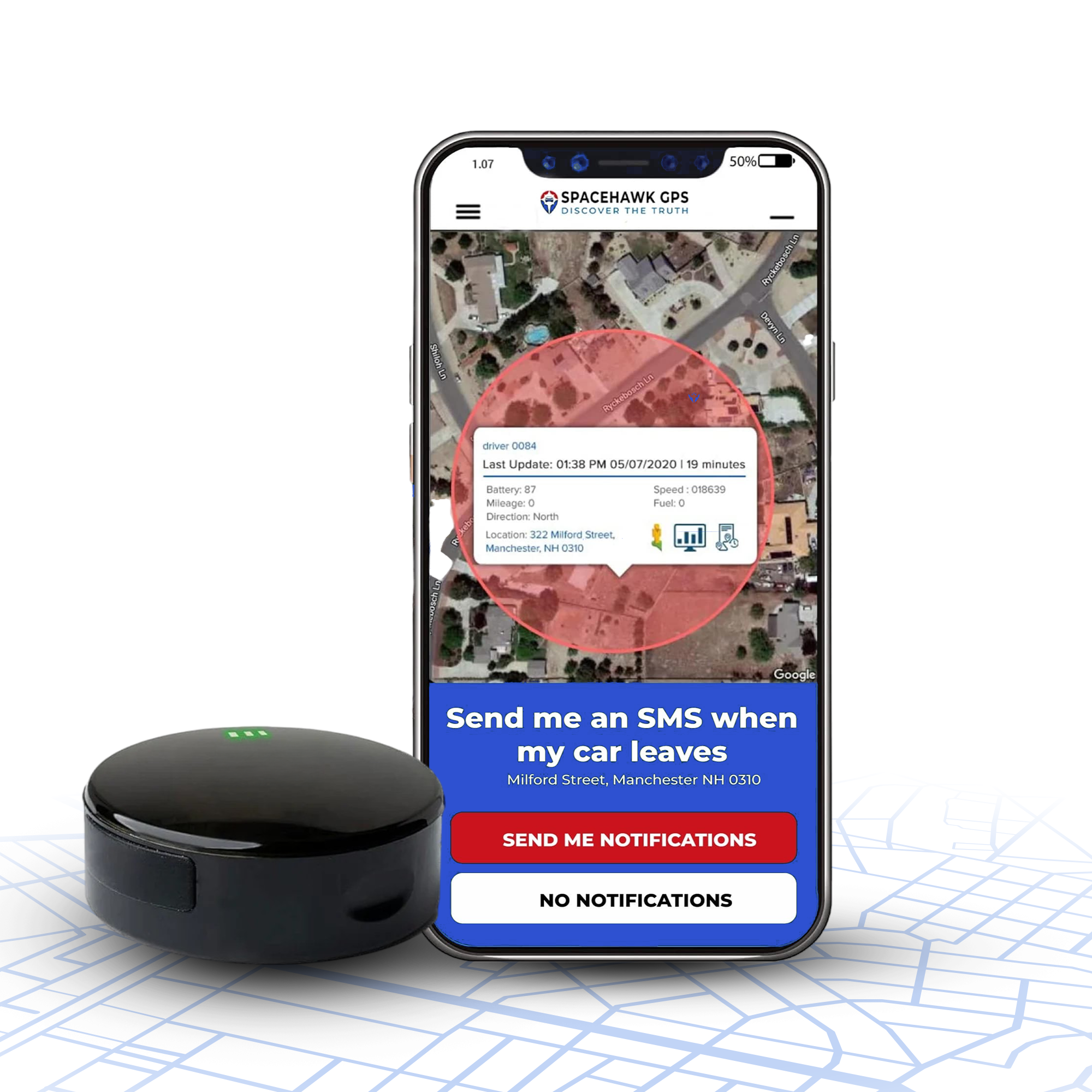
Magnetic mount, no wiring, live location every 3 seconds. Rated 4.1 stars from nearly 100 verified Amazon reviews, with a lifetime warranty and free US support.

The Seven, Side by Side
Every device on this list, one row each. Sections below give the detail.
| Tracker | Pick it for | Battery | Update rate |
|---|---|---|---|
| SpaceHawk | Best overall, $39.95 | 1 to 3 weeks | Every 3 seconds |
| Americaloc GL300MXW | Prepaid service, no auto-renew | Up to 14 days | 10 seconds, per maker |
| Invoxia GPS Pro | Longest runtime per charge | Weeks, per maker | 30 to 60 seconds |
| Tracki Mini | Smallest body | 2 to 5 days | 60 seconds, per maker |
| LandAirSea 54 | Strongest magnet, roughest use | 1 to 3 weeks | 3 seconds on top plan |
| Optimus 3.0 | Flat body plus waterproof case | Weeks, per maker | 10 seconds, per maker |
| Family1st | Lowest device price | Up to 2 weeks | 60 seconds, per maker |
How This List Was Put Together
Rankings compare published specifications, manufacturer documentation and verified buyer feedback. No mileage counters, no invented lab. Where a figure is a manufacturer's claim rather than a verified one, the entry says so. Several of these units sit in our own collection. Every first-party photo and clip below is ours rather than stock.
Six things carried the most weight. Magnet strength, since a shifted tracker is a found tracker. Update rate, and which plan tier actually buys it. Battery life at realistic settings. Weather sealing for exterior mounting. The app. And total cost across the subscription, not the sticker.

Part of the tracker collection we keep for comparison work.
Our own footage of the SpaceHawk alongside the rest of the lineup.
One product from the usual roundups is missing deliberately. AngelSense is a wearable for children and elderly family members, worn with their knowledge. A device for tracking people has no place on a list about concealment, so it is not here.
1. SpaceHawk, Best Overall
Top pick overall

SpaceHawk GPS Tracker
Small, magnetic and quick. The built-in magnet holds to a frame rail or bumper lip without a case. Reporting runs every 3 seconds, with accuracy around 6 feet. $39.95 for the device, $19.95 a month for service, or $9.95 a month on a two-year prepay.
Key features
- Live location every 3 seconds, accuracy around 6 feet
- Built-in magnet, no separate case to buy
- 1 to 3 weeks per charge in regular mode
- Waterproof housing for exterior mounting
- Movement, speed and geofence alerts
- Lifetime warranty with free US support
Pros and cons
Pros
- Fastest update rate here without a premium tier
- Magnet and housing are one piece, nothing to lose
- Lifetime warranty at a $39.95 device price
Cons
- Frequent updates shorten the runtime per charge
- Deep metal enclosures still weaken any GPS signal
- Recharging is on you, unlike a wired unit

Best suited to vehicle owners, parents of new drivers, and small fleets. On a family car, tell the driver the tracker is there. The protection works the same, and the trust survives.

The SpaceHawk in hand.
Mounting on a vehicle side panel.
2. Americaloc GL300MXW, Prepaid Service
No auto-renew billing

Americaloc GL300MXW
A flat rectangular unit whose selling point is billing. Service is bought in prepaid blocks, no card on file, nothing auto-renews. That suits a seasonal car or a stored asset tracked part of the year. Service still costs money; you just choose when.
Key features
- Prepaid service blocks, nothing renews on its own
- Maker quotes updates as fast as every 10 seconds
- Runs up to 14 days between charges
- Flat shape slips behind interior panels
- Reporting dashboard with trip exports
- Multi-network coverage in the US
Pros and cons
Pros
- Billing structure suits part-year tracking
- Solid battery for a compact unit
- Reporting tools deeper than most rivals
Cons
- No built-in magnet, the case is a separate buy
- Slower refresh than the 3-second units
- Per-month cost runs higher than subscription rivals
3. Invoxia GPS Pro, Longest Runtime
Battery over speed

Invoxia GPS Pro
Built the other way round from SpaceHawk. A slow 30-to-60-second refresh buys weeks of runtime. Right for a parked or stored vehicle where you want a check-in, not a chase view.
Key features
- Weeks per charge, per the manufacturer
- Slim body hides in a console or door pocket
- Low-power hybrid positioning design
- Movement alerts through a simple app
- Among the cheaper subscriptions in this group
- No external lights to give it away
Pros and cons
Pros
- Runtime per charge leads this group
- Low ongoing cost on the annual plan
- Route history reads clearly over long periods
Cons
- A minute-old position is useless in a live theft
- Splash resistance only, keep it out of road spray
- No magnet, so interior placement in practice

The Invoxia unit from our collection.

Same unit, second look.
4. Tracki Mini, Smallest Body
Fits where nothing else does

Tracki Mini GPS
The smallest device here by a clear margin, sized for luggage, tool bags and tight interior gaps. The tiny sticker price is not the real price, since a required subscription makes the running cost ordinary. Buy it for the size.
Key features
- Smallest footprint in this roundup
- Ships with a small clip-on magnet
- Motion plus location logging with map playback
- Attachment accessories for bags and gear
- Splash-resistant casing
- 2 to 5 days per charge at typical settings
Pros and cons
Pros
- Goes places no vehicle tracker fits
- Cheapest way to try GPS tracking at all
- Accessories cover non-vehicle uses well
Cons
- Shortest battery life in the group
- Small magnet suits interiors, not frame rails
- Subscription erases the sticker-price advantage

The Tracki from our collection.

In hand, for scale.
5. LandAirSea 54, Strongest Magnet
Rough exterior duty

LandAirSea 54
A round puck made for the underside of working vehicles. IP67 sealing and the strongest built-in magnet in this lineup. An unconditional lifetime warranty, at around $29.95. The 3-second update rate exists, but only on the premium SilverCloud tier. Price that plan before comparing it to SpaceHawk.
Key features
- Strongest built-in magnet of the seven
- IP67 sealed against mud and road spray
- 3-second updates on the premium plan tier
- 1 to 3 weeks per charge, motion-activated sleep
- A full year of trip history
- Unconditional lifetime warranty, made in USA
Pros and cons
Pros
- Grip and sealing made for frame rails
- Round shape tucks into wheel arch curves
- Warranty terms as good as they come
Cons
- Headline update rate costs a premium tier
- Accuracy around 8 feet trails the 6-foot units
- Round body sits awkwardly in flat interior spots
6. Optimus 3.0, Flat and Waterproof
Weatherproof, flat profile

Optimus 3.0 GPS
A flat rectangular unit whose weather protection comes from an accessory case rather than the body. That case is also the magnetic mount, so there are two parts to keep together. Lose the case and both jobs go with it.
Key features
- Waterproof accessory case for exterior use
- Maker quotes 10-second live updates
- Flat profile suits door panels and compartments
- Handles vibration and temperature swings
- Clear app with detailed movement history
- Works across vehicles, equipment and gear
Pros and cons
Pros
- Flat shape mounts flush where pucks cannot
- Cased, it takes sustained road spray
- Accuracy holds up in urban and rural use
Cons
- No built-in magnet, the case carries it
- Two components to manage instead of one
- Mid-pack refresh rate, behind the 3-second units
7. Family1st, Lowest Device Price
Cheapest way in

Family1st GPS Tracker
Around $14.95 for the device, the lowest entry price here. The app is simple and suits checking a parked car or a new driver's arrival home. Trade-offs: a 60-second refresh, history capped at 30 days, and a magnetic case sold separately.
Key features
- Lowest device price in this group
- Straightforward app with clean map views
- Compact enough for consoles and glove boxes
- Alert options aimed at family use
- Trip history held for 30 days
- Plans at $15.95 a month annual or $21.95 monthly
Pros and cons
Pros
- Easiest budget entry to GPS tracking
- Setup and app suit first-time users
- Fine for simple did-it-move questions
Cons
- 30-day history against a year on rivals
- Monthly plan is the dearest way to run it
- Weakest water resistance in this lineup
Run the two-year math before calling anything cheap. SpaceHawk at $39.95 plus $9.95 a month on the prepay is about $279 over 24 months. Family1st at $14.95 plus $15.95 a month is about $398. The cheaper device is the more expensive tracker.
Where to Mount a Tracker So a Thief Misses It
Placement is a trade between concealment, signal and magnet grip. These are the spots that balance all three, for a vehicle you own.

Wheel well
Along the inner metal lip, away from anything that moves. A thief working fast checks bumpers before arches. Road grime hides a dark puck within a week.

- Plastic arch liners pass GPS signal far better than thick steel
- A weak magnet shifts here first, so this spot suits the strong-magnet units
- Too close to suspension parts risks the device on the first pothole
- Wet weather grips worse, so mount onto clean, dry metal
Under the rear bumper
The classic spot for a reason. Plastic bumper skins barely attenuate signal. Mounting points sit within reach for recharging, and dark trim swallows a black housing.

Frame rail
Flat steel gives the magnet its best grip. Rails are the right home for heavier units on rough roads. Pick a flat outer face rather than a deep pocket. Metal on every side is what actually smothers GPS reception.

Glove box, console or trunk liner
Interior spots trade some concealment for protection. No weather, no vibration, easy recharging. Fabric passes signal cleanly. The right choice for the non-magnetic units in this list.

Related reading
More spots, with photos, in our guide to where to hide a GPS tracker on a car. The physics is in what materials block GPS signal.
SpaceHawk ships with the magnet built in, a lifetime warranty, and free US support.
See SpaceHawkThe Legal Line, Plainly
Tracking a vehicle you own or lease is lawful in every state. Tracking one you do not is a crime in most of them. Hiding the device makes it worse, not better.
23 states
Have a statute written specifically about placing a tracking device on a vehicle. Sixteen more reach the same conduct through stalking law.
Statute-by-statute detail in our state law guide, with the NCSL's statute index as the primary source

Your own vehicles
Personal cars, family cars, company vehicles and fleet assets registered to you can carry a tracker. Theft protection, new-driver monitoring and fleet management all sit comfortably inside the law.
Spouses and family
Owning the car does not settle this one. Covertly tracking a spouse or partner can cross into stalking law even on a jointly owned vehicle. Courts have treated it exactly that way.
The US Supreme Court held in United States v. Jones that attaching a GPS tracker to a vehicle is a Fourth Amendment search. The principle travels: secretly fixing a device to someone's car is a serious act, not a workaround.
If the honest description of your plan is tracking a person without their knowledge, stop. Tell them, or do not fit the device. That conduct is criminal in many states. Wherever the statute lands, it is the wrong side of this store's advice.
Employers and investigators
Company-owned vehicles may be tracked, with drivers told in writing as part of a monitoring policy. Undisclosed employee tracking creates liability in several states. New Jersey goes furthest and requires written notice even on an employee's own car.
Licensed private investigators operate under state rules and ownership limits that vary widely. That profession knows its own statutes. This page is written for owners.
When to ask a lawyer

Any situation where ownership is shared, contested or unclear. Divorces, separations, business disputes, and any vehicle someone else drives daily. All of those qualify. Ask before mounting, not after.
Hide the tracker from the thief, never from the driver. Every legitimate use of these devices fits inside that one sentence.
Ryan Horban
GPS Tracking Expert
The Verdict
SpaceHawk takes the top spot on the combination that matters here. A strong one-piece magnet, 3-second updates on the standard plan, and a $39.95 device with a lifetime warranty.
The rest are the right pick for narrower cases. Americaloc for prepaid billing on part-year vehicles. Invoxia when runtime beats speed. Tracki for spaces nothing else fits. LandAirSea 54 for rough exterior duty, priced with its premium tier in mind. Optimus for a flat waterproof profile. Family1st when the budget is fixed and the questions are simple.
Whichever you mount, the placement section above does more for reliability than any spec sheet. And the rule from the top holds: hidden from thieves, known to drivers.
Sources
- National Conference of State Legislatures, Private Use of Location Tracking Devices: State Statutes
- United States v. Jones, 565 U.S. 400 (2012), via Oyez
- Manufacturer specifications for each third-party device, per its own listing
Protect the vehicle, keep the trust
SpaceHawk mounts in seconds, reports every 3 seconds, and carries a lifetime warranty.
View SpaceHawkAbout the Author

Frequently Asked Questions
Where is the best place to hide a GPS tracker in a car?
Is it legal to track a car without telling the driver?
Should I choose a magnetic or non-magnetic GPS tracker for covert use?
Can someone detect a hidden GPS tracker on their car?
Why You Can Trust This Guide
- Choosing a selection results in a full page refresh.
- Opens in a new window.
 Buy on Amazon