
Can A GPS Tracker Be Traced To Owner

Key Takeaways
5 things to know about tracing a tracker back to whoever placed it
-
01
Real-time trackers leave a billing trail. Passive loggers usually leave nothing.
-
02
The serial number is the one detail that makes any of this possible.
-
03
Manufacturers will not hand a stranger their customer's name. Expect that.
-
04
Police can compel the record. In practice they are the route, not a backup.
-
05
Photograph it where it sits before touching anything else.
Not certain there is a device at all?
An RF detector confirms a live tracker in about a minute.
See the bug detectorFinding a tracker on your own car is a bad hour. The question that follows is always the same one. Who put it there?
I'm Ryan Horban, and I've spent the last 15 years working with GPS vehicle trackers, fleet tracking devices, and commercial GPS tracking systems across real-world fleets. I have been on the manufacturer side of these requests.
So this guide tells you what actually happens when you make that call. Not the version where a company looks up a serial and reads you a name.
The short answer
Sometimes, and almost never by yourself. A live cellular tracker needs a paid account, and that account has a name and a card behind it. Getting that name released takes a subpoena, which means police. Your job is to find the device, record the serial, and hand over a clean report.
Confirm it before you do anything else

GPS Tracker Detector
Sweeps for the radio a live tracker transmits, across the frequency range those devices use. A whole vehicle takes about a minute. Silent alerts, so a sweep does not announce itself.
- Finds GPS trackers and RF bugs
- Also detects hidden cameras
- Four detection modes
- Silent vibration alert
- Pocket sized
- Works on cars, rooms and rentals
How to detect a hidden GPS tracker on your car
Why Some Trackers Can Be Traced and Others Cannot
Everything here turns on one distinction. Get it wrong and you will waste a week.
Real-time tracker
- Transmits live over a cellular network
- Needs a SIM, an account and a card on file
- Serial number ties hardware to that account
- A billing trail exists to be subpoenaed
Passive logger
- Stores location to internal memory only
- No SIM, no subscription, no account
- Often no registered serial at all
- The trail usually ends at the shop counter

Most devices found on cars today are the first kind, because live location is the reason someone fits one. That is the good news in an otherwise unpleasant situation.
Telling them apart is quick. A SIM slot, an antenna, or a wire running into the loom means live. A sealed unit with no markings and no port is usually a logger.
Related reading
The difference in more detail is in our guide to real-time versus passive GPS tracking.
The Five Steps, and Which Ones Actually Work
Here is the honest version of the process. Two of these five do most of the work, and they are not the two people expect.
- Find the device and leave it alone. Torch, inspection mirror, wheel wells and bumper corners first. Photograph it in place before anything moves.
- Record the serial number exactly. Printed or engraved on the casing. Photograph the label rather than typing it out. No serial usually means a passive logger, and the trail stops here.
- Identify the brand and where it was sold. Search the model number. This tells you which company holds the activation record, which is what police will need.
- Contact the manufacturer, expecting little. Ask whether the serial is tied to an active account, and tell them police may request the record. Most will confirm the account exists and nothing more.
- File a police report. This is the step that works. A subpoena compels what a phone call cannot. The report itself also becomes the record that protects you later.
Step four almost never produces a name, and any guide that says otherwise is guessing. A company that hands a stranger its customer's identity has broken its own privacy obligations. Go in expecting confirmation, not disclosure.


Where to look on the vehicle
A careful search finds most devices inside ten minutes. Work in daylight or with a strong light.
- Wheel wells and the inside faces of both bumpers
- Along the frame rails, anywhere flat and horizontal
- Behind the front and rear plates
- Under seats, floor mats and the spare wheel
- Glove box, center console and seat back pockets
- Under the hood near the battery tray and fuse box

A hardwired unit has wires running out of it. Loose wiring that does not belong is the clearest signal there is. No app will ever tell you that.

Telescoping LED Inspection Mirror
Most hiding spots sit where you cannot see without one. An extendable lighted mirror turns the undercarriage check into a two-minute job instead of a lie-down.

Streamlight 88061 Pro Tactical Light
Paired with the mirror, this is the whole toolkit. Wheel wells stay dark at noon, and a phone light will not reach up inside an arch.
What Happens After You Report It
Police can do three things you cannot. They can compel the account record. They can judge whether the tracking breaks your state's law. And they create the paper trail that matters in court.
Whether it is a crime depends on where you live and who fitted it. Roughly two dozen states have a statute written specifically about tracking devices. Others charge it under stalking or harassment, and a few have nothing squarely on point.
23 states
Have a statute written specifically about placing a tracking device on a vehicle. Sixteen more reach it through stalking law, and twelve have nothing directly on point.
Our own statute-by-statute count, set out in the state law guide
One thing worth knowing before you pull the device off. An owner tracking their own car is usually within the law. So a tracker is not automatically evidence of a crime.
A device fitted by someone with no ownership interest is very different. Officers start from that distinction.
How to find and detect a hidden GPS tracker on your vehicle
If this involves a partner, an ex, or someone you are afraid of
Tracking is a recognized pattern in stalking and domestic abuse, and removing the device can escalate things. Talk to someone before you act. The National Domestic Violence Hotline is 1-800-799-7233, or text START to 88788, at thehotline.org. The Stalking Prevention, Awareness and Resource Center has guidance on documenting incidents safely at stalkingawareness.org. If you are in danger right now, call 911.


BASU Personal Safety Alarm
If the situation involves someone you are afraid of, a pull-pin alarm draws attention fast. No phone unlock needed. Small enough for a keyring.
The serial number and a clear photograph are worth more than any phone call you make yourself. Give police something they can act on.
Ryan Horban
GPS Tracking Expert
When to Bring in Help
Some situations are worth handing over rather than solving in a driveway.
- A hardwired unit spliced into the loom, where removal risks damage
- A device you cannot identify as live or passive
- Any case where you would rather not touch it at all
Auto electronics installers and counter-surveillance specialists do this work routinely. So do private investigators, though police remain the route to a name.

Before any of this, confirm there is something to find. A detector sweep costs a minute and settles the question either way.
See the bug detectorRelated reading
Knowing the usual hiding places speeds up the search. See where trackers get hidden on a car, and whether phone apps can find one.
Sources
- Statute counts from our own state-by-state review, GPS tracking laws by state
- National Domestic Violence Hotline, thehotline.org, and the Stalking Prevention, Awareness and Resource Center, stalkingawareness.org
Settle the question in a minute
An RF detector confirms whether anything on your vehicle is transmitting, before you call anyone.
See the bug detectorTracking a Vehicle You Own
Some readers arrive from the opposite direction. You have a work van or a trailer of your own to keep an eye on.
Lawful, provided the vehicle is yours and anyone driving it knows the tracker is fitted.

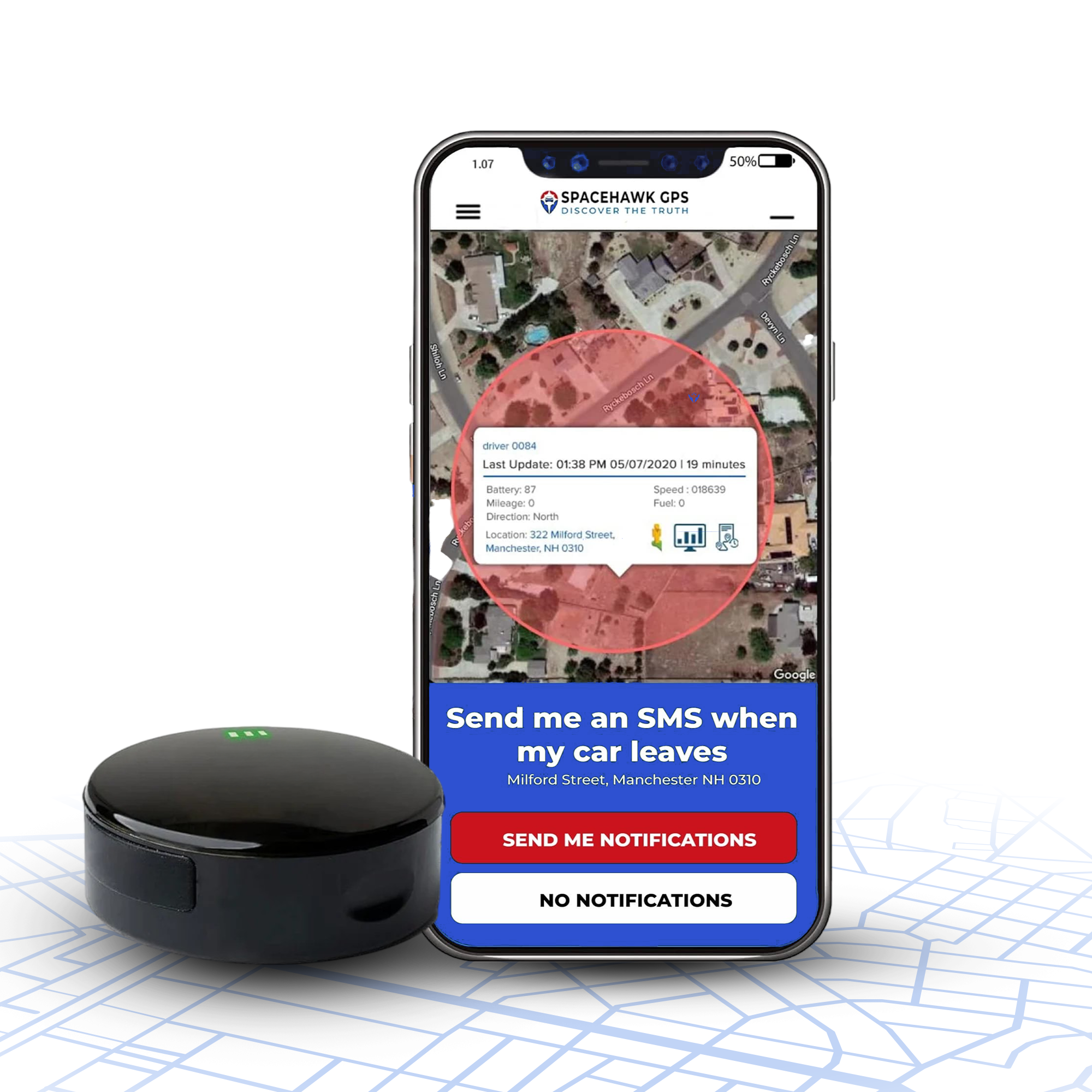
SpaceHawk Magnetic GPS Tracker
Magnetic mount, no wiring, live location every 3 seconds. Suited to a vehicle, trailer or piece of equipment you own. Rated 4.1 stars from nearly 100 verified Amazon reviews, with a lifetime warranty.
As an Amazon Associate, GPS Tracker Shop earns from qualifying purchases.
About the Author

Frequently Asked Questions
Do Penalties Exist for Illegally Tracking a Car Without the Owner’s Consent?
Are There Tools That Might Help Find a GPS Tracker on My Car?
What Should I Do with the Serial Number on a Tracker Found on My Car?
Can My Fleet Manager Legally Place a Tracker on My Truck GPS Without Informing Me?
- Choosing a selection results in a full page refresh.
- Opens in a new window.
 Buy on Amazon