
Can I Use AirTag To Track My Husband? The Legal Answer

5 things to know before putting an AirTag on your husband's car
-
01
Placing an AirTag in your husband's car without consent is illegal in most US states.
-
02
Vehicle ownership decides legality, so tracking a car titled in your own name is lawful.
-
03
AirTags contain no GPS and borrow their location from Apple devices passing nearby.
-
04
Unwanted tracking alerts notify iPhone and Android users when an unknown AirTag travels with them.
-
05
A separated AirTag starts chirping on its own within 8 to 24 hours, exposing itself.
Own the vehicle? Track it the legal way.
Shop GPS TrackersUsing Apple AirTags to Track Your Spouse’s Car | What the Law Says and What He'll See
Can I use an AirTag to track my husband? If you’re asking, there’s probably a reason.
Maybe his story doesn’t add up, you’re worried about where he goes, or you found something that left you with more questions than answers. I’ve spent 15 years working with tracking devices on fleet vans, work trailers, and trucks.
The technical answer and the legal answer can be very different. That gap can put you in a tough spot. An AirTag can attach to a car in about four seconds. An AirTag may well help locate his car. Using one to follow your husband raises a different set of questions. Who owns the vehicle? Does he know about the tracker? What does your state allow?
I’ll answer those three questions, plus the part nobody tells you. The goal is the safest path forward, not a decision that could hurt you later.
We earn a commission on purchases made through Amazon links on this page.
Legal notice
This article explains how AirTags and GPS trackers work and how US tracking laws generally treat them. Nothing here is legal advice, and I am not an attorney. Tracking statutes differ by state and change often. A pending divorce, custody case or protective order can change your answer completely. Talk to a family law attorney in your state before placing any tracker on a vehicle you do not own.

Quick answer
Yes, you can use an AirTag to track your husband. Doing so without his consent is illegal in most US states. Marriage creates no exemption. Legality depends on vehicle ownership, so tracking a car titled in your own name is generally lawful. Apple and Google also alert iPhone and Android users when an unknown AirTag travels with them. He will likely find out.
What is an Apple AirTag?

An Apple AirTag is a coin-sized Bluetooth tracker for your belongings. You locate them through the Find My app on an iPhone, iPad or Mac. AirTags contain no GPS and no cellular radio. Each tag broadcasts a Bluetooth signal, and nearby Apple devices relay its approximate location back to you. Apple designed AirTags for objects, not for tracking people.
- Coin-sized, with a replaceable CR2032 battery lasting about a year
- Locates keys, luggage and bags through the Find My network
- No GPS receiver and no cellular connection of its own
Buy the AirTag for your keys and your luggage. A vehicle needs a real GPS tracker, which is a different tool for a different job.
Do Apple AirTag trackers use GPS?
No, Apple AirTag trackers don't use GPS. AirTags have no GPS receiver, so they can't determine their own position from satellites. Instead, they use Bluetooth to communicate with nearby Apple devices. Those devices report the tag's location through Apple's Find My network.

Inside an AirTag, you get Bluetooth, an ultra wideband chip, and a coin battery that lasts about a year. That difference is important if you're thinking about using an AirTag to track your husband's car. Nearby Apple devices detect the AirTag and help update its location. The reported position can sometimes be delayed.
A dedicated GPS tracker, by contrast, carries its own cellular connection and its own GPS receiver. The device knows where it is. No borrowed pin from a passing stranger. No dead zone the second the iPhones thin out. Our guide to how GPS trackers work covers the technology in plain English.
Buy the AirTag for your keys and your luggage. Buy a GPS tracker when you want to know where the vehicle is, right now, or track a stolen car.
Is it legal to put a tracking device in your spouse's car?
No. Putting a tracking device in your spouse's car without consent is illegal in most US states. The name on the title changes the answer. I get this question often, from people worried about a spouse's location, a possible affair, or a custody dispute.

The safest way to look at the issue is to start with who owns the car. Three situations cover nearly everyone who asks me. I will take them in order.
Is the car titled in your name only?
A car titled in your name alone is generally your property. Many state tracking laws create an exception for the registered owner. California Penal Code 637.7, for example, prohibits using an electronic tracking device to learn a person's location or movement. The statute then exempts the registered owner, lessor, or lessee. Tracking your own registered vehicle can fall within that exception.

Even then, I wouldn't assume vehicle ownership gives you unlimited permission to monitor your spouse. State laws differ. The reason for tracking can also affect the legal analysis.
What if the car is titled to both of you?
Joint title creates a grey area because the answer changes from state to state. Some states may allow one co-owner to track shared property. Others can require consent before an electronic tracking device is used.

A few things can change the situation quickly, and I see these issues come up in family disputes:
- A divorce filing is already with the court
- A restraining order or protective order exists
- You're separated and your spouse has been the only driver for months
Any of these circumstances can increase the legal risk. Secret tracking during a custody dispute can also create problems for the person doing the tracking. The risk grows if the evidence ends up before a judge.
Can you put a tracking device in a car titled to your husband?
A car titled solely to your husband is legally his vehicle. Marriage alone doesn't automatically give you permission to place a tracking device on it.

California, Texas, and Florida don't provide a general marital exemption in their electronic tracking laws. North Carolina treats certain unauthorized tracking as a Class 2 misdemeanor. I am not your attorney, and one article can't cover all 50 states. Talk with a family law attorney before putting an AirTag or GPS tracker in your husband's car.
Twenty minutes of legal advice can cost far less than dealing with a criminal charge.
Related deep guide
GPS Tracking Laws By State
Every state's tracking statute, its penalty, and the owner exception, in one directory you can search by state.
Look Up Your StateI’ll add one personal observation. People who feel they need to secretly track a spouse are dealing with a bigger problem than a car's location. If you're worried enough to hide a tracker, you may need a conversation or legal advice, not another tracking device.
Will unwanted tracking alerts tell my husband?
Unwanted tracking alerts can tell your husband that an unknown AirTag is traveling with him. Apple and Google built these protections to help people detect unauthorized tracking.

Your husband won't see your Find My map or your account. Instead, his phone can alert him that an unknown AirTag is moving with him. He can then locate the AirTag, check its serial number, and report it. All of that works without his ever seeing your account.
Depending on his phone:
- iPhones can alert users about an unknown AirTag traveling with them.
- Newer iPhones can detect compatible Bluetooth trackers from other brands.
- Newer Android devices run Google's unknown tracker alerts natively.
- Older Android phones can scan manually with Apple's Tracker Detect app.
- The AirTag itself starts chirping once separated from its owner, at a random point between 8 and 24 hours.
Five different ways he finds out, and you control none of them.
Ask Brooks Nader how well the alerts work. A stranger slipped an AirTag into the Sports Illustrated model's coat at a TriBeCa bar in January 2022. Her iPhone flagged an unknown accessory moving with her while she walked home. She described the moment as the scariest of her life. The alert is the reason she knew at all.
What happens when unauthorized tracking gets prosecuted?
Unauthorized tracking can lead to criminal charges. The trigger is secretly using an AirTag or other tracking device to monitor another person or vehicle. Depending on the circumstances, the case may involve electronic tracking, stalking, or illegal surveillance. The tracker itself can also become important evidence when unauthorized tracking is reported.

Carlos Atkins and the AirTag in a car
Real case
Carlos Atkins, near Memphis, was charged with electronic tracking of a motor vehicle. His ex-wife had found an AirTag in her car. He admitted putting it there. His explanation, that he wanted to leave roses on her car, did not help him. Apple responded to the case by saying the company strongly condemns malicious use of its products.
AirTag tracking during a child support dispute
Real case
The second case hits closer to home. A wife in Hampshire fitted an AirTag to her husband's work van during a difficult split over child support. She wanted proof he was working while claiming he could not pay. She checked the tracker daily and kept showing up wherever he was, until he found it.
She pleaded guilty to stalking and received a 12-month community order. She told the court she hadn't realized hiding a tracking device was illegal.
Read her story twice. Her motive wasn't sinister and she thought she was gathering evidence. The court still treated what she did as stalking. Unauthorized tracking creates serious legal trouble regardless of the reason behind it.
3.4 million
Americans aged 16 and over reported stalking in a single survey year. Technology was involved in 80% of those cases, and 14% of that group said their whereabouts were tracked electronically.
Source: Bureau of Justice Statistics, Stalking Victimization 2019
When are GPS trackers the legal choice?

GPS trackers are generally the legal choice when you own the vehicle or equipment being tracked. Common examples cover a car in your name, a teen in the family vehicle, and company equipment. Ownership gives you a much stronger legal basis for tracking your own property.
Where a real GPS tracker separates from an AirTag is the part I explained earlier. The unit reports the vehicle's location directly instead of relying on nearby Apple devices.
Every one of those sits inside the registered owner exception, and none of them needs a lawyer on speed dial. None of that makes every tracking situation automatically legal. Federal and state laws can apply, and state rules vary with the circumstances.
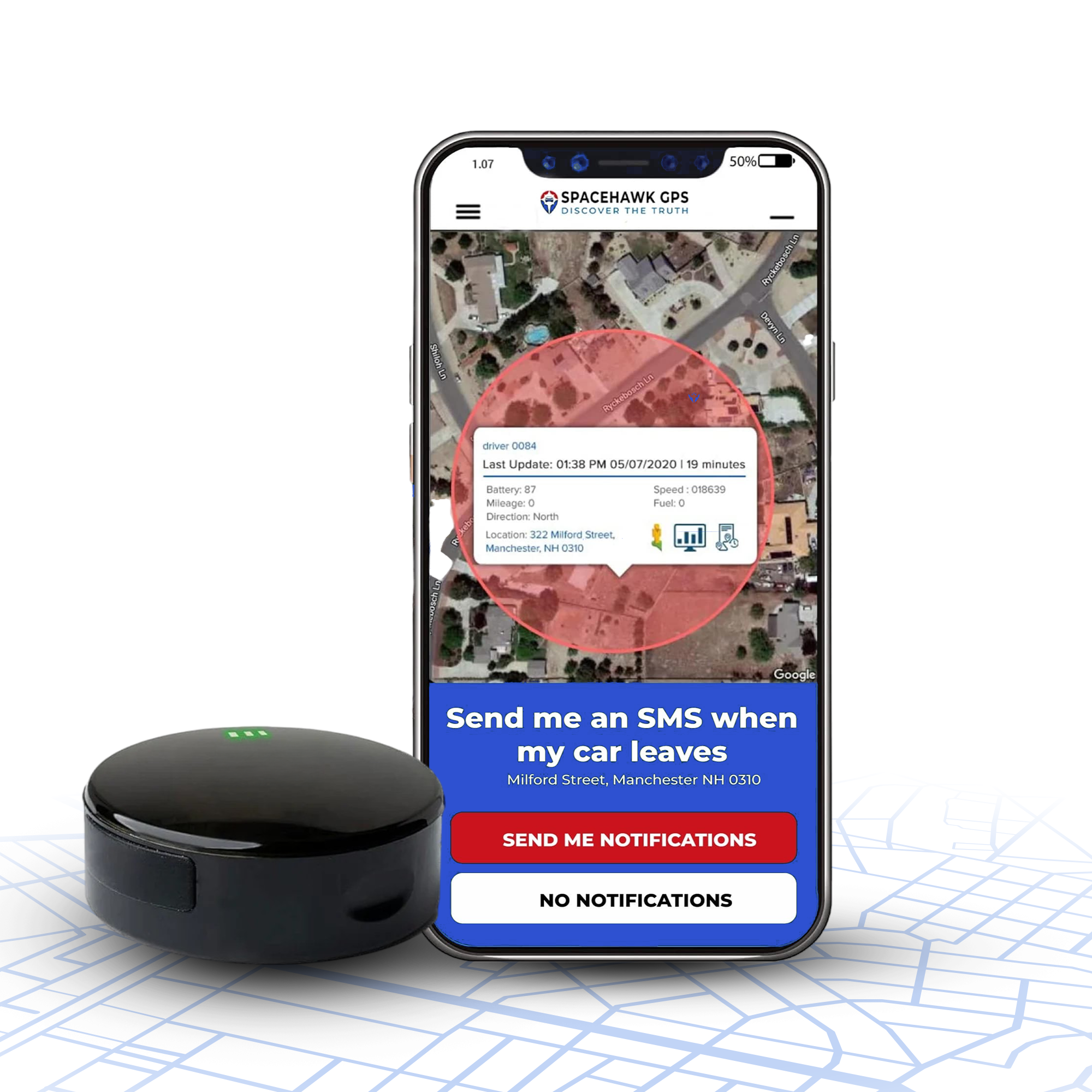
For a vehicle you own, the SpaceHawk is the tool built for the job. Real GPS and its own cellular connection, so the location comes from the tracker rather than from passing iPhones.
- Live location updates from its own GPS receiver
- Magnetic, waterproof housing that mounts in seconds
- Runs one to three weeks per charge on its internal battery
Use one on your own car, your teen's family vehicle, or a work van. The registered owner exception is the entire point of this product.
How do I find an unknown AirTag on my own car?

Finding an unknown AirTag on your own car takes four steps. Your phone does most of the work before you ever kneel down. Run them in order.

If the person who placed it frightens you
Maybe you have a good idea who put it there, and that person frightens you. Go somewhere public and call the police before you do any of this. Apple works with law enforcement on these cases. The serial number is the first thing they will ask you for.
Fear of a partner or an ex changes the picture. The National Domestic Violence Hotline at 1-800-799-7233 is free, confidential and open around the clock.
Final Thoughts
Can I use an AirTag to track my husband? Technically yes, for a matter of hours, until his phone tells him.
The device you were hoping for does not exist. Apple built the alerts on purpose. Every state legislature has been moving in the same direction for four years now. Whatever you learn from a hidden tag, you will explain to a judge who knows how you got it.
If you own the vehicle, track it. Put a real tracker on your own car, your teen's car, or your work van, and stop worrying. For a vehicle you do not own, the honest answer is the one nobody wants from me.
You already know something is wrong. A tracker will not tell you anything a conversation would not.
Track what you own, and skip the legal grey zone entirely
About the Author

Frequently Asked Questions
Can I use an AirTag to track my husband legally?
Can AirTags track someone in real time?
Do AirTags work without an iPhone nearby?
How long before an AirTag alerts someone?
Will someone know if an AirTag is tracking them?
Is tracking my teenager with an AirTag legal?
Can my husband see where I am from the AirTag I placed?
What is the penalty for tracking a spouse without consent?
- Choosing a selection results in a full page refresh.
- Opens in a new window.
 Buy on Amazon