
GPS Tracking Laws By State

Key Takeaways
5 things to know before you put a tracker on any vehicle
-
01
Tracking a car you own is legal everywhere. Tracking one you do not own is where the trouble starts.
-
02
Twenty-three states have a statute written specifically for tracking devices.
-
03
No tracking statute does not mean permission. Stalking and harassment laws fill the gap.
-
04
The Fourth Amendment restrains police, not private citizens. Your neighbor is not covered by it.
-
05
Employers may track company vehicles. New Jersey requires written notice, even on an employee's own car.
Tracking a vehicle you own?
Trackers for your own car, your trailer and your fleet.
Shop GPS TrackersMaybe you run a small fleet and want to know where the vans are. Maybe you bought a trailer and would rather not lose it. Either way, the law decides what you can do before the hardware does.
I'm Ryan Horban, and I've spent the last 15 years working with GPS vehicle trackers, fleet tracking devices, and commercial GPS tracking systems across real-world fleets. The question I get asked most often is not which device to buy. People want to know whether tracking is legal at all.
So we went through the statutes in all 50 states and the District of Columbia, and linked each one. Below you'll find what each state actually says. You also get the cases that shaped the rules, plus a policy template for employers.
The short answer
Track what you own. A vehicle titled to you, or to your business, is yours to monitor in every state. Everything else depends on consent.
Track a vehicle you do not own, without the owner agreeing, and you are exposed. Twenty-three states say so directly. The rest get there through stalking and harassment law.

For vehicles you own
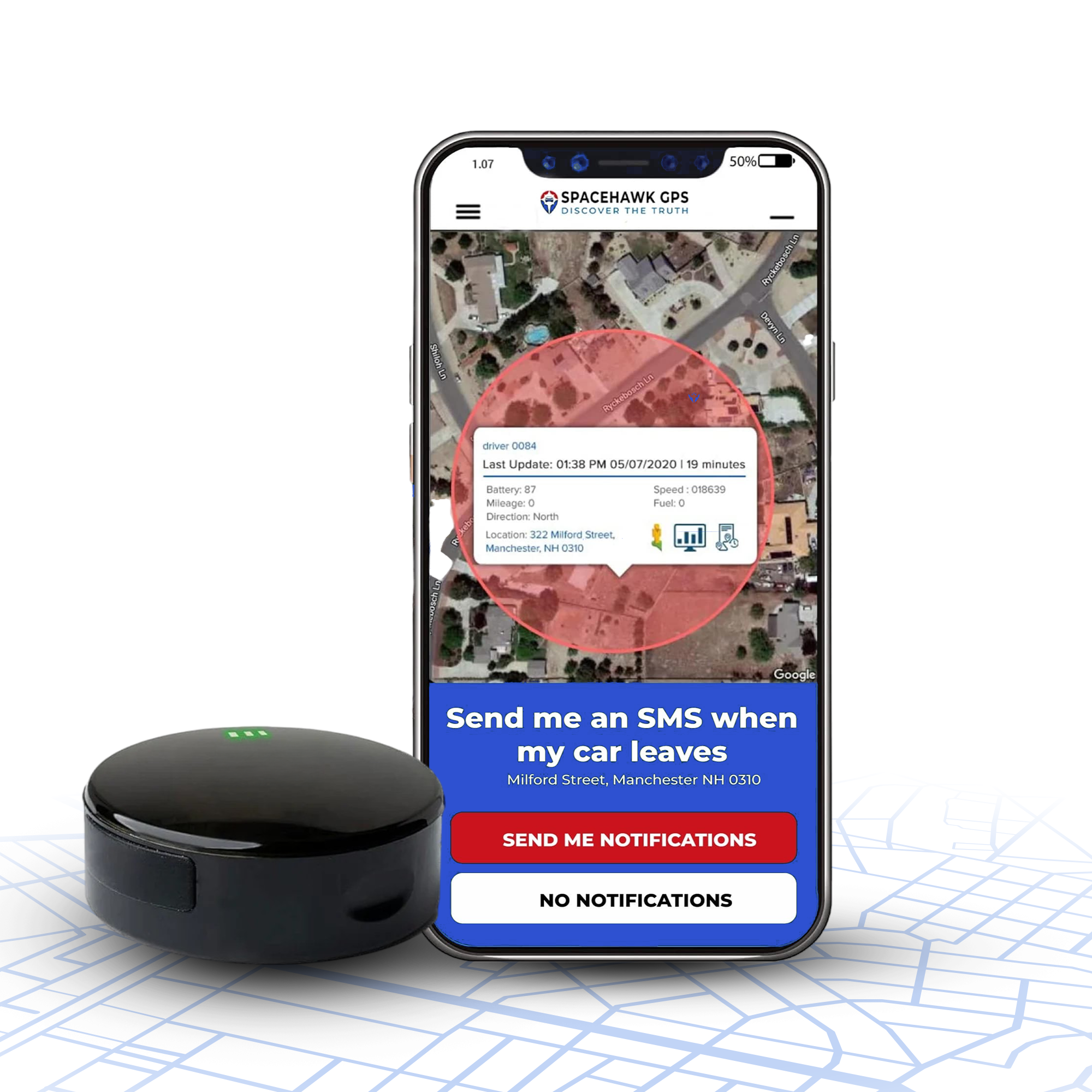
SpaceHawk Magnetic GPS Tracker
A magnetic unit that moves between your own vehicles without an install. Good fit for a work truck, a trailer or a second car.
- $39.95 device
- 3-second updates
- Around 6 ft accuracy
- IP67 weatherproof
- Plans from $9.95 a month
- Lifetime warranty
Plan pricing shown at the two-year prepay rate. Month-to-month runs $19.95.
What GPS Tracking Law Actually Turns On
Most articles on this topic start with the device. Wrong end of the problem.
Almost every statute in the country asks the same two questions. Who owns the vehicle? And did that person agree to be tracked?
Answer both in your favor and the placement barely matters. Answer either one badly and the make and model of the tracker will not save you.
Ownership and consent decide the case. Where you stuck the magnet almost never does.
You will read online that attaching a device to the outside of a car is a loophole. Not true. Prosecutors charge people for exactly that.
Related reading
New to the hardware side? Start with how GPS trackers work.
The Fourth Amendment Misconception
This is the single most common error in GPS legal content, and it cuts both ways.
That amendment restrains the government. Police, federal agents and public employers acting as the state all fall under it.
A private person does not. Your neighbor cannot violate your Fourth Amendment rights, because those rights do not run against him.
Private exposure comes from state stalking and surveillance statutes, plus civil invasion-of-privacy claims. Not from the Constitution.
That matters practically. People assume no warrant means no problem for a private tracker. The opposite is closer to true.
201 to 2
The Pennsylvania House vote in April 2025 to make tracker-based stalking its own criminal offense. The bill has not become law.
Source: City and State Pennsylvania, April 2025
GPS Tracking Laws in All 50 States and D.C.
Each entry names the provision the state actually relies on and links to it. Three patterns show up again and again.
Some states wrote a law about tracking devices. Some reach the same conduct through stalking. A few have neither, which is not the same as allowing it.
Western States
-
Alaska
Stalking lawAlaska has no tracking-device statute. Following or monitoring someone with a location device is charged as stalking.
-
Arizona
Stalking lawArizona sets a clock. Surveilling a person by GPS for twelve hours, or on two occasions, counts as stalking.
-
California
Tracking statuteCalifornia bars using an electronic tracking device to find a person. The registered owner or lessee is exempt.
-
Colorado
Stalking lawVonnie's Law covers repeatedly following, contacting or surveilling a person. The name honors Vonnie Flores, killed by a stalker in 2010.
-
Hawaii
Tracking statuteHawaii treats tracking as electronic eavesdropping. Intentional use needs consent, a warrant or another court order.
-
Idaho
No statute on pointIdaho's eavesdropping chapter never names GPS or location data. Stalking and trespass still reach the conduct.
-
Montana
No statute on pointHouse Bill 603 made police get a warrant before tracking a person. Private conduct is handled under other offenses.
-
Nevada
Tracking statuteNevada now bars installing a tracking device on another person's vehicle. The 2023 act treats it as a privacy offense.
-
New Mexico
Stalking lawNew Mexico reaches device-assisted surveillance through its stalking law. The conduct must put the person in reasonable fear.
-
Oregon
Tracking statuteOregon makes it a crime to knowingly attach a GPS device to a vehicle without the owner's consent.
-
Utah
Tracking statuteUtah bars installing a tracker on a vehicle you neither own nor lease. Carve-outs cover police warrants, licensed investigators and guardians.
-
Washington
Stalking lawWashington folds tracking into cyberstalking. Installing or monitoring a device counts when it would reasonably cause fear.
-
Wyoming
Stalking lawWyoming lists electronic, digital and GPS surveillance inside its stalking offense. Intent to harass is the element that matters.
Midwestern States
-
Illinois
Tracking statuteIllinois has two routes. A criminal trespass provision bars tracking a vehicle, and the stalking law covers surveillance.
-
Indiana
Tracking statuteIndiana bars tracking a person without consent. Police with a warrant and certain family members sit outside the offense.
-
Iowa
Tracking statuteIowa is one of the few states to name the device in the offense title. The charge is unauthorized placement of a GPS device.
-
Kansas
Stalking lawKansas added GPS to its stalking provisions. Tracking a person's location or movement patterns is covered.
-
Michigan
Tracking statuteMichigan bars placing a tracker on a vehicle without the owner's or lessee's consent. The penalty reaches a year in jail and a $1,000 fine.
-
Minnesota
Tracking statuteMinnesota requires a court order for a mobile tracking device, with limited exceptions. Penalties run to $3,000 and 364 days.
-
Missouri
Stalking lawMissouri handles tracking mainly through its order-of-protection and stalking provisions rather than a standalone tracking crime.
-
Nebraska
No statute on pointNebraska has no private tracking statute. Prosecutors use stalking, which needs a course of conduct, not one placement.
-
North Dakota
Stalking lawNorth Dakota names GPS inside its stalking offense. The test is whether a reasonable person would feel frightened or harassed.
-
Ohio
No statute on pointOhio's menacing by stalking law never mentions GPS. Prosecutors rely on its broader electronic-device language instead.
-
South Dakota
No statute on pointSouth Dakota's provision governs police. Officers need a warrant from a magistrate before using a tracking device.
-
Wisconsin
Tracking statuteWisconsin makes non-consensual placement a Class A misdemeanor. Pulling location data off such a device is also an offense.
Southern States and the District of Columbia
-
Alabama
No statute on pointAlabama has no tracking statute. Criminal surveillance reaches surveillance carried out while trespassing on private property.
-
Arkansas
No statute on pointArkansas draws the line at ownership. A company vehicle needs no consent, and an employee's own car does.
No tracking statute
-
Delaware
Tracking statuteDelaware makes non-consensual installation a class A misdemeanor. Police and a parent tracking a minor child are exempt.
-
District of Columbia
Stalking lawThe District reaches GPS through stalking. Monitoring a person on two or more occasions is the threshold.
D.C. Code 22-3132
-
Florida
Tracking statuteFlorida bars installing a tracking device or app without consent. Consent is presumed revoked once a divorce petition is filed.
-
Georgia
No statute on pointGeorgia has no dedicated provision. Non-consensual tracking is handled under stalking and privacy law, and police need a warrant.
No tracking statute
-
Kentucky
Tracking statuteKentucky created a standalone offense. Placing a device on a vehicle, or tracking it, without consent is unlawful.
-
Louisiana
Tracking statuteLouisiana is blunt about it. No person may use a tracking device to locate another person without consent.
-
Maryland
Stalking lawMaryland writes device tracking into the stalking offense. Doing it without the person's knowledge or consent is enough.
-
Mississippi
No statute on pointMississippi has no GPS-specific law. Using a device to follow someone can still be charged as stalking.
-
North Carolina
Tracking statuteNorth Carolina puts tracking inside cyberstalking. Using or installing a device without consent is unlawful.
-
Oklahoma
Stalking lawOklahoma counts GPS tracking as following. Dealers and creditors are carved out where they hold written consent.
-
South Carolina
No statute on pointSouth Carolina's tracking provision governs police applications for a court order. No statute squarely bars private tracking yet.
-
Tennessee
Tracking statuteTennessee bars installing or concealing a tracking device in a vehicle without the consent of all owners.
-
Texas
Tracking statuteTexas makes unlawful installation a Class A misdemeanor. Effective consent of the owner or lessee is a defense.
-
Virginia
Tracking statuteVirginia targets tracking carried out by deception. Using a device to locate someone without consent is the offense.
-
West Virginia
Tracking statuteWest Virginia treats a first offense as a misdemeanor. Later offenses are graded as felonies.
Northeastern States
-
Connecticut
Stalking lawConnecticut charges electronic stalking as a Class B misdemeanor. Repeated remote tracking that causes fear is covered.
-
Maine
Stalking lawMaine's stalking law reaches any method or device used to follow, track or surveil a person.
-
Massachusetts
No statute on pointMassachusetts never names GPS. Criminal harassment covers devices used as part of a distressing pattern of conduct.
-
New Hampshire
Tracking statuteNew Hampshire bars placing an electronic device on a person or their property to get location information.
-
New Jersey
Tracking statuteNew Jersey is the strictest employer rule in the country. Written notice is required, and it covers the employee's own car too.
-
New York
Stalking lawNew York reads unauthorized GPS tracking as following, which supports a fourth-degree stalking charge.
N.Y. Penal Law 120.45
-
Pennsylvania
No statute on pointPennsylvania's mobile tracking provision is written for courts and police. Private conduct is charged as stalking or harassment.
-
Rhode Island
Tracking statuteRhode Island requires consent from the operator and all occupants. Law enforcement sits outside the offense.
-
Vermont
Stalking lawVermont's stalking definitions cover following, monitoring or surveilling a person by any type of device.
1 year
The maximum jail term in Michigan for putting a tracker on a vehicle without the owner's consent. A $1,000 fine can run alongside it.
Never track a person without their agreement
Putting a tracker on someone else's vehicle is a crime in most states. That device is also the most common tool used against partners and ex-partners.
If you think a device has been placed on your car, leave it where it is and photograph it. Then call your local police. Removing it first destroys the evidence.
Support is available. The National Domestic Violence Hotline runs at 1-800-799-7233 and thehotline.org. The Stalking Prevention, Awareness and Resource Center is at stalkingawareness.org.
Employer Tracking and What Notice Rules Really Require
A company-owned vehicle may be tracked in all 50 states. That part is settled.
What varies is what you owe the driver. Most guides say consent. The statutes usually say notice, which is a lower bar and a different one.
Four states have written rules worth knowing. Only one of them was drafted with vehicles in mind.
| State | Statute | What it requires | Does it clearly cover vehicle GPS? |
|---|---|---|---|
| New Jersey | N.J.S.A. 34:6B-22 | Written notice before using a tracking device in a vehicle an employee drives | Yes. Written for vehicles, and it covers the employee's own car |
| New York | Civil Rights Law 52-c | Notice at hiring, acknowledged in writing, plus a posted notice | Unsettled. Drafted for telephone, email and internet monitoring |
| Connecticut | Conn. Gen. Stat. 31-48d | Prior written notice of electronic monitoring, posted where employees can see it | Unsettled. Written around monitoring on the employer's premises |
| Delaware | 19 Del. C. 705 | Daily notice or a one-time signed acknowledgement before monitoring | Unsettled. Drafted for telephone, email and internet monitoring |
New Jersey is the outlier and the one to plan around. Its rule reaches an employee's personal car, which no other state does.
The other three were written before vehicle tracking was common. Employment lawyers generally advise treating notice as required anyway.
Two habits keep employers out of trouble. Put the policy in writing, and switch tracking off when the shift ends.
Off-hours monitoring is where these cases actually get lost. A vehicle the driver takes home is a mixed-use vehicle, and courts treat it that way.
Related reading
For how the tracking itself works day to day, see how real-time GPS trackers work.
Running vehicles your business owns?
Company-owned vehicles are the clean case. Write the policy, tell the drivers, and track the assets you paid for.
Browse fleet trackersCourt Cases That Shaped GPS Tracking Law
Five decisions come up constantly. Several are misreported online, including on pages selling trackers.
Here is what each one actually held.
-
United States v. Jones
Police attached a GPS unit to a suspect's car and tracked it for 28 days. Installing the device and monitoring the vehicle is a Fourth Amendment search, the Court held.
The ruling did not say police always need a warrant. That question was expressly left open, and the officers here had a warrant that was improperly executed. Read the opinion.
-
Cunningham v. New York State Dept. of Labor
The state put a GPS device on an employee's personal car to investigate his timesheets. The device ran for a month, covering evenings, weekends and a family vacation.
The employer lost. Judges called the search unreasonable in scope. No effort was made to avoid tracking him off the clock. Decision in full.
-
United States v. Katzin
A panel ruled that police need a warrant to attach a GPS device, and suppressed the evidence. That made the Third Circuit the first federal appeals court to require one.
A full en banc rehearing reversed the suppression in October 2014. The warrant requirement stood, but the evidence came in under the good-faith exception. Rehearing ruling.
-
Elgin v. St. Louis Coca-Cola Bottling Co.
An employer put a GPS unit on a company van after cash went missing from vending machines. The employee was cleared, then sued for intrusion upon seclusion.
The claim failed. The van belonged to the company. Tracking it showed only where that van had been on public roads.
-
Tubbs v. Wynne Transport Service
A trucking company fitted GPS across its fleet as standard practice. A driver brought an invasion of privacy claim over the data collected.
A judge dismissed it, but wrote almost nothing about GPS itself. Treat this as weak authority, not a green light.
GPS monitoring generates a precise, comprehensive record of a person's public movements.
Justice Sonia Sotomayor
Concurring opinion, United States v. Jones, 565 U.S. 400 (2012). Her concurrence is the most quoted passage in location privacy law.
When GPS Tracking Is Almost Always Legal
Plenty of tracking is straightforward. These five situations hold up nearly everywhere.
Two cautions sit on top of that list. A jointly titled car during a separation is not a simple ownership question.
And tracking a competent adult relative, including an aging parent, needs their agreement. Age alone does not remove consent.
Related reading
Tracking equipment rather than vehicles? See what GPS asset tracking covers.
How to Write an Employee GPS Policy
A written policy is what turns a legal gray area into a defensible one. Five steps cover it.
-
Name the reason
Write down why you are tracking. Route efficiency, dispatch, theft recovery and driver safety are all defensible. A vague purpose is what gets picked apart later.
-
Say what you collect
List the actual data points. Location, timestamps, trip start and stop. Say what you do not collect, because that reassures people more than the list of what you do.
-
Set the hours
State when tracking runs and when it stops. For a take-home vehicle, spell out that monitoring ends at the end of the shift.
-
Give notice in writing
Have every driver sign that they have read it. Written notice is mandatory in New Jersey, and three other states require it for electronic monitoring.
-
Review it once a year
These statutes are moving. Bills were filed in several states last session. Check the rules where your drivers actually operate.
Frequently Asked Questions
Are GPS trackers legal in South Carolina?
South Carolina has no statute that squarely bars private tracking. A 2025 bill, H. 3059, would create one, and it is sitting in House Judiciary. Stalking and harassment law still applies in the meantime.
Can my employer track my location without asking me?
If the vehicle belongs to the company, generally yes, and consent is usually not the legal test. Notice often is. One state goes further and covers your own car too.
What does the law on GPS tracking say in Texas?
Texas Penal Code 16.06 makes it a Class A misdemeanor to install a tracking device. That covers any vehicle owned or leased by someone else. Consent of the owner is a defense.
Can I track my spouse's car if we are married?
Treat this as a no. Marriage does not create consent, and several states name divorce filings directly. Doing it anyway can also damage your own family law case.
Does putting the tracker outside the car make it legal?
No. Statutes are written around ownership and consent, not placement. People have been charged for devices taped to a wheel well.
Primary sources
- United States v. Jones, 565 U.S. 400 (2012)
- Cunningham v. New York State Dept. of Labor, N.Y. Court of Appeals (2013)
- United States v. Katzin, Third Circuit en banc (2014)
- South Carolina H. 3059, Unlawful Tracking (2025-2026 session)
- New Jersey N.J.S.A. 34:6B-22, vehicle tracking notice
- Nebraska Rev. Stat. 28-311.02, stalking definitions
- Delaware 11 Del. C. 1335, violation of privacy
This article is general information about GPS tracking laws, not legal advice. These statutes change, and outcomes turn on the facts of a particular situation. Talk to a licensed attorney in your state first. That applies before you install or use a tracker on any vehicle, person or employee.
Track what belongs to you
Your own car, your own trailer, your own fleet. That is the version of this that never gets complicated, and it is what our trackers do best.
- Choosing a selection results in a full page refresh.
- Opens in a new window.
 Buy on Amazon