
How to Build a GPS Tracking Policy for Your Business

Key Takeaways
5 things to know before building a GPS tracking policy
-
01
New Jersey is the only state whose notice law is written specifically about vehicle tracking devices
-
02
Define who is tracked, what data, who can see it, and how long you keep it
-
03
Most state tracking statutes exempt the vehicle owner, so your own fleet sits outside them
-
04
Tracking after hours must be stated outright if vehicles go home with your drivers
-
05
The signed acknowledgment form is the document that does the most work in a dispute
Need a tracker your policy can actually use?
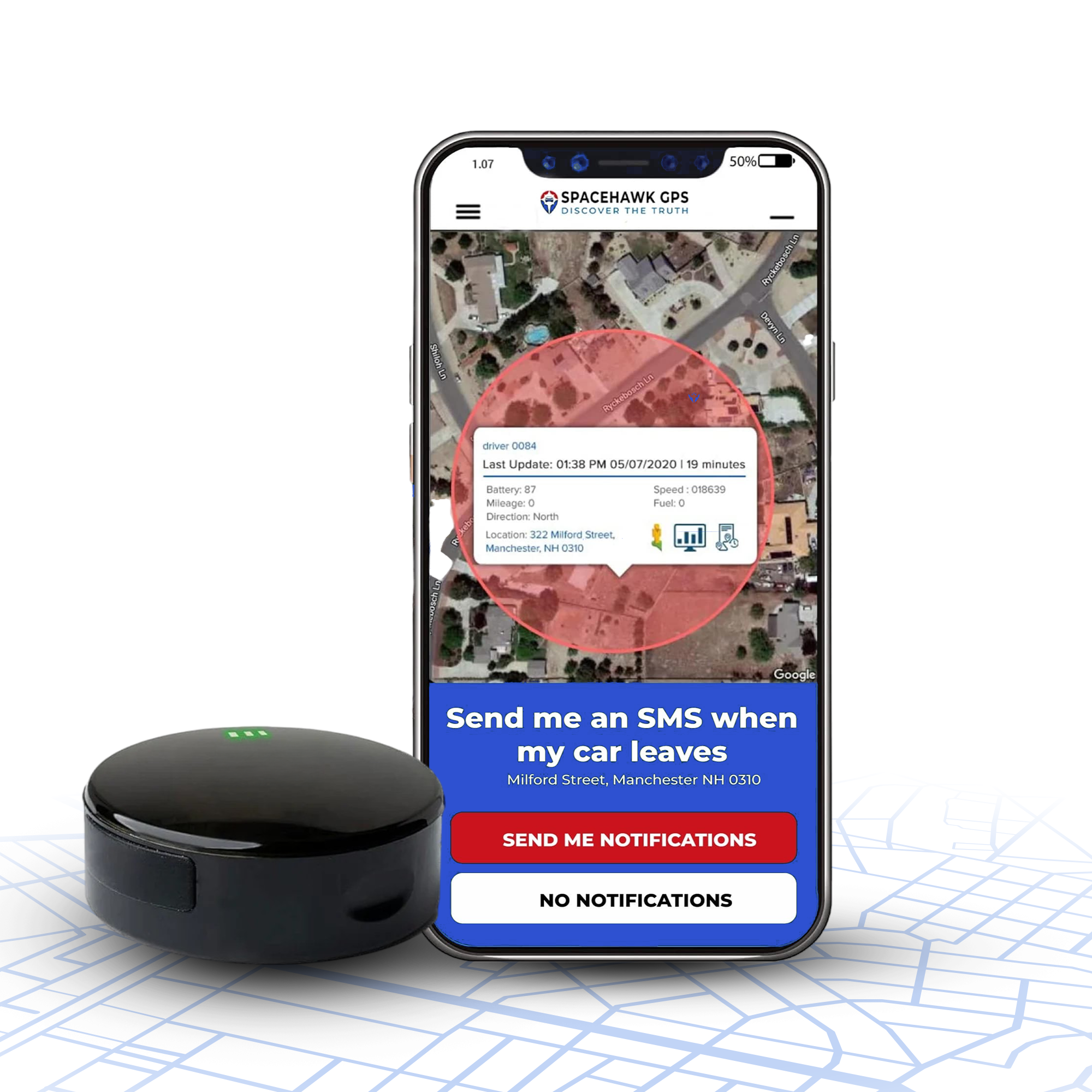
SpaceHawk produces clean trip records, tamper alerts, and real-time 4G LTE data.
As an Amazon Associate, GPS Tracker Shop earns from qualifying purchases.
A GPS tracking policy is a written document. It defines which vehicles are tracked and what location data is collected. It also sets who can access that data and how long it is kept. Without one, a legally installed fleet tracker can still expose your business to lawsuits and employee grievances.
I'm Ryan Horban. I've spent 15 years deploying GPS tracking systems across small businesses and multi-vehicle fleets. The mistake I see most often: companies install hardware correctly, then ship with no written policy. That's where the legal exposure begins.
This guide gives you a ready-to-use template, a state compliance table, an employee consent form, and a rollout plan. You can put all four into action this week.

Recommended for fleet tracking
Install in seconds. Track from anywhere.
No wiring and no tools. The magnetic mount fits under any vehicle. What it produces is the useful part. Timestamped trip records, tamper alerts, and geofence logs your policy can point to.
- Zero-wire install
- 3-second updates
- Magnetic mount
- Tamper alerts
- Full trip history
- Weatherproof housing
What a GPS tracking policy is, and why your business needs one
 The policy is the part that survives a dispute. The hardware rarely is.
A GPS tracking policy is a formal written document. It sets the rules for how your business collects, uses, stores, and shares location data. That covers company vehicles and equipment. Employees learn what is tracked, when, why, and who inside the organization can view it.
Most businesses that run into legal trouble did not install the wrong device. They installed the right device with no documentation behind it. Building a first compliance framework? Our free sample employee GPS tracking policy template shows how the disclosure, consent, retention, and acknowledgment sections fit together.
Fleets that track for years without a written policy tend to hit the same wall. A driver disputes a GPS-related decision and HR has nothing to present. No signed acknowledgment, no access log, no documented retention window. The tracker data can be completely accurate and still not carry the day. Nothing supports how it was collected or used.
Without signed disclosures on file, employers lose the ability to lean on GPS data. That matters at arbitration and at a state labor board. A documented policy also works the other way. Drivers have used timestamped records to disprove customer complaints about late arrivals and missed service windows.
Businesses that need a GPS tracking policy include delivery and logistics companies, HVAC and plumbing contractors, and construction firms. Also landscaping operations, transportation services, sales fleets, and school transportation operators. Healthcare providers with mobile staff belong on the list too. So does any company that assigns employees to company vehicles.
What state law actually requires
Tracking company-owned vehicles is legal in all 50 states. Legality and compliance are two different things, and the statutes fall into two very different groups. Getting that split right is what keeps a policy honest.
The first group is employer notice law. One state stands out here, and that is New Jersey. N.J.S.A. 34:6B-22 took effect in April 2022. It requires written notice before an employer knowingly uses a tracking device in a vehicle an employee drives. The employee's own car is covered as well as a company one.
New York, Connecticut, and Delaware also have electronic monitoring notice statutes. Those three were written for telephone, email, and internet monitoring. Whether vehicle GPS falls inside them has not been settled, so employment attorneys advise treating notice as required anyway.
Statutes in Texas, Nevada, Indiana, California, and Florida are often described as employer consent rules. They are not. Each is a criminal statute against putting a tracker on another person's vehicle. Each exempts the owner or lessee. A company tracking its own fleet sits outside them. Where they bite is an employee's personal car.
| State | What kind of law | What it means for your policy |
|---|---|---|
| New Jersey | Notice required | 34:6B-22 is the only statute written about vehicle tracking devices and employees. Written notice before use. Covers company vehicles and personal cars alike. |
| New York | Notice, GPS scope open | Civil Rights Law 52-c requires written notice of electronic monitoring at hiring, acknowledged and posted. Written for phone, email, and internet. |
| Connecticut | Notice, GPS scope open | Section 31-48d reaches furthest of the three. Monitoring is defined around activity on the employer's premises, which sits awkwardly with an off-site vehicle. |
| Delaware | Notice, GPS scope open | 19 Del. C. 705 requires notice before monitoring telephone, email, or internet use. Vehicle GPS is not named. |
| California | Owner exempt | Penal Code 637.7 bars tracking a person without consent, then exempts the registered owner or lessee. Your own fleet is inside that exemption. |
| Texas | Owner exempt | Penal Code 16.06 makes it a Class A misdemeanor to track a vehicle owned or leased by another person. Effective consent is a defense. |
| Nevada | Owner exempt | NRS 200.930, enacted by AB356 in 2023, criminalizes placing a tracker on another person's vehicle. The owner or lessor is exempt. Penalties escalate to a felony. |
| Indiana | Owner exempt | Senate Enrolled Act 83 added Ind. Code 35-46-8.5-1 in 2023. Consent is needed to track a person or their property, not your own. |
| Florida | Owner exempt | Statute 934.425 bars installing a tracking device without the owner's consent. Company-owned vehicles fall outside it. A written policy still protects you in a dispute. |
| Every other state | No statute on point | Company-vehicle tracking is generally permitted with no specific notification duty. A written policy remains the strongest protection you have. |
Statute index: NCSL, Private Use of Location Tracking Devices
Collect signed acknowledgments everywhere, including the states with nothing on the books. The cost is one form. The benefit shows up the first time a driver's attorney asks whether the driver knew about the tracker. Running the whole fleet to the New Jersey standard is the simplest fix. You stop tracking rules state by state.
If your drivers cross state lines, write the policy to the strictest rule any of them operate under. Several of these statutes are recent. Multi-state fleets should review the current GPS tracking laws by state once a year.
One state, New Jersey, has an employer notice statute written specifically about vehicle tracking devices.
Source: N.J.S.A. 34:6B-22
“The fleet tracker worth buying is the one that produces clean, timestamped trip records. That is what a policy actually runs on.
Ryan Horban, GPS Tracking Expert
The 7 elements every business GPS tracking policy needs
An effective policy does not need 20 pages of legal language. It needs to be specific, complete, and written in plain English. Every employee should be able to read it and understand it before signing.
Purpose statement
 Name the business reasons. Vague oversight language is what gets challenged.
State clearly why your business uses GPS tracking. Employment disputes get judged against a legitimate business purpose standard. New York's Civil Rights Law 52-c ties monitoring to actual operations. So does Connecticut's Public Act 98-142. General supervision is not enough. List every permitted use.
[Company Name] uses GPS tracking on company-owned vehicles for defined business purposes. Those purposes are route optimization and verification of service completion times for customer billing. They also include driver safety monitoring, vehicle theft recovery, and fleet maintenance scheduling.
Scope: which vehicles and assets are tracked
 Company assets only. Personal cars are where the criminal statutes start.
Define exactly which vehicles are covered. List vehicle types, company equipment, and trailers. Your policy must state that tracking applies only to company-owned vehicles. Personal vehicles stay out, even when used occasionally for business travel. This is the boundary the owner-exempt statutes protect, and crossing it is a crime in several states.
- List every vehicle category by type: vans, trucks, cars, trailers, equipment
- State explicitly that personal vehicles are not tracked
- If employees take company vehicles home, address 24/7 tracking directly
Data collected and retention period
 Name every data type. An undisclosed one is the one that gets challenged.
Specify exactly what your system collects. Standard types include real-time location, speed, route history, arrival and departure times, idle time, and trip duration. Be specific. Say “location data” and never mention speed or idle time, and the policy is open to challenge. That matters if the data later supports a disciplinary action. Employee GPS monitoring disputes often turn on exactly that question.
Retention windows in fleet operations commonly run 30 to 90 days for routine monitoring. Longer holds of a year or more show up where billing verification or insurance compliance demands them. State your window, and explain how data is purged once it closes.
Collected data includes real-time vehicle location, speed, and route path. It also includes arrival and departure timestamps, idle time, and trip duration. Data is retained for 90 days for operational purposes and deleted thereafter. Retention is extended only where required for active legal or insurance proceedings.
Access controls: who can view GPS data
 Fewer people with access means fewer questions about how data was used.
Name the roles that can see tracking data, and stop there. Limit access to the people who need it to do their job. Handing the whole management team a live dashboard is unnecessary. It is also the detail that turns a small complaint into a formal privacy dispute.
- Fleet managers and dispatchers for day-to-day operations
- HR personnel for disciplinary proceedings tied to documented violations
- Legal counsel and insurance teams for claims or litigation
- Senior management for fleet performance reporting only
Consequences for policy violations
 Write the progression down before you need it, not after.
Define what happens when tracking data reveals a violation. The usual list runs to four items. Unauthorized personal use of a company vehicle, falsified timesheets, tampering with a device, and driving outside approved boundaries. Spell out the disciplinary progression so nobody can dispute it later.
A location log alone should never be the sole basis for an employment decision. Employers who rely entirely on tracker records stand on weaker ground when a termination is challenged. Supervisor observations, customer complaints, and timesheet cross-references are what turn a location log into a record that holds. Say in the policy that GPS evidence gets reviewed alongside supporting documents.
Employee rights and dispute process
 A named contact turns a grievance into a conversation.
Give employees a clear path for raising concerns. They should be able to question data accuracy and challenge a record they believe is wrong. Asking how their data has been used counts too. This section builds trust, and it makes drivers far less likely to read tracking as surveillance.
- Designate a specific HR or fleet contact for GPS data questions
- Define the process for disputing an inaccurate location record
- Confirm employees can request a summary of their own tracking data
- State that GPS data will not drive an employment decision in isolation
Review schedule and update process
 Book the review in January. The statutes keep moving.
Tracking law moves faster than most compliance calendars. Three states, New Jersey, Indiana, and Nevada, added statutes between 2022 and 2023. Your policy needs a documented annual review and a way to notify employees when it changes. Adding geofencing alerts or new vehicle types triggers an update and a fresh signature from affected drivers.
GPS tracking policy template you can copy
This template covers all seven sections and satisfies the written notice requirement in New Jersey. Customize the bracketed fields for your company. Have legal counsel review it before you distribute anything.
GPS VEHICLE TRACKING POLICY, [COMPANY NAME]
[Company Name] uses GPS tracking technology on company-owned vehicles to support legitimate business operations. These include route optimization, customer service verification, and employee safety monitoring. They also include theft prevention and asset recovery, fleet maintenance scheduling, and accurate mileage and billing records. Tracking is conducted for business purposes only and is not used to monitor personal activities.
This policy applies to all [Company Name]-owned vehicles, including [list types: delivery vans, service trucks, company cars, trailers, equipment]. GPS tracking applies to company-owned vehicles only. Personal vehicles are not tracked. Employees who operate company vehicles outside regular working hours are advised of one thing. Tracking remains active 24 hours a day, 7 days a week.
Tracking systems collect real-time vehicle location, speed, route history, arrival and departure timestamps, idle time, and trip duration. This data is retained for [30/60/90] days for operational review and deleted on a rolling basis. Retention is extended only where required for active legal, insurance, or compliance proceedings. Data is stored securely and is not shared with third parties except as required by law.
Access to GPS tracking data is restricted to four roles. The Fleet Manager and Dispatcher for day-to-day operations. The HR Department for disciplinary proceedings. Legal Counsel and Insurance for claims or litigation. Senior Management for fleet performance reporting. All other personnel are prohibited from accessing tracking data. Unauthorized access is a policy violation subject to disciplinary action.
Employees may not tamper with, remove, disable, or obstruct any GPS device installed on a company vehicle. Unauthorized personal use identified through GPS records may result in disciplinary action up to and including termination. So may falsification of trip logs or interference with tracking equipment. Managers who misuse GPS data outside the defined access controls face the same standards.
Employees may submit a written request to [HR Contact Name and Title] to review their own GPS records. Employees who believe data is inaccurate may open a formal dispute through [HR process]. GPS data will not serve as the sole basis for any employment decision. All disputes are reviewed with supporting documentation before action is taken.
This policy is reviewed annually, or sooner following any relevant change in state or federal law. Employees will be notified of material changes and required to sign an updated acknowledgment form. The most current version supersedes all previous versions.
Employee acknowledgment and consent form
A signed acknowledgment is required by statute in New Jersey and strongly advised everywhere else. Keep the signed copy in the personnel file for the length of employment plus three years. This is the single document that protects your business most directly.
How to roll out the policy without employee pushback
The document is only half the work. How you introduce tracking decides whether drivers treat it as a business tool or resist it as surveillance. The difference almost always comes down to the first week.
Announce before you activate
 Two weeks of notice costs nothing and prevents most of the friction.
Give at least two weeks of advance notice before tracking begins. A group email on its own will not carry it. Schedule a team meeting, walk through the policy in plain language, and leave room for questions. Informed employees accept tracking far more readily than employees who find out afterward.
Contractors who give notice and hold a short walkthrough tend to see very little pushback. Framing the data as driver protection is the part that works. Some drivers start citing the tracker themselves when a customer disputes an arrival time. Contractors who switch tracking on with no announcement tend to see the opposite, and it usually surfaces within days.
Frame it around benefits, not monitoring
 Lead with what drivers get. The rest follows more easily.
Lead with the benefits drivers actually care about. Accurate mileage reimbursement. Protection against a false customer complaint. Documented proof of completed work. Faster dispatch when they are already near a job. Resistance drops sharply once employees see that the data cuts both ways.
Collect signed acknowledgments before activation
 Signatures first, then activation. Not the other way round.
Distribute the policy and the acknowledgment form together. Give employees time to read, ask, and sign. In New Jersey, notice before activation is a statutory duty rather than a nicety. Everywhere else it is still the strongest protection you have.
Designate a clear point of contact
 Name a person. An unclear escalation path is where complaints grow.
Name a specific person in HR or fleet management as the policy contact. Every driver should know exactly who to call about their data. Same for a record they think is wrong, or a tracking log used in a review. Vague escalation paths are where small issues turn into formal complaints.
Review annually and re-acknowledge after changes
 Any material change means a new signature before the change goes live.
Review the policy every January. Check for law changes that took effect in the prior year and update accordingly. Any material change needs a fresh signed acknowledgment first. That includes new vehicle types, a different retention period, or expanded access roles.
The policy is written. Now you need the data behind it.
Timestamped trip records, geofence logs, and tamper alerts your acknowledgment form can point to.
Shop fleet trackersPenalty per subsequent violation of the New Jersey notice statute. The first one costs $1,000.
Source: N.J.S.A. 34:6B-22
Pre-launch checklist
Run this before activating tracking on any company vehicle. Every item maps to a legal requirement in at least one state. The rest reduce risk in a real deployment.
Before the first tracker goes live
- Written policy drafted covering all seven required sections
- Policy reviewed by counsel for every state where drivers operate
- Off-hours tracking addressed if company vehicles go home with drivers
- Retention period defined and privacy controls documented
- Data access restricted to named job functions only
- Employee acknowledgment form prepared and ready to distribute
- All employees notified with a minimum of two weeks advance notice
- Team meeting or question session held before activation
- Signed acknowledgments collected and filed before GPS goes live
- HR point of contact designated and communicated to all drivers
- Annual policy review date set and calendared
- Tracking confirmed active on company-owned vehicles only
Policy mistakes that create legal exposure
Most fleet GPS disputes are not caused by bad hardware or aggressive monitoring. They come from predictable gaps that surface the moment a complaint is filed. These are the ones that keep showing up.
Burying the disclosure inside the employee handbook
 A clause inside a 40-page handbook is not a disclosure anyone remembers.
Here is the most common mistake in multi-vehicle operations. Consent gets buried as a clause inside a general employment agreement, or a 40-page handbook signed at onboarding. New York and Connecticut both want the monitoring notice to stand on its own. Bundling it with general terms works against you. An employee who never received a standalone notice has an argument against any discipline built on tracking data.
The signing date matters. Fold the disclosure into day-one onboarding paperwork and an employee has an argument. They had no meaningful chance to review it separately. A standalone form carrying its own date closes that gap.
Never saying what happens off the clock
 The vehicle goes home. The tracker does too. Say so in writing.
Language like “tracking applies during normal business operations” collides with reality. That happens the moment a van goes home with a driver. If weekend or evening data later supports a disciplinary decision, the policy has to have covered that window. Otherwise you are enforcing something the document never defined. Pick one and write it down.
Giving too many people access
 Access logs cut both ways. Yours can be read too.
Dashboard access shared across an entire management team is a recurring audit failure. Data reaches supervisors with no operational need for it. That same data later appears in a disciplinary proceeding. An employee's attorney has a fair question about what happened in between. An access log showing repeated pulls on one driver, with no incident attached, becomes a liability of its own.
Does your tracking software log individual user access with timestamps? If not, close that gap now rather than during a dispute.
Terminating on GPS data alone
 Location, speed, and time. Never context.
GPS shows location, speed, and time. It never shows why. Picture a driver sitting 40 minutes somewhere that is not a job site. That could be a breakdown, a dispatch instruction, or a customer problem nobody logged. A route log, a supervisor note, or a matching customer complaint is what makes the decision defensible.
Adding features without updating the policy
 Platforms add features quietly. Policies do not update themselves.
Geofencing alerts, speed thresholds, harsh braking detection, and idle reports may not have existed when the policy was written. Switch one on without updating the document and you are monitoring behavior the original disclosure never covered. Scope creep like this is more common than most operators realize, because platforms ship new features quietly.
Where this leaves you
A tracking policy is what separates usable fleet data from contested evidence. Employers rarely lose these disputes because a tracker malfunctioned. They lose over a missing signature, an undefined retention window, an undocumented access log, or silence about off-hours monitoring.
Those are paperwork failures rather than technology failures, and paperwork is the cheaper half to fix. The seven sections above reflect the gaps that surface most often. The template is ready to customize and the consent form is ready to distribute.
Get the policy signed and dated before the first tracker goes live. Employers who skip that step usually learn why it mattered at the worst possible moment.
Recommended for business fleets
SpaceHawk backs up what your policy promises
Three-second live updates, full trip history, geofence alerts, and tamper notifications. Those are the timestamped records a tracking policy is written to govern. They are also what HR needs when a decision gets questioned.
- Zero-wire install
- 3-second updates
- Tamper alerts
- Geofence alerts
- Full trip history
- Waterproof housing
This article is for informational purposes only and is not legal advice. GPS tracking laws vary by state and change often. Consult a licensed attorney about your own jurisdiction and business before starting any employee monitoring program.
About the Author

Frequently Asked Questions
Is It Legal to GPS Track Employees Without Their Consent?
Can Employers Track a Company Vehicle After Work Hours?
Is GPS Tracking an Employee's Personal Vehicle Illegal?
How Long Should Fleet GPS Data Be Retained?
Does a GPS Fleet Tracking Policy Need Legal Review?
- Choosing a selection results in a full page refresh.
- Opens in a new window.
 Buy on Amazon