
My Boyfriend Installed a GPS on My Car: Legal Options & Safety Steps

5 things to know if a GPS tracker was placed on your car
-
01
Your safety comes before the car. Tell someone you trust first.
-
02
Photograph the device where it sits before anybody touches it.
-
03
Removing it tells whoever placed it that you know. Think that through first.
-
04
A serial number on the casing can trace back to who bought it.
-
05
Do not confront the person. Let the police handle that part.
Want to sweep the car yourself before you decide anything?
Buy NowIf you are worried about your safety, start here rather than with the car
If you are in immediate danger, call 911.
For confidential support at any hour, the National Domestic Violence Hotline is 1-800-799-7233, or text START to 88788. You can also chat at thehotline.org.
The Stalking Prevention, Awareness, and Resource Center has safety planning guides and a directory of local victim services. Find it at stalkingawareness.org.
I'm Ryan Horban, a GPS tracking expert. I have spent 15 years working with tracking hardware. Some of that is helping people work out what they have found on a car.
Finding a tracker you did not put there brings shock and anger and fear all at once. That reaction makes sense, and none of what follows asks you to be calm about it.
What this guide does is put the steps in the right order. The order matters more than most people expect.
What this guide covers
-
01
What to do the moment you find a device, in order
-
02
What a vehicle tracker actually looks like
-
03
Where they get placed on a car
-
04
How a serial number traces back to a buyer
-
05
Where the law stands, and where it varies
-
06
The support that exists, and how to reach it

What To Do If You Find A Tracker On Your Car
The instinct is to rip it off and throw it away. That is understandable, and it is also the one thing worth pausing on.
-
01
Tell someone you trust
Before you touch anything, let a friend or family member know what you found and where you are. Do not call or message the person you suspect.
-
02
Photograph it exactly where it sits
Take clear photos of the device in place, the area around it, and any brand name or serial number. Placement often matters as much as the device itself.
-
03
Think about what removal tells them
A tracker that stops reporting says plainly that you found it. If that person becoming aware would put you at risk, talk to the police before you take it off.
-
04
Report it before you remove it
Share your photos and notes with local police. Officers can explain how your state treats this and advise on whether and when to remove the device.
-
05
Keep it, do not destroy it
Once you have been advised to remove it, put the device in a bag. It may hold account and purchase information an investigator can use.
-
06
Check your phone and accounts too
A tracker on a car often sits alongside location sharing, shared logins or a family plan. Review phone settings, email access and social accounts.
80%
Of stalking victims report being stalked with technology. If you feel paranoid for even checking, the numbers say otherwise.
Source: Stalking Prevention, Awareness, and Resource Center
What A Vehicle Tracker Actually Looks Like
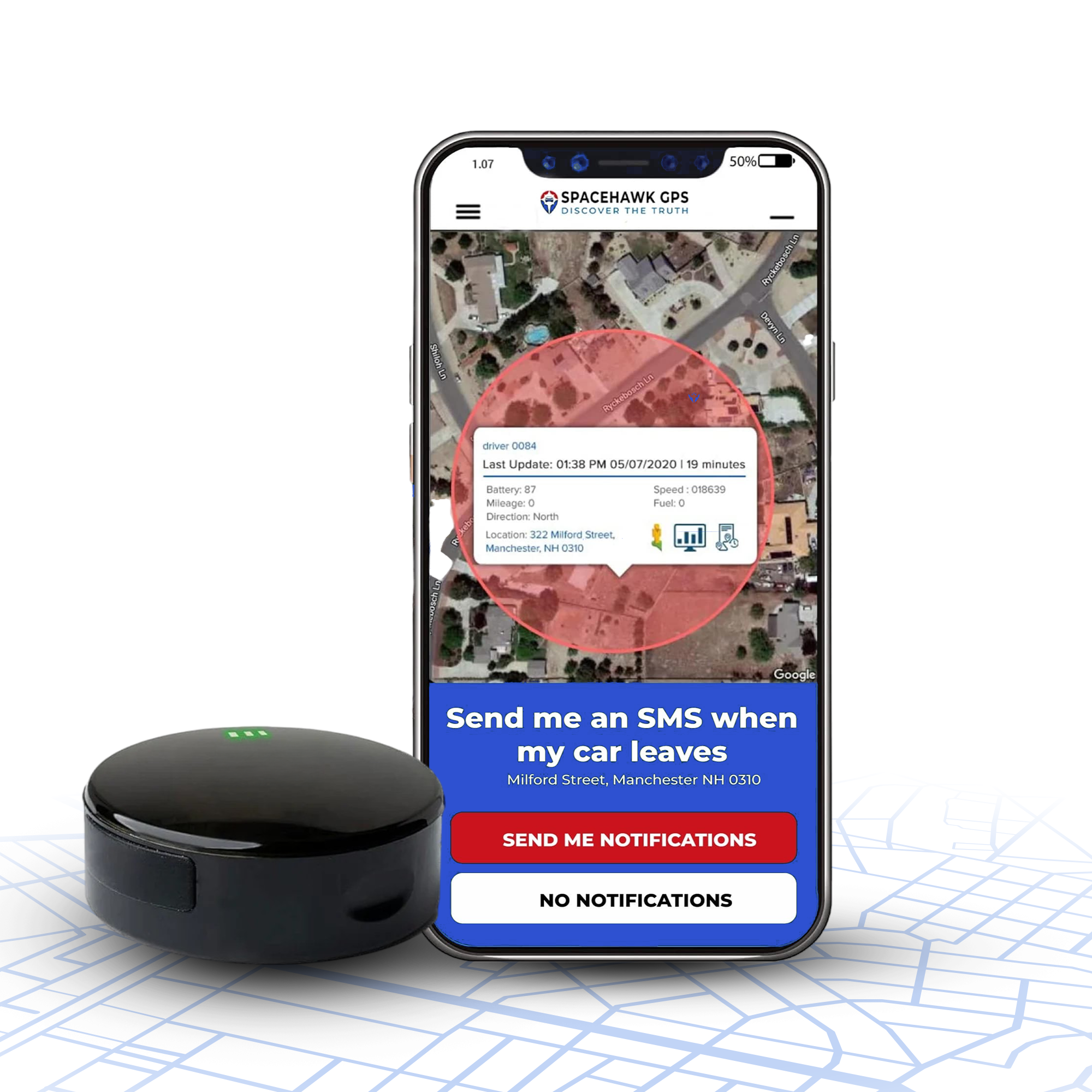
Most people picture something tiny and film-like. Real trackers are bigger than that, because most of the body is battery and antenna.


Most are a plain black or gray plastic box. Many have a magnet on one face. That is why they turn up stuck to bare metal underneath a car.
If a device has no wires running into the car, it runs on its own battery. That means somebody has to come back to it, which is worth telling the police.
Where A Tracker Gets Placed On A Car

Whoever places one wants somewhere out of sight that takes seconds to reach. That narrows it down to a handful of places.
Underneath the car
The most common spot, because a magnetic unit attaches in seconds and nobody looks there.
- Along the frame rails, anywhere bare metal is exposed
- Inside the wheel wells, near the inner edges
- Behind the rear bumper cover or near the exhaust shielding
Use a flashlight and go slowly. You are looking for a box that does not match anything else under there.
The OBD2 port
A port under the dash on the driver's side, on every US car built since 1996. A tracker plugged in here never needs charging.
- Reach under the dash and feel for anything plugged in
- Look for a small unit sitting proud of the port
This is the easiest one to check and the one most people never think of.
Under the seats
Wires and rails already live here, so an extra box blends in.
- Along the seat rails, taped or cable-tied
- On the floor under the seat, loose
- Under the carpet edge, felt rather than seen
Slide each seat fully forward and back so you can see the whole area.
The glovebox and trunk
Somewhere a device can sit unmounted among things you rarely move.
- Behind the manual and registration papers
- Wedged into side corners or behind a liner panel
- Under the trunk floor, beside the spare wheel
Take everything out rather than looking around it.
Inside the seats and trim
Less common, because it takes time and access, but worth checking if the rest turns up nothing.
- Run a hand along seat seams for anything firm
- Press the cushions where foam should give
Anything solid where the padding should be soft is worth a closer look.

How To Work Out Who Placed It

Finding a device points at somebody. Proving it comes from the markings on the casing rather than from a guess.
Once the police have advised on handling it, turn the unit over. Most carry the maker's details somewhere on the case or under a battery cover.
- A brand name or logo
- A model number
- A serial or IMEI number, printed or engraved
That serial number is the thread worth pulling. Tracking companies keep purchase records against it. Their support teams can usually confirm when and to whom a unit was sold.
They will not hand that to a member of the public, and they should not. Once law enforcement asks, the picture usually comes together quickly.
Warning Signs Worth Taking Seriously
A tracker rarely arrives on its own. If several of these are also true, that pattern is what advocates and police will want to hear about.
Recognising the pattern is not a reason to confront him
This is the point where people want an explanation from the person who did it. Stalking behavior tends to escalate when it is challenged directly.
Let the police make that contact instead. Keep your notes, keep the photographs, and let someone whose job this is take the next step.
None of these on its own proves anything. Together with a device on your car, they describe a pattern. A pattern is what the law responds to.
Is It Illegal To Put A GPS Tracker On Someone Else's Car?

Often yes, and there are two separate routes into it. Which applies depends on your state, who owns the car, and whether this was one act or a pattern.
The first route is a dedicated tracking-device statute. Several states have one. It makes installing a tracker on a vehicle you do not own a criminal offense by itself.
Examples include Texas Penal Code 16.06 and California Penal Code 637.7. Both turn on consent and on who the registered owner is.
One act can be enough under a tracking statute. A pattern is usually what a stalking statute needs.
The second route is the stalking statute, and this one reaches further.
Every state
Every US jurisdiction has a statute criminalizing stalking carried out through technology. The tracker is evidence of the pattern rather than the whole case.
Source: Stalking Prevention, Awareness, and Resource Center
Stalking statutes usually require a course of conduct, meaning more than one act. That is why the warning signs above matter so much alongside the device.
-
1
Who owns the car
If he is not the registered owner or lessee, most states treat installing a tracker as unlawful.
-
2
Whether you agreed
Consent is the hinge in nearly every statute. Agreeing to share location on a phone is not agreement to a device on a car.
-
3
Inside or outside
A device placed inside the car reads as more serious than one stuck underneath. Entering the vehicle is its own question.
-
4
What it was for
Tracking tied to control, repeated contact or following behavior is what turns a device into a stalking case.
This is general information, not legal advice
Nothing on this page is legal advice, and none of it is specific to your situation. Tracking law varies a great deal between states. The same facts can land differently depending on where you live.
One more correction worth making, because it comes up constantly. The Fourth Amendment restrains government searches and does not apply to what a private person does to you. Your protection comes from state stalking and tracking statutes, and from civil privacy claims.
For anything that turns on your own circumstances, talk to local law enforcement or a licensed attorney.
Where To Get Help

The numbers again, so you do not have to scroll back
In immediate danger, call 911.
National Domestic Violence Hotline, 1-800-799-7233, or text START to 88788. Advocates listen, help you plan, and explain options without pushing you toward any of them.
SPARC at stalkingawareness.org for stalking-specific safety planning and a directory of local victim services.
A police report creates a record even when nothing happens immediately. That record is what a protective order is built on later, so filing early is worth it.
A therapist helps with the part nobody sees. Being monitored damages your sense of safety in your own life. That does not resolve itself when the device comes off.
Telling friends and family reduces isolation, which is often the point of the behavior in the first place. Other people also notice patterns you have stopped noticing.
Related guides
Questions People Ask
Should I take the tracker off straight away?
Photograph it first, wherever it sits. Then think about what removal signals. A device that stops reporting tells whoever placed it that you found it. If that person knowing would put you at risk, speak to the police before you remove anything.
Is it illegal for a partner to track my car?
Often, and by two routes. Several states have a dedicated statute. It makes installing a tracker on a car you do not own a crime. Every US jurisdiction also has a stalking statute covering technology. Those usually require a pattern rather than a single act. Ask local police or an attorney about your state.
Can a tracker be traced back to who bought it?
Often yes, through the serial or IMEI number on the casing. Manufacturers keep purchase records against those numbers. They will not release that to the public, but they routinely provide it once law enforcement asks.
What share of stalkers become violent?
There is no single reliable figure, and anyone quoting one precisely is guessing. Research does show one thing. Stalking by a current or former partner escalates more often than stalking by a stranger. Treat it seriously and get advice from an advocate rather than trying to estimate your own odds.
Could the tracker be there legitimately?
Sometimes. A lease company, a fleet employer, or police with a warrant may all have placed it lawfully. If you do not know who put it there, treat the steps above as the safe default.
Some images in this article were generated using AI.
If you want to check the car yourself
About the Author

- Choosing a selection results in a full page refresh.
- Opens in a new window.
 Buy on Amazon