
AirTag vs GPS Tracker: Which Is Better for Your Car?

5 Key Differences Between an Apple AirTag and a GPS Tracker
-
01
AirTag depends on nearby Apple devices. A GPS tracker uses satellites and its own cellular link.
-
02
Only a GPS tracker gives live updates, movement alerts, and full route history.
-
03
AirTag costs nothing to run. Every live GPS tracker needs a data plan, though some include the first year.
-
04
iPhone and Android both warn people when an unknown AirTag travels with them.
-
05
Track only what you own. That rule decides which device is even appropriate.
Need tracking that goes beyond finding lost items? Live location for vehicles and assets, with free technical support on every purchase.
Shop GPS TrackersDisclosure: Ryan Horban, who wrote this guide, owns GPS Tracker Shop and SpaceHawk GPS. As an Amazon Associate, GPS Tracker Shop earns from qualifying purchases made through Amazon links on this page.
For vehicle tracking, theft recovery, and live monitoring, a GPS tracker beats an Apple AirTag outright. AirTags do their best work finding misplaced keys, wallets, and luggage. GPS trackers deliver live location, route history, and geofence alerts over satellite and cellular networks.
I'm Ryan Horban, a GPS tracking expert with more than 15 years of hands-on experience across vehicle trackers, asset monitoring systems, fleet tracking, and personal GPS devices. Buyers often assume the two products do the same job. In practice they do not.
Both can help you find something missing. How each one gathers and delivers location data is what creates the gap. That gap shows in accuracy, update frequency, and theft recovery. Below is how they compare across city driving, highway travel, parking lots, theft situations, and weak coverage areas, plus what each one shows you in the first hour after a theft and what each costs over three years.
What an Apple AirTag Actually Is

Apple AirTag is a small Bluetooth item finder for keys, wallets, bags, and luggage. Apple made it to work inside the Apple ecosystem through the Find My network. Tracking movement was never the goal.
AirTag leans on other people's iPhones to report location. When something goes missing, Find My shows the last place a nearby Apple device spotted it. That design suits everyday item recovery, not long-distance tracking or security work.
- AirTag is a key finder rather than a GPS device
- Tracking depends on the Apple network and nearby iOS devices
- No cellular network or satellite signal is involved
- Best suited to personal items, not vehicles or assets
How an AirTag Reports Its Location

- The AirTag broadcasts a Bluetooth signal, and that single radio is all it has.
- Any nearby Apple device picks up the signal and passes the location on securely.
- The Find My app updates with wherever that device happened to be.
- Update frequency tracks how many Apple devices are around, nothing else.
Because updates are crowdsourced rather than direct, AirTag cannot deliver real-time tracking or live movement. In a busy city that gap barely shows. On a rural road at 2am it is the whole story.
What AirTag Does Well

Apple released a second-generation AirTag on January 26, 2026, still at $29 for one or $99 for four. Precision Finding now works up to 50 percent farther away and the speaker is 50 percent louder. The new tag still has no GPS receiver and no cellular radio, so it still waits on a passing Apple device to report a car that is miles away. The louder speaker also makes a hidden tag easier for a thief to hear.
What a GPS Tracker Actually Is

A GPS tracker reads satellite signals to work out where it is. That position then goes out over a cellular network. You see the result live in an app or a web dashboard.
The independence is the point. Nothing here waits for a stranger's phone to walk past. Hence the use on vehicles, pets, assets, and valuable property rather than house keys.
- Reads satellite signals directly for positioning
- Sends data over LTE or 4G cellular networks
- Reports live location and movement as it happens
- Works over long distances and in thinly populated areas
How a GPS Tracker Reports Its Location

- Satellites overhead give the tracker a position fix.
- The tracker sends that fix over LTE or 4G on its own SIM.
- Your app draws the live position and the route behind it.
- Updates keep arriving whether or not anyone else is nearby.
More on the mechanics: how do GPS trackers work.
What a GPS Tracker Adds on Top

AirTag and GPS Tracker, Side by Side
Seventeen rows, from how each device finds itself to what each one costs. Swipe the table sideways on a phone.
| Feature | Apple AirTag | GPS tracker |
|---|---|---|
| Type of device | Key finder for personal items | Tracking device for monitoring movement |
| Tracking technology | Bluetooth plus Ultra Wideband | Satellite positioning plus cellular |
| How location updates | Via nearby Apple devices | Directly, over its own SIM |
| Real-time tracking | No | Yes |
| Live movement updates | No | Yes, continuous |
| Range | Short, and only where Apple devices are | Long, across cities and countries |
| Accuracy | High only with Apple devices nearby | Within a few meters under open sky |
| Update frequency | Irregular, depends on foot traffic | From three seconds to a few minutes |
| Location history | None | Yes, up to a year |
| Best use | Keys, wallets, bags, luggage | Vehicles, trailers, equipment, assets |
| Battery | Replaceable coin cell, about a year | Rechargeable or hardwired, days to months |
| Upfront cost | $29, or $99 for four | $39.95 to $249.95 for our trackers |
| Monthly fee | None | $8.95 to $19.95 a month on our trackers, after any included period |
| Phone compatibility | Owner needs an Apple device | iOS and Android |
| Unwanted-tracking alerts | Warns iPhone and Android users nearby | None, so ownership rules matter more |
| Fitting | Attach and go | Magnetic, concealed, or hardwired |
| Theft recovery | Occasionally helpful | Exactly what it exists to do |


An AirTag tells you where something was. A tracker tells you where it is going. On a moving vehicle that difference is everything.
Ryan Horban, GPS Tracking Expert
Can an AirTag Recover a Stolen Vehicle?

Sometimes, yes. Owners have found stolen cars this way. Treating that as a recovery plan is the mistake. Two things have to go right, and neither is under your control.
The first is coverage. AirTag needs a stranger's iPhone to pass close enough, and no phone means no update. The second is Apple's unwanted-tracking protection, which is doing exactly the job Apple designed it to do.
| Recovery feature | Apple AirTag | GPS tracker |
|---|---|---|
| Live location | No | Yes |
| Movement alert | No | Yes |
| Route history | No | Yes |
| Geofence alert | No | Yes |
| Works with no phones nearby | No | Yes |
| Announces itself to whoever has it | Yes, by design | No |
Track what belongs to you, and nothing else
Everything on this page assumes the vehicle, trailer, or equipment is yours or your company's. Apple's own guidance says the same about AirTags. Do not use them on people, or on property that is not yours. Putting a tracker on someone else's vehicle without consent is a crime in many states. If the tracking involves a person rather than an asset, tell them.
Why a GPS Tracker Wins on Theft Recovery

GPS trackers exist for moving vehicles, which is why they hold up in a theft. Satellite positioning and a cellular link keep the updates coming with no dependence on passing phones.
When a vehicle disappears, minutes matter. You get the current position, a movement alert, and the route it took. You report a live location to police instead of a description and a color.
Worth being honest about what that does and does not buy you. A tracker does not recover the vehicle. Police do. What the tracker changes is how fast and how precisely you can hand them something to act on.
659,880
Vehicles stolen across the US in 2025, a 23 percent drop from 2024. Even after that drop, one vehicle is still stolen every 48 seconds.
Most stolen cars do come back. More than 85 percent of stolen passenger vehicles were recovered in NICB's 2023 Vehicle Theft Trends Report, 34 percent within a day of the theft report and 45 percent within two days. How fast yours comes back depends on what you can tell the police in the first hours.
The First 60 Minutes After Your Car Is Stolen
The clock starts the moment you notice the empty space. What you can show the police in that first hour depends on which device is in the car.
This timeline follows how each device works, not a single theft case, so treat the times as typical.
-
10 to 5 min
You notice the car is gone
✕ AirTag
The pin shows where an Apple device last saw the tag, often your driveway.
✓ GPS tracker
A live dot shows where the car is now.
-
25 to 15 min
You check the app
✕ AirTag
Updates only when someone's Apple device happens by.
✓ GPS tracker
A route trail updates as often as every 3 seconds on our trackers.
-
315 to 30 minThe moment that matters
You call the police
✕ AirTag
You share an old pin that may be hours behind.
✓ GPS tracker
You share a live location and route.
-
430 to 45 min
Thieves look for trackers
✕ AirTag
The tag may beep or trigger phone alerts.
✓ GPS tracker
Stays silent if well hidden.
-
545 to 60 min
The car stops or changes hands
✕ AirTag
The trail often goes cold.
✓ GPS tracker
Pings continue while power and cell signal last.
Step 3 is the one that matters most. Officers can act on a live location far more easily than on a pin that is hours old.
Give the location to the police, then step back. NICB advises reporting a theft immediately, with the make, model, color, plate number and VIN ready when you call. Once a tracker gives you a location, hand it to the police and let them handle the recovery. Walking up to a stolen car yourself puts you at risk.
My advice: open the tracker app once a month, so the first time you use it is not the night you need it.
Hardwired units add one more option. Our Hardwired GPS Tracker with Kill Switch can disable the starter from the app, so once a stolen car is switched off, the engine will not start again until you re-enable it. The disable stops a restart. The disable does not stop a car that is already rolling, which is how a safe kill switch should work. Professional installation may be needed.

For blocking a restart
Hardwired GPS Tracker With Kill Switch
Wired into the vehicle's power with a backup battery. Remote starter disable from the app, updates as fast as every 3 seconds, data plans from $16.95 a month.
Stop guessing where your vehicle is
Live location, movement alerts, and a full year of trip history, on your phone.
Which One Fits What You Are Tracking
The better device depends on the job. Something that finds lost keys is not the same tool that watches a van across a working day. Here is how the two land in the situations people actually ask about.
Cars

For a car, the tracker is the better fit. Live location, route history, movement alerts, and real theft recovery all come with it. The AirTag can remind you which level of the parking garage you left the car on.
For occasional location checks, an AirTag is a cheap answer. For theft protection, a new driver in the family, or daily security, the tracker wins easily. Comparing models? Our guide to the best GPS vehicle tracker covers the current field.
Motorcycles

Motorcycles push the case hardest. A stolen bike gets lifted into a van and moved a long way inside an hour. A last known location from yesterday evening is close to useless.
54,736
Motorcycles reported stolen across the US in 2022, up 7 percent on 2021.
Source: National Insurance Crime Bureau
Plenty of riders fit an AirTag as a second layer, and the small size makes that easy. Just know that updates need passing iPhones, and that the alerts described above may eventually announce it. Riders comparing options can start with the best motorcycle GPS trackers.
Fleet Vehicles

Running a fleet on AirTags falls apart quickly. You might know where a van was last spotted. You will not know where it is now, how long it sat, or which route it took. Nor whether it left the service area.
Fleets run on visibility. A plumbing company with four vans needs to see which vehicles are working and which are idle. A contractor with thirty needs it more. A dashboard answers that. A last known position does not.
Before you buy for a fleetChoose the Right Fleet GPS TrackerTracker types, specs, real savings data and a 60-second checklist.Read the GuideIf employees drive the vehicles, some states require written notice before tracking starts.
Pets

Choose a GPS pet tracker if your animal goes outdoors, clears fences, hikes, or covers real ground. Live location shows you where the dog is heading rather than where it was twenty minutes ago.
Indoor cats are a different story. An AirTag works fine there, or as a backup tag on a collar. Once a pet leaves a populated area, the updates thin out. Note that a vehicle tracker is not a pet tracker, so buy something made for a collar.
Keeping Track of Family

For a person rather than an asset, start with the conversation, not the hardware. Tell your child or family member that the device exists and why. Both platforms now alert people to unknown trackers, so concealment tends to fail anyway.
With that settled, a GPS device gives live location through its own app without waiting on nearby phones. Apple made the AirTag to find luggage. Delayed updates plus unwanted-tracking alerts make it a poor tool here.
Why an AirTag Gets Noticed

Apple built anti-stalking protection into AirTag from the start. If an AirTag travels with someone who does not own it, their phone gets a warning. The tag eventually plays a sound too, according to Apple Support.
Android is covered too. Devices running Android 6.0 or later automatically flag an unknown AirTag moving with the user. A manual scan is available as well. So this is not an iPhone-only backstop.
That protection exists for good reason, and it works. The side effect lands on recovery. Put one on a stolen vehicle and it will likely announce itself to whoever has it. A device made for asset tracking does not carry that behavior, which is one reason it holds up better.
A GPS Tracker Worth Looking At Instead
AirTags earn their place on a keyring. Once live tracking, vehicle security, and theft recovery become the point, the needs change. You want a device that reports on its own rather than borrowing someone else's phone.

Our pick for vehicles and assets
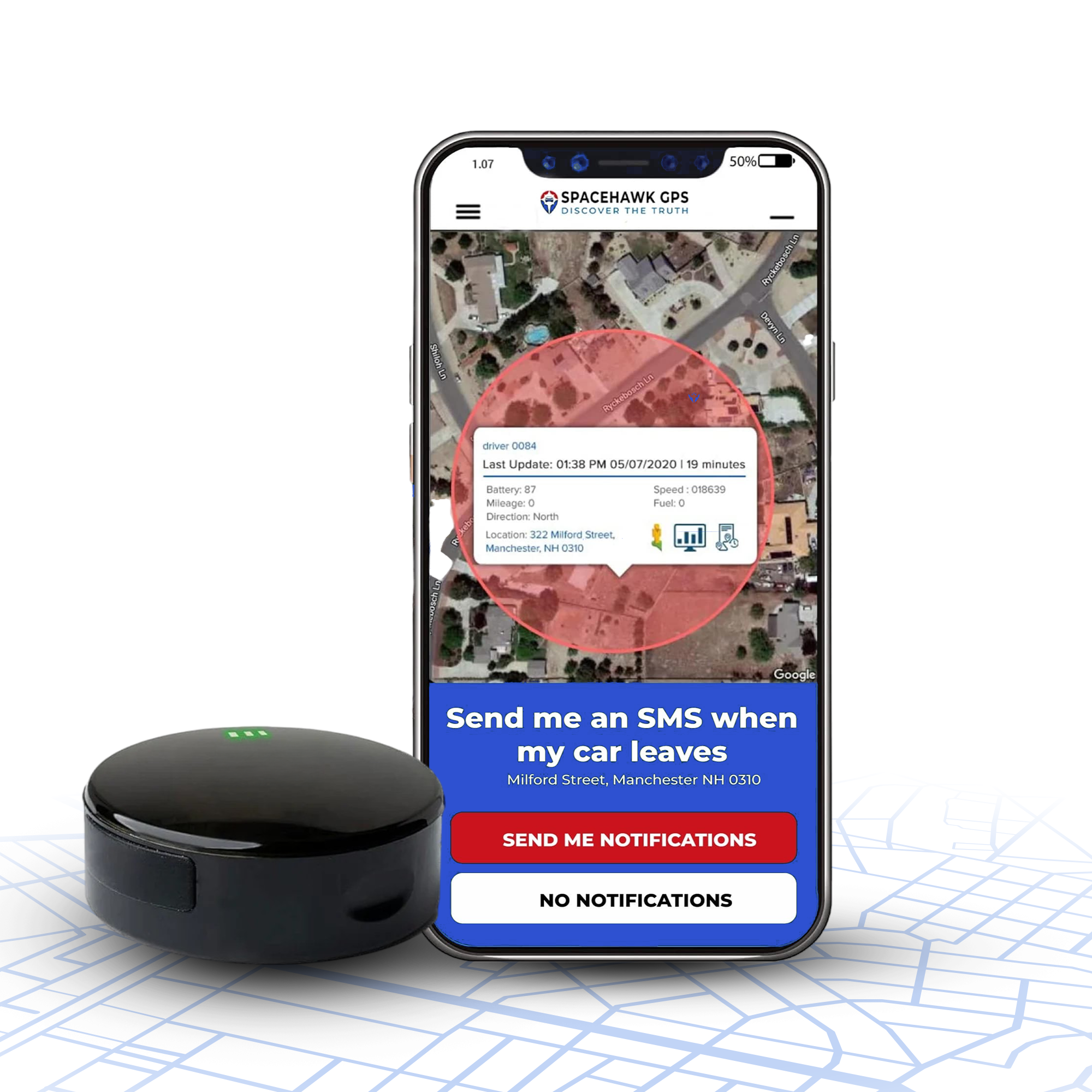
SpaceHawk GPS Tracker
A magnetic tracker that mounts in seconds with no wiring. Updates as fast as every three seconds, with a full year of trip history. Rated 4.2 out of 5 across more than 120 Amazon ratings.
- Updates: As fast as every 3 seconds
- Mounting: Built-in magnet, no wiring
- Build: Waterproof, IP67 rated
- History: A full year of trips
- Alerts: Geofence and movement alerts
- Warranty: Lifetime warranty
AirTag vs GPS Tracker Cost Over 3 Years
Running a tracker costs money, and that is the honest trade against an AirTag. $29 covers three full years of AirTag ownership, because there is no plan to pay. The bill changes once a cellular plan enters the picture.
| Option | Upfront | Plan | 3-year total |
|---|---|---|---|
| AirTag | $29 ($99 for four) | None | $29 |
| SpaceHawk (magnetic) | $39.95 | $9.95 a month on the 2-year prepay, or $19.95 month to month | About $398, or about $758 month to month |
| Konnect (OBD2 plug-in) | $199.95 | First year included, then $8.95 a month | About $415 |
| Hardwired with kill switch | $249.95 | $16.95 a month at 1-minute updates, $19.95 at 3-second | About $860 to $968, plus installation if you hire it |
The math is simple. SpaceHawk is $39.95 plus 36 months of plan. Konnect is $199.95 plus 24 months at $8.95, because the first year is included. The hardwired model is $249.95 plus 36 months of plan.
Budget for the plan rather than just the device, because over three years the plan is the larger number. What that money buys is a live location, the one thing a tag waiting on a passing iPhone cannot promise.

No monthly fee in year one
Konnect Plug & Play OBD2 GPS
Plugs into the OBD2 port in seconds and updates every 3 seconds. The first year of service is included, then plans start at $8.95 a month, with a tamper alert if anyone unplugs it.
3 seconds
How often the better trackers report position. The common rate is once a minute, and a car covers most of a mile in between.
Which One Should You Buy
The two devices answer different questions, which makes the choice simpler than it looks.
Everyday belongings point at an AirTag. Keys, a wallet, a backpack, a suitcase on a carousel. Small, cheap, no running cost, and Precision Finding is genuinely excellent at close range.
The tracker is the answer when something moves and you need to know about it. Vehicle security, theft recovery, fleet work, and family safety all lean on live updates, movement alerts, geofencing, and history.
For things you lose
Apple AirTag
Keys, wallets, bags and luggage. $29, or $99 for four, with no plan to pay and Precision Finding at close range.
For things that can be driven away
SpaceHawk GPS Tracker
Cars, trucks, trailers and equipment. A magnetic tracker with live updates as fast as every 3 seconds, for $39.95.
The short version: lost items point to an AirTag. Anything that moves, and anything you would be badly hurt to lose, points to a GPS tracker.
Ready to move past last known location?
Free USA-based support for the life of the device, and a lifetime warranty on SpaceHawk.
Sources
- National Insurance Crime Bureau, U.S. Vehicle Thefts Experience Historic Decline (March 18, 2026)
- National Insurance Crime Bureau, 2023 Vehicle Theft Trends Report
- National Insurance Crime Bureau, Motorcycle Thefts Rise for the Third Consecutive Year
- Apple Support, What to do if you get an alert that an AirTag is with you
- MacRumors, Apple Unveils New AirTag With Longer Range, Louder Speaker (January 26, 2026)
- Prices, plans and specs from the GPS Tracker Shop product pages for SpaceHawk, Konnect and the Hardwired GPS Tracker with Kill Switch, checked October 2026
About the Author

Frequently Asked Questions
Can Apple AirTag Track a Car in Real Time?
Do GPS Trackers Require a Monthly Subscription?
How Far Can an Apple AirTag Track an Item?
Which Is Better for Pets or Kids?
Can Apple AirTag Be Used Internationally?
Can a Thief Detect an Apple AirTag?
Can an AirTag Replace a GPS Tracker?
- Choosing a selection results in a full page refresh.
- Opens in a new window.
 Buy on Amazon