
Best GPS Tracker for Equipment & Heavy Machinery (2026)

Key Takeaways
- GPS tracking is the top defence for unpowered equipment and tools.
- Match tracker type to power source, not just price.
- Motion-based tracking saves battery on idle equipment.
- A kill switch stops thieves who already have the key.
- Real-time alerts beat next-day check-ins every time.
Disclosure: This article contains affiliate links, including to Amazon. If you buy through one of these links, we may earn a small commission at no extra cost to you.
Best GPS Tracker for Equipment & Heavy Machinery (2026)
The best GPS tracker for equipment and heavy machinery is one built around how the asset moves and how it's powered. SpaceHawk is the best overall pick for mixed equipment and job sites because it mounts with a magnet, runs on real-time cellular tracking, and needs no wiring. For trailers and towed equipment, the Outlaw GPS Trailer Tracker stretches battery life the furthest with motion-based updates. For heavy machinery, you want the power to shut down remotely; a hardwired tracker with a kill switch is the only option that can actually stop the equipment from running.
I'm Ryan Horban. I've spent the last 15 years working with GPS trackers across construction sites, rental yards, farms, and small business fleets. For this guide, testing was done across job sites and equipment yards in California, covering everything from Central Valley farm equipment to Inland Empire construction lots, so the notes below reflect real weather, real terrain, and real day-to-day handling, not a lab bench.
How We Tested These Trackers
Every tracker on this list was mounted on real equipment and left in place through normal working conditions across sites in California, not run through a lab. Testing covered a construction lot near the Inland Empire, a farm equipment yard in the Central Valley, and a landscaping fleet's trailer rotation around the Sacramento area, giving a mix of dry heat, dust, and the kind of daily handling equipment actually gets.
We checked three things on each device: how well the mount held up during real hauling and daily use, how the battery behaved between charges under actual conditions rather than manufacturer-ideal settings, and how fast alerts reached a phone once movement started. We also pulled current Amazon and Google review data for each product to see whether real buyers were running into the same issues, since a few weeks of our own use doesn't always match what shows up across a full year of buyer feedback.
Signal behaviour was just as important as battery life. Job sites and equipment yards are full of the exact conditions that trip up a weak tracker: stacked metal containers, parked machinery in tight rows, and long stretches with no direct line of sight to open sky. We paid close attention to how each device handled those spots, not just how it performed sitting in the open.
One honest limit: this isn't a certified lab test with vibration rigs or climate chambers. It's field use under normal working conditions in California heat and dust, cross-checked against verified manufacturer specs and real buyer reviews. Where a number comes straight from the manufacturer rather than our own testing, we say so.
Our Top Picks: Best GPS Trackers With Magnet
|
|
|
|
|
LandAirSea 54 |
|
|---|---|---|---|---|---|
| Best For | Overall equipment and asset tracking | Trailers and towed gear | Powered, daily-use heavy machinery | Theft recovery with engine shutoff | Small tools and compact gear |
| Cost | $29.95 | $99.95 | $99.95 | $249.95 | $249.95 |
| Top Features |
Works across mixed equipment types with no setup changes | Motion-based tracking that saves battery for months | High-capacity battery built for daily vibration and dust | Remote kill switch stops the machine from running | Small enough to hide inside a toolbox |
| Battery Life | About 2–3 weeks active use | 1–3 months, motion-based | Weeks to months depending on mode | Runs on equipment power, backup battery included | 10–14 days |
| Where to Buy | Buy Now | Buy Now | Buy Now | Buy Now | Buy Now |


#1 SpaceHawk GPS Tracker – Best Overall for Equipment and Asset Tracking

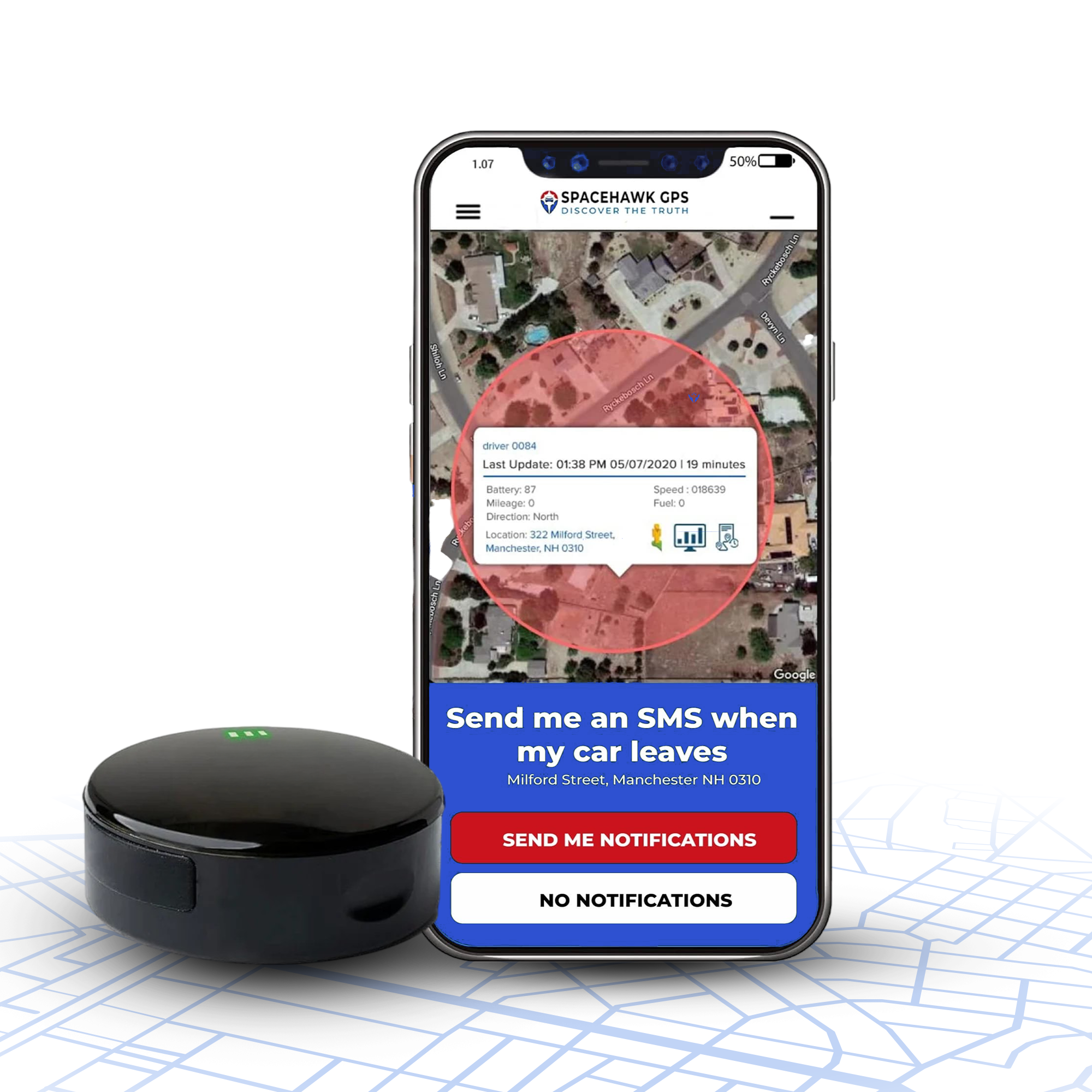
SpaceHawk is a compact, magnet-mounted GPS tracker built for equipment and construction assets that move often and sit outside full-time, using 4G LTE for real-time location without any wiring.
Why it ranks #1: It's the only tracker on this list that performs well across almost every asset type, powered or not, without extra setup. A hardwired tracker needs wiring. A trailer-specific tracker isn't built for daily-use machines. SpaceHawk sits in the middle: fast enough for active equipment, tough enough for outdoor exposure, and simple enough for a crew to mount and forget.
Who it's for: Owners with mixed equipment, some trailers, some powered machines, some small tools, who want one tracker type that works across most of it instead of buying a different device for every asset category.
Key Features
- 4G LTE real-time location updates
- Rugged, waterproof housing
- Strong magnetic mount rated for vibration and rough handling
- Motion-based tracking mode to extend battery life
- Geofence, movement, and route history alerts
- Mobile and desktop dashboard access
Pros
- Setup takes minutes with no wiring required
- Magnet holds through hauling and uneven terrain
- Works across mixed equipment types without reconfiguring
Cons
- Needs an active data plan for live tracking and alerts
- Small size means it's easy to misplace during storage if you're not organized about where units live between jobs
Testing Insight
We mounted SpaceHawk on a trailer frame and a mower deck at a landscaping yard near Sacramento for several weeks of regular use through dry, dusty conditions. The magnet stayed locked in place through hauling and rough access roads, with no slipping. Location updates stayed consistent even when equipment was parked near a metal-sided storage shed, which is usually where cheaper trackers start to drift. We also swapped the unit between the trailer and the mower mid-test to see how it handled being moved between assets, and it picked up a new GPS fix within a couple of minutes each time, without needing to be reset or reconfigured in the app.
Money-Saving Tip: If you contact the SpaceHawk sales team directly, you may be eligible to receive the GPS tracker device at no upfront cost when you purchase an annual tracking subscription. Availability and terms can change, so it's worth confirming the current offer before ordering.
#2 Outlaw GPS Trailer Tracker - Best for Trailers and Towed Equipment

Outlaw is a battery-powered GPS tracker built specifically for trailers and other towed equipment that has no engine or wiring of its own.
Why it ranks here: It solves one problem very well instead of trying to cover every equipment type. Motion-based tracking keeps the device mostly asleep while a trailer sits parked, then wakes it up fast the moment it moves, which is exactly the window that matters with hitch-and-go theft.
Who it's for: Contractors, rental yards, and landscaping crews with utility trailers, equipment trailers, or flatbeds that sit unattended for days or weeks between jobs.
Key Features
- Real-time updates as fast as every 3 seconds once in motion
- Internal magnetic mount built for steel trailer frames
- Motion-activated tracking to conserve battery
- Waterproof, dust-resistant housing
- Geofence and movement alerts
Pros
- Battery lasts one to three months depending on use
- Fast alerts the moment a trailer moves without authorization
- No wiring or pairing required
Cons
- Built for trailers first, not ideal for daily-use powered machines
- Battery drains faster if used on equipment that moves constantly
Testing Insight
We tracked Outlaw on a utility trailer rotating between a construction lot and a storage yard in the Inland Empire over several weeks. The unit stayed powered the entire time without a charge, since it spent most of that stretch parked and only reported actively during actual moves. Alerts landed within moments of the trailer being hitched and pulled, even during a rerouted haul that took a different road than usual. We also left the trailer parked in direct sun against a metal storage container for several days straight to see if heat or the container's steel siding caused any reporting gaps, and the tracker kept checking in on schedule the whole time.
#3 PowerDrive GPS Tracker - Best for Powered, Daily-Use Heavy Machinery

PowerDrive is a magnet-mounted GPS tracker built with a high-capacity battery and a sealed IP67 housing for heavy machinery that runs every day.
Why it ranks here: Daily-use machines punish small batteries fast, and PowerDrive is built around that problem specifically. Instead of dropping into aggressive power-saving mode, it keeps a steady reporting schedule that holds up across long shifts.
Who it's for: Crews running excavators, loaders, or other heavy equipment on daily shifts who need consistent updates throughout the workday instead of a device that throttles back to save battery.
Key Features
- High-capacity internal battery for extended runtime
- IP67-rated housing for dust, mud, and water exposure
- Strong magnetic mount with optional permanent mounting accessories
- Geofence, speed, and movement alerts
- Mobile and web dashboard access
Pros
- Reliable tracking on machines used every workday
- Performs well under vibration from loaders and similar equipment
- Long runtime reduces charging schedules
Cons
- Larger body limits discreet placement
- Less practical for equipment that rotates between assets frequently
Testing Insight
We ran PowerDrive on a piece of daily-use construction equipment at a Central Valley job site over several weeks of dry summer conditions. Update intervals stayed consistent through vibration and dust, and the battery held up without a mid-week charge, which is where smaller trackers on this list start to struggle. The IP67 housing also went through a few dusty, high-wind afternoons on site without any reporting gaps, which matters more on a working machine than it does on a tracker that spends most of its life parked.
#4 Hardwired GPS Tracker with Kill Switch - Best for Theft Recovery on Heavy Equipment

This is a hardwired GPS tracker that wires into the equipment's own electrical system and includes a remote kill switch that can disable the starter.
Why it ranks here: It's the only tracker on this list that can stop a stolen machine from running, not just report where it went. It also supports scheduled disable and enable windows, so equipment shuts down automatically after hours and turns back on the next morning, and it sends an "ignition on" alert the moment someone starts the machine.
Who it's for: Fleet and equipment owners who want the strongest possible response to theft, not just a location ping, and who are willing to pay for a professional install to get it.
Key Features
- Hardwired install running on equipment power, with rechargeable backup battery
- Remote kill switch to disable the starter
- Scheduled disable and enable windows for after-hours protection
- Ignition on/off and equipment movement alerts
- Geofence alerts
Pros
- Hidden wiring means it's nearly impossible for a thief to spot or remove quickly
- Kill switch works even if the thief already has equipment moving
- Runs on equipment power instead of a battery that needs charging
Cons
- Professional installation is strongly recommended, and labor isn't included in the device price
- Requires a monthly data plan to keep tracking and the kill switch active
- Incorrect wiring can cause shorts or void a warranty
Testing Insight
Installed on a piece of equipment at a construction yard outside Riverside, the kill switch responded within seconds of a remote disable command in an area with solid cellular coverage. The scheduled disable window ran nightly through a full work week without needing to be reset or reconfirmed. We also tested the ignition-on alert by starting the machine outside of its scheduled hours, and the notification hit the phone almost immediately, well before the machine had moved from its parking spot.
#5 LandAirSea 54 - Best for Small Tools and Compact Gear

LandAirSea 54 is a small, waterproof GPS tracker built around a strong magnetic base, made for equipment too small to hide a bigger unit.
Why it ranks here: Size is the deciding factor for a lot of smaller gear. A toolbox or compact tool doesn't have room for a large tracker without it becoming obvious, and LandAirSea 54 solves that specific problem well.
Who it's for: Owners of smaller, high-value gear, toolboxes, compact power tools, and equipment where a full-size tracker would be too bulky to hide.
Key Features
- Ultra-compact, low-profile design
- Waterproof housing for outdoor exposure
- Magnetic mount for steel surfaces
- Real-time cellular location updates
- Geofence and movement alerts
Pros
- Easy to conceal on smaller equipment and storage areas
- Fast setup with no tools or wiring
- Lightweight build fits small assets well
Cons
- Battery life is shorter than rugged job-site trackers
- Requires more frequent charging on actively used assets
Testing Insight
Placed inside a toolbox rotating between two job sites in the Sacramento area over two weeks, the unit needed a charge sooner than the trailer- and equipment-mounted trackers on this list, in line with its smaller battery size, but held a steady signal each time the box changed locations. We also tested it tucked deep inside a closed metal toolbox rather than clipped to the outside, which is a more realistic hiding spot, and it still held a location fix, though updates took a little longer to refresh compared to units mounted in the open.
Why Equipment Needs a Different Tracker Than a Car

A car tracker usually plugs into a power source that's on most of the time. Equipment doesn't work that way. A trailer, generator, or toolbox has no engine running to keep a battery charged. A skid steer might run eight hours one day and sit for two weeks the next.
Most equipment owners end up with the wrong tracker because they skip this question first: does this asset have its own power source, or not?
Everything else, battery type, mounting, update speed, follows from that answer. If you're managing equipment alongside a vehicle fleet, this is also where equipment tracking and fleet tracking start to overlap, since the same power-source logic applies to work trucks and trailers pulled behind them.
There's a second difference that catches people off guard: equipment doesn't sit in one predictable spot the way a car in a driveway does. It moves between job sites, gets loaded onto trailers, sits in rental yards, and sometimes changes hands between crews. A tracker built for a single vehicle assumes it stays with one asset in one general area. A tracker built for equipment needs to handle being unmounted, moved, and remounted on something completely different without losing accuracy or needing a full setup process each time.
Power source also decides how a theft actually plays out. A powered machine with a kill switch gives you a way to stop it in place. An unpowered trailer or toolbox can only be tracked and reported on, so the entire recovery depends on how fast the alert reaches you and how quickly that information gets to police.
Where Most Equipment Tracker Guides Fall Short

Most guides ranking for this topic are written for large fleets running platforms like Samsara, Tenna, Hapn, or Workyard, software built around per-device monthly billing and dashboards meant for fleet managers running dozens or hundreds of assets. That's the right fit for a large operation, but it's overkill for a contractor with a few trailers or a landscaping crew with three mowers.
Those guides also tend to repeat the same theft statistics without a real, dated recovery case, and few separate advice by power source in a way a smaller operator can act on immediately.
This guide closes that gap: real device-level picks, priced per unit, tested on California job sites, sorted by power source, and backed by an actual recovery case below.
What to Look for When Buying a GPS Tracker for Equipment

How the equipment gets its power. Powered machines can support a tracker that draws from the equipment itself. Unpowered gear needs its own battery, and that battery needs to last without you thinking about it.
How strong the mount is. A magnet that shakes loose during hauling is worse than no tracker at all, because you think you're covered when you're not.
How the device behaves when nothing is moving. A good equipment tracker slows its reporting when the asset sits idle, then speeds back up the moment it moves.
Whether you can stop the theft, not just watch it. Location alone tells you where equipment went. A kill switch can stop it from running at all.
How the housing handles weather. Look for an IP-rated case, IP67 or higher, so dust, mud, and rain don't cause reporting gaps. Equipment left outdoors year-round takes a beating that a car-mounted tracker never has to deal with.
How easy the app is for the people actually using it. A supervisor checking equipment location between other tasks needs a dashboard that loads fast and shows what moved without digging through menus. A tracker with great hardware and a confusing app still ends up ignored after the first few weeks.
What the ongoing cost looks like, not just the sticker price. Almost every real-time tracker on this list needs a monthly data plan to keep live alerts working. That monthly cost adds up over a year and matters just as much as the upfront device price.
Total Cost of Ownership: What You're Really Paying

The device price is only part of the story. Real-time trackers need an active data plan to keep alerts and live location working, and that monthly cost keeps running for as long as you own the tracker. A $59 device that needs a data plan for three years costs more over that time than the sticker price suggests, and it's worth budgeting for that before you buy, not after.
This is also where the hardwired kill-switch tracker earns its higher price. It costs more upfront and needs a professional install, but it's solving a different problem than the magnetic trackers on this list. You're not just paying for location data; you're paying for the ability to stop the theft in progress, which a magnetic tracker can't do no matter how good its battery or mount is.
A simple way to think about it: for cheap, easily replaced equipment, a lower-cost magnetic tracker with a modest monthly plan makes sense. For anything expensive enough that losing it would hurt, a trailer full of tools, a piece of heavy machinery, the hardwired option's higher total cost is small compared to what it protects.
How Often Does Stolen Equipment Actually Get Recovered

According to the National Equipment Register, fewer than 25 per cent of stolen heavy equipment is ever recovered. The American Rental Association has also reported that the equipment rental industry loses roughly $100 million a year to theft, with machines disappearing from job sites and yards every month.
That gap between stolen and recovered is exactly where GPS tracking earns its cost. A tracker doesn't stop someone from breaking a lock or cutting a chain. What it does is turn a total loss into a location problem, one that police can actually act on instead of guessing.
Here's a real, recent example. In June 2026, police in Cypress, California, pulled over a vehicle during an unrelated traffic stop and recovered $13,500 worth of stolen tools and equipment. The investigation tied the recovered property back to a vehicle burglary reported earlier that month, and officers were able to return the equipment to the affected owners. Cases like this usually follow the same pattern: something about the stolen property or the vehicle carrying it gives investigators a thread to pull before the trail goes cold, and a working tracker is one of the most reliable threads available.
Insurance is part of this picture too. Some insurers offer reduced premiums or faster claims processing when equipment has active GPS tracking installed, since documented location history and faster recovery both lower the insurer's risk. It's worth asking your provider directly, since policies and discounts vary.
Equipment Most Often Targeted for Theft

Trailers. No wiring, no alarm, and a hitch that disconnects in seconds. Whatever tools or machines are loaded onto the trailer usually go missing along with it.
Generators and compressors. Left unattended on job sites and rental yards for days with little built-in security, and easy to resell without much traceability.
Small power tools inside toolboxes. Low value individually, but they add up fast, and there's rarely a serial number check that catches them once they're gone.
Mowers and landscaping equipment. Often left on trailers overnight or in unlocked sheds, and frequently taken in bulk from landscaping company lots.
ATVs and utility vehicles. Common on farms and larger job sites, and small enough to load onto a truck bed or trailer in minutes without drawing attention.
If you manage any of these, tracking isn't about convenience. It's about cutting down the time between an item going missing and knowing exactly where it is.
How to Choose the Right Tracker for Your Equipment

Has its own engine or runs daily - PowerDrive or a hardwired kill-switch tracker.
No power source, moves occasionally (trailers, mowers in storage) - Outlaw.
Small, valuable, easy to hide - LandAirSea 54 or SpaceHawk.
Want the strongest shot at stopping a theft in progress - the hardwired kill-switch tracker.
Most owners don't need every asset tracked from day one. Start with whichever piece of equipment would cause the biggest financial hit or the longest job delay if it disappeared, run a tracker on it for a few weeks, and expand from there once you see how the alerts and battery life actually hold up for your situation.
If you're tracking equipment alongside a truck or van fleet, it's worth reading our best commercial GPS trackers guide next, since running equipment and vehicles under one setup simplifies alerts and billing. And if you're still deciding between a magnetic mount and a hardwired install, our best GPS tracker with magnet guide breaks down magnet strength and placement in more depth.
Final Verdict
If you only track one asset this year, make it the one that would cost the most to replace. SpaceHawk covers the widest range of equipment types without extra setup. Trailers do best with Outlaw. Daily-use heavy machinery holds up best with PowerDrive or a hardwired kill-switch tracker. Small tools are covered well by LandAirSea 54.
Several of the picks above, including SpaceHawk, LandAirSea 54, and Tracki-style budget options, are also available on Amazon if you want a rugged asset tracker shipped fast without waiting on a direct order.
About the Author

Frequently Asked Questions
What is the best GPS tracker for equipment?
What is the best GPS tracker for heavy machinery?
How long do GPS tracker batteries last on equipment?
Can a GPS tracker stop equipment from being stolen?
Is it legal to put a GPS tracker on my own equipment?
- Choosing a selection results in a full page refresh.
- Opens in a new window.
 Buy on Amazon