
Best GPS Tracker for Trucks 2026: Fleet Owner’s Guide

5 things to know before you buy trackers for your trucks
-
01
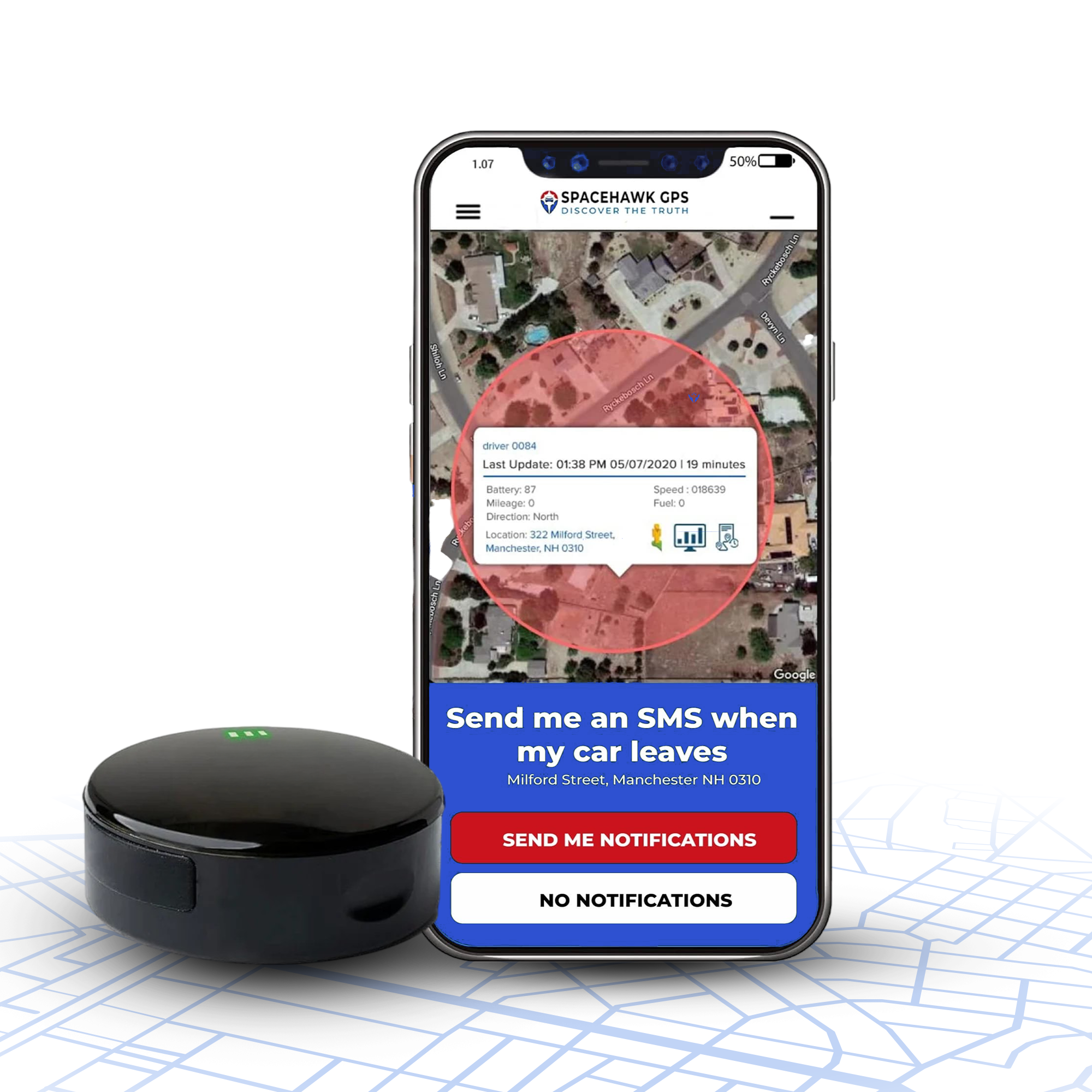
SpaceHawk sends live location every 3 seconds over 4G and mounts with a magnet.
-
02
Konnect OBD2 plugs into the diagnostic port and also updates every 3 seconds.
-
03
A heavy-duty truck burns roughly 0.8 gallons of diesel for every hour it idles.
-
04
Tell your drivers in writing. New Jersey requires it, and every state rewards it.
-
05
A GPS tracker is not an ELD. Federal law treats those as two different devices.
Some links on this page earn us a commission at no extra cost to you.

The short answer
SpaceHawk Mini GPS Tracker
Updates every 3 seconds against an industry norm of once a minute. Sticks to a trailer with a magnet in about five seconds, and needs no port. $39, then $19.95 a month or $9.95 on a two-year prepay.
Full reasoning, four alternatives and the compliance trap, below.
Lost loads. Late deliveries. A driver who swears he is just around the corner when he is two towns away.
If you run trucks, you know that feeling. One vehicle drops off the radar. Suddenly you are chasing delays, fielding angry calls, and counting the cost.
So here is the guide. Five trackers worth your money, and what each one actually does. Plus the legal trap that catches more trucking companies than any other.
Quick comparison
| Tracker | Install | Update rate | Registered ELD | Best for |
|---|---|---|---|---|
| SpaceHawk Mini | Magnetic, no wiring | 3 seconds | No | Trailers, yard assets and anything without a diagnostic port |
| Konnect OBD2 | Plugs into OBD2 port | 3 seconds | No | Vans and light-duty trucks with an OBD2 port |
| GPS Tracker with Kill Switch | Hardwired | Real-time | No | High-theft routes where a remote disable matters |
| Verizon Connect Reveal | Hardwired or plug-in | 30 seconds | Yes, via its ELD product | Mid-size fleets that need compliance and tracking in one contract |
| Samsara Vehicle Gateway | Hardwired to the CAN bus | Second-by-second | Yes, via its ELD product | Larger fleets wanting AI dashcams and deep engine data |
The 5 best GPS trackers for trucking companies
SpaceHawk Mini GPS Tracker
Best for trailers and equipment
Small body, no wiring, and it goes wherever you need it. The magnet holds it to a trailer frame, a skid steer or a truck chassis in about five seconds.
Updates land every 3 seconds over 4G. Most fleet platforms refresh once a minute, so a truck covers most of a mile between pings. At 3 seconds you are watching the vehicle move rather than reading where it used to be.
- $39 at GPS Tracker Shop, with plans at $19.95 a month or $9.95 on a two-year prepay
- 3-second updates, accuracy around 6 feet
- Waterproof housing, 1 to 3 weeks per charge in normal use
- Lifetime warranty and free USA-based support
- 4.1 stars from nearly 100 verified Amazon reviews
Pros
- Moves between assets fast
- No port or wiring
- Fastest updates here
Cons
- Battery needs recharging
- No engine diagnostics
- Not a registered ELD
Pick this if your assets outnumber your diagnostic ports. Trailers, containers and yard equipment have nowhere to plug a tracker in.


Konnect OBD2 GPS Tracker
Best for vans and light-duty trucks
One port, one tracker, and you are live in about ten seconds. No wiring, no downtime, no mechanic booked for a morning.
Konnect also runs 3-second updates, and the plan is a flat $8.95 a month with no contract. Across a twenty-van fleet that difference against a $25 platform is real money every month.
- $39.00 on sale against a $99.00 regular price
- $8.95 a month flat, no contract and no prepay required
- 3-second updates, accuracy around 6 feet
- One year of trip history, geofence and speed alerts
- Lifetime warranty, USA-based support, coverage in 150+ countries
Pros
- Cheapest monthly plan
- No wiring needed
- Tamper alert on unplug
Cons
- Needs an OBD2 port
- No idle or fuel data
- Not a registered ELD
Pick this if your fleet is vans, pickups and box trucks with standard OBD2 ports.
Why Konnect leaves fuel and idle data out on purpose
Pulling idle time, fuel level and harsh-braking scores means polling the engine control module continuously. All day, on every vehicle. That much polling leaves the door open to electrical problems across a fleet.
Konnect skips it deliberately. Most operators want to know where the trucks are and where they have been. If you need driver scorecards and fuel analytics, buy a deep-ECM platform. Accept what that polling asks of your vehicles. Do not buy a light tracker and hope.
GPS Tracker with Kill Switch
Best for high-theft routes
Wired into the vehicle rather than hung off it. The unit draws power from the truck, so nothing needs charging and nothing needs remembering.
The kill switch is the reason to choose this one. If a truck moves when it should not, you can stop the starter remotely. Better than watching a dot cross a map.
- Hardwired to vehicle power, no charging cycle
- Remote starter disable for recovery situations
- Harder to remove than a plug-in unit
Pros
- Remote starter disable
- Never needs charging
- Hard to unplug
Cons
- Needs a technician to fit
- Hard to move between trucks
- Not a registered ELD
Pick this if you run routes through high-theft corridors. The remote disable is the whole reason.
A word on the remote disable
A kill switch stops the starter. Stopping a moving truck is not what it does, and no responsible product would. Treat it as a recovery tool for a vehicle already stopped. Never trigger it while a driver is on the road.
Verizon Connect Reveal
Best for compliance in one contract
Reveal is a full fleet platform rather than a tracker, and it is where a growing carrier usually lands. Compliance tooling, reporting and dashcams sit under one vendor.
Location refreshes every 30 seconds, which is the industry standard and slower than anything we sell. For dispatch across a hundred vehicles that is fine. For catching a trailer moving off a yard at 2am, it is a long half minute.
- 30-second location refresh
- ELD, Hours of Service and IFTA tooling available
- Integrations with payroll, maintenance and dispatch systems
Pros
- One vendor for both
- Deep fleet reporting
- Nationwide carrier coverage
Cons
- No published pricing
- Multi-year contracts
- Heavy for five vans
Pick this if you have outgrown spreadsheets and want compliance, tracking and reporting on one invoice.
Samsara Vehicle Gateway
Best for engine data and dashcams
Current price on the product page
See the kill switch trackerCustom quote, no public pricing
Visit Verizon ConnectHardware plus a license
Visit SamsaraThe Vehicle Gateway hardwires into the CAN bus and pulls engine data straight from the truck. Engine data is a genuinely different category from what a location tracker sees.
Samsara publishes second-by-second breadcrumbing, so treat any comparison claiming it is slow with suspicion. Third-party reviews disagree on the dashboard refresh. Figures range from one second to about a minute.
- Second-by-second breadcrumb reporting from the gateway
- Engine diagnostics via a direct CAN bus connection
- AI dashcams and compliance tooling available
Pros
- Richest engine data here
- Very fast breadcrumb reporting
- Strong compliance tooling
Cons
- Hardware cost plus an annual software license
- One to five year contracts
- Driver cameras need care
Pick this if you want engine diagnostics and video coaching. Budget for a platform rather than a device.
Read this before you buy anything: a GPS tracker is not an ELD
This is the single most expensive mistake in fleet buying, and half the internet gets it wrong. Location tracking and Hours of Service compliance are two separate legal categories.
FMCSA's own guidance is blunt about it. A GPS receiver is not synchronized with the engine. So it cannot supply the engine data the ELD rule requires. Any ELD has to connect to the engine control module. The device must also appear on FMCSA's registered device list. Running a device that is not on that list counts the same as running no ELD at all.
Nothing on this page is a registered ELD, including our own products. If your drivers keep records of duty status, you need a registered ELD for compliance. Visibility is what the GPS tracker buys you. They are complementary purchases, never substitutes.
A tracker tells you where the truck is. An ELD keeps your logbook legal. Buy both, and never confuse the two.
Ryan Horban, founder, GPS Tracker Shop
How we ranked these
Splitting this honestly matters, so here it is plainly. SpaceHawk, Konnect and the kill switch tracker are our own hardware. We buy them, fit them and run them on real vehicles, and several sit in our own test collection.
Verizon Connect and Samsara were assessed from published specifications, vendor documentation and third-party reviews. Securing enterprise contracts across dozens of trucks is not a realistic basis for a blog comparison. So we are not claiming it.

What a truck tracker actually does
A trucking GPS tracker reports where a vehicle is, how fast it is going, and where it has been. Satellites supply the position, and a cellular connection carries it to your dashboard.


That is the whole mechanism. Everything else, geofences, alerts, trip history, is software built on top of those two facts. Our full explainer covers how GPS trackers work in more depth.
Where the money actually comes back
Idling, which is the biggest line item nobody manages
Every hour a truck sits running, it burns diesel and produces nothing. The Department of Energy puts a heavy-duty truck at roughly 0.8 gallons per idle hour.
Diesel a typical long-haul truck burns idling in a single year, across roughly 1,800 idle hours.
That fuel never shows up as a mile on the odometer. Worse, it hides inside a fuel report that measures miles per gallon rather than hours per gallon. Idle data turns invisible engine-on time into a dollar figure per truck.
One caveat worth stating. Not all idling is waste. Reefer units, lift gates and hydraulic equipment need the engine running. Build your policy around discretionary idling rather than a blanket rule.
Cargo theft, where the numbers have changed shape
Cargo theft is worse than it was, but not in the way most articles say. CargoNet's 2025 data tells a specific story, and the specific version is more useful than the headline.
Estimated 2025 cargo theft losses across the US and Canada, up 60 percent on 2024.
Here is the part that matters. Incident volume was essentially flat, at 3,594 events against 3,607 the year before. Losses surged anyway, because average value per theft climbed 36 percent to $273,990.
Read that carefully before you plan around it. Organized groups are hitting fewer loads and choosing better ones. California was the most affected state, with 1,218 incidents.
A tracker does not stop a theft. What it does is turn a phone call into a live location for police. The first hour decides recovery.
Put a tracker on the trailer, not just the tractor
Cargo moves with the trailer. A magnetic unit takes about five seconds to fit and needs no port.
Shop magnetic trackersCustomers who stop calling to ask

Every dispatcher knows the call. A customer wants an ETA and nobody can give a straight answer. Live location kills that conversation permanently.
What to look for when you compare trackers
Update rate
Most fleet platforms refresh every 30 to 60 seconds. A truck at highway speed covers most of a mile in a minute. A slow refresh means you are always looking into the past.
For dispatch across a large fleet, 30 seconds is fine. For theft response and yard security, it is not.
Coverage where you actually drive

A dashboard is worthless if the device goes quiet on a rural highway. Ask which carriers a tracker uses, and whether it can fall back to a second network.
Install type
OBD2 plug-in
- Installs in seconds with no tools
- Draws power from the vehicle
- Needs a standard OBD2 port
Vans, pickups and box trucks
Hardwired
- Permanent connection to vehicle power
- Survives casual removal attempts
- Can support a remote kill switch
Long-term installs and theft-prone routes
Magnetic and portable
- No wires and no port required
- Runs on battery, so it reports when the asset is parked
- Moves between trailers in seconds
Trailers, containers and equipment
J1939 or J1708
- The heavy-duty equivalent of an OBD2 port
- Reads engine diagnostics and fault codes
- Required for ELD-grade engine data
Class 8 rigs and semis
Match the connector to the truck. A light-duty OBD2 tracker has nowhere to plug into a Class 8 rig. That single detail eliminates half the products people shortlist.
Geofencing and movement alerts

Draw a boundary around the yard, a job site or a customer location. An alert fires when a vehicle crosses it. The value is not the map, it is not having to watch the map.
Contract terms and support
Read the cancellation clause before you sign anything. Some vendors run month to month, others lock you into three years with fees buried in the middle.
Ask where support sits, too. Hardware acts up during a delivery or before an inspection. An answering machine costs you real money at exactly that moment.
The checklist

- An update rate that matches what you need it for
- A connector your vehicles actually have
- A separate, FMCSA-registered ELD if your drivers keep duty logs
- Coverage on your rural routes, not just the metro ones
- A written cancellation clause you have read
- Support in a timezone that overlaps your dispatch hours
The law: what you can and cannot track

Tracking a vehicle your company owns is lawful across the United States. The complications start at the edges, and two of them catch trucking companies regularly.
Notice law. New Jersey is the only state with a statute written specifically for tracking employee vehicles. Written notice is required before a device goes on. That took effect in April 2022. New York, Connecticut and Delaware have monitoring-notice laws. All three were drafted for telephone, email and internet, so their reach over vehicle GPS is unsettled.
Owner-exempt criminal statutes. Texas, Nevada, Indiana, California and Florida all criminalize placing a tracker on a vehicle you do not own. Those bite the moment an employee uses a personal car for work. Scope your policy to company-owned vehicles in writing and the problem disappears.
Best practice, regardless of your state
Tell drivers in writing before installation and put the policy in the handbook. Use the data for routing, safety and compliance only. Stop monitoring at the end of the shift.
None of this is legal advice, and workplace-monitoring law varies. Talk to an attorney before you adopt a driver-tracking policy. Our state-by-state guide covers which statutes apply where.
One last thing on the human side. Drivers accept tracking when it is explained. They resent it when they discover it, and that difference costs more in turnover than the hardware ever does.
The short version
- Trailers and equipment without a port: SpaceHawk.
- Vans and light-duty trucks: Konnect OBD2.
- High-theft routes: the kill switch tracker.
- Compliance and tracking in one contract: Verizon Connect Reveal.
- Engine data and video coaching: Samsara.
- Duty logs, in every case: a separate FMCSA-registered ELD.
Sources
FMCSA, ELD Functions FAQs and Registered Devices List: eld.fmcsa.dot.gov
US Department of Energy, Idle Reduction Benefits and Considerations: afdc.energy.gov
Verisk CargoNet, 2025 supply chain risk trends, January 2026: cargonet.com
Stop guessing where your trucks are
Three-second updates, lifetime warranty, and support you can actually reach.
Shop fleet GPS trackersFrequently asked questions
Is a GPS tracker the same as an ELD?
No, and treating them as interchangeable is the most expensive mistake in fleet buying. An ELD connects to the engine control module and records duty status in a federally specified format.
Location is all a GPS tracker reports. FMCSA states plainly that a GPS is not synchronized with the engine. So it cannot supply the data the ELD rule requires. Check any device against the registered list before you buy.
Do trucking GPS trackers work without cell service?
Partly. The device still gets its position from satellites with no cell signal, because GPS is receive-only.
What it cannot do is report that position to you. Most units buffer the fixes and upload them once the truck returns to coverage. The trip history fills in afterwards. Live tracking stops until then.
How much does truck GPS tracking cost per month?
Two very different tiers, and the gap between them is wide.
- Single-purpose trackers run roughly $9 to $20 per vehicle per month. Konnect is $8.95 flat, SpaceHawk $19.95 month to month or $9.95 on a two-year prepay.
- Full fleet platforms with compliance tooling, dashcams and engine data typically start around $25 and climb. Usually on a multi-year contract, with hardware billed separately.
Work out the three-year total rather than the monthly figure. The cheaper device is often the more expensive tracker.
Can GPS tracking reduce my insurance premiums?
Sometimes, but do not buy on that promise. Some commercial carriers run telematics-based programs that reward documented safe driving, and some do not.
Ask your own broker two questions before you assume a discount. Does the carrier accept data from third-party devices, and what evidence do they need to see?
How long do truck GPS tracker batteries last?
Depends entirely on how the unit gets power. Hardwired and OBD2 trackers draw from the vehicle, so they run as long as the truck has a battery.
Plug-in units are not immortal, though. Konnect carries a small internal battery good for roughly fifteen minutes after an unplug. Fifteen minutes is what powers the tamper alert. Magnetic units like SpaceHawk run 1 to 3 weeks per charge depending on how often they report.
Can a driver disable a fleet GPS tracker?
An OBD2 unit can be unplugged in seconds. So the tamper alert matters more than the tamper resistance, because you get told immediately.
Hardwired units are harder to remove and need tools. Worth saying plainly: a driver who wants the tracker gone is a management problem, not a hardware one. The fix is a written policy rather than a tougher enclosure.
What is the difference between a consumer tracker and a fleet-grade one?
Less than vendors suggest at the hardware level, and more at the software level. The radio and GPS chip in a $40 tracker are often comparable to an enterprise unit's.
What you pay for higher up is the platform. Multi-user accounts, role permissions, compliance reporting, integrations with payroll and maintenance, and support built around a fleet. Buy the platform when you need those. Buy the device when you need to know where the truck is.
- Choosing a selection results in a full page refresh.
- Opens in a new window.
 Buy on Amazon