
Best GPS Tracker Watch For Elderly

5 things to know before buying a GPS watch for an elderly parent
-
01
A real senior care watch needs an SOS button, not fitness tracking.
-
02
An AirTag has no GPS of its own. Apple devices must be nearby.
-
03
Fall detection and geofencing matter most where dementia is involved.
-
04
Almost every stand-alone care watch bills monthly. Budget for the plan.
-
05
Still driving? Track the car instead. A watch answers a different question.
A senior who still drives needs a tracker on the car, not on the wrist.
Buy NowWe earn a commission on purchases made through Amazon links on this page.

The short answer
If a relative wanders, buy the Theora Connect. The watch was built for dementia care rather than adapted to it. The optional locking clasp needs a tool to remove.
Service runs $29.97 a month with a $39.97 one-time activation, no contract. Fall detection is a separate monthly add-on. Full reasoning, and six alternatives, below.
I'm Ryan Horban, a GPS tracking expert. I have spent the last 15 years working with vehicle, fleet and personal GPS trackers.
Watching a parent lose their footing is hard enough without wondering where they are. If your mother or father lives with Alzheimer's or another form of dementia, the worry rarely switches off.
A tracking watch does not solve that. What a good one does is shorten one gap. Somebody notices an empty chair. Somebody works out which direction to walk. Where a device on this list is the wrong tool, the entry says so.
Swipe or scroll the table sideways to compare all eight options.
| Watch |  #1Theora Connect #1Theora Connect
|
 #2Medical Guardian #2Medical Guardian
|
 #3Osmile ED1000 #3Osmile ED1000
|
 #4Apple Watch Ultra #4Apple Watch Ultra
|
 #5Apple AirTag #5Apple AirTag
|
 #6MorePro #6MorePro
|
 #7Amazfit GTR 3 #7Amazfit GTR 3
|
 Our pickKonnect GPS Our pickKonnect GPS
|
|---|---|---|---|---|---|---|---|---|
| Best for | Dementia and wandering care. SOS, safe zones, locking clasp option | Two-way voice to a live operator, 24/7 monitoring | SOS to three contacts, plus photo and video check-in | Active, independent seniors who hike or travel alone | A coat pocket or wallet, near home and known devices | Everyday wellness numbers on an active parent | Long battery and step counting on a fit senior | A senior who still drives. Goes on the car, never charged |
| Not ideal for | Budget shoppers. Priciest plan on this page | One-time purchases. The plan is mandatory | Buying today. Listed out of stock at the maker | Dementia care. No caregiver safe zones | Wandering. No location without an Apple device nearby | Finding anybody. There is no GPS in it | Care use. No SOS and no caregiver alerts | Anyone on foot. A car tracker stays with the car |
| Buy | See Pricing | Buy on Amazon | Check Availability | Buy on Amazon | Buy on Amazon | Buy on Amazon | Buy on Amazon | Buy Now |

If they still drive
The car is where the risk sits. A plug-in tracker reports every trip and never needs charging.
You get live location and safe zone alerts without asking anybody to wear anything.
Best for a parent still behind the wheel
If they no longer drive
A car tracker reports an empty driveway. What matters now is what leaves the house on foot.
Look for an SOS button, safe zones and a clasp that stays on the wrist.
Best for a parent on foot
Konnect GPS: Best GPS Tracker For A Senior Who Still Drives
That first case is where Konnect fits, and the fit is unusually clean.

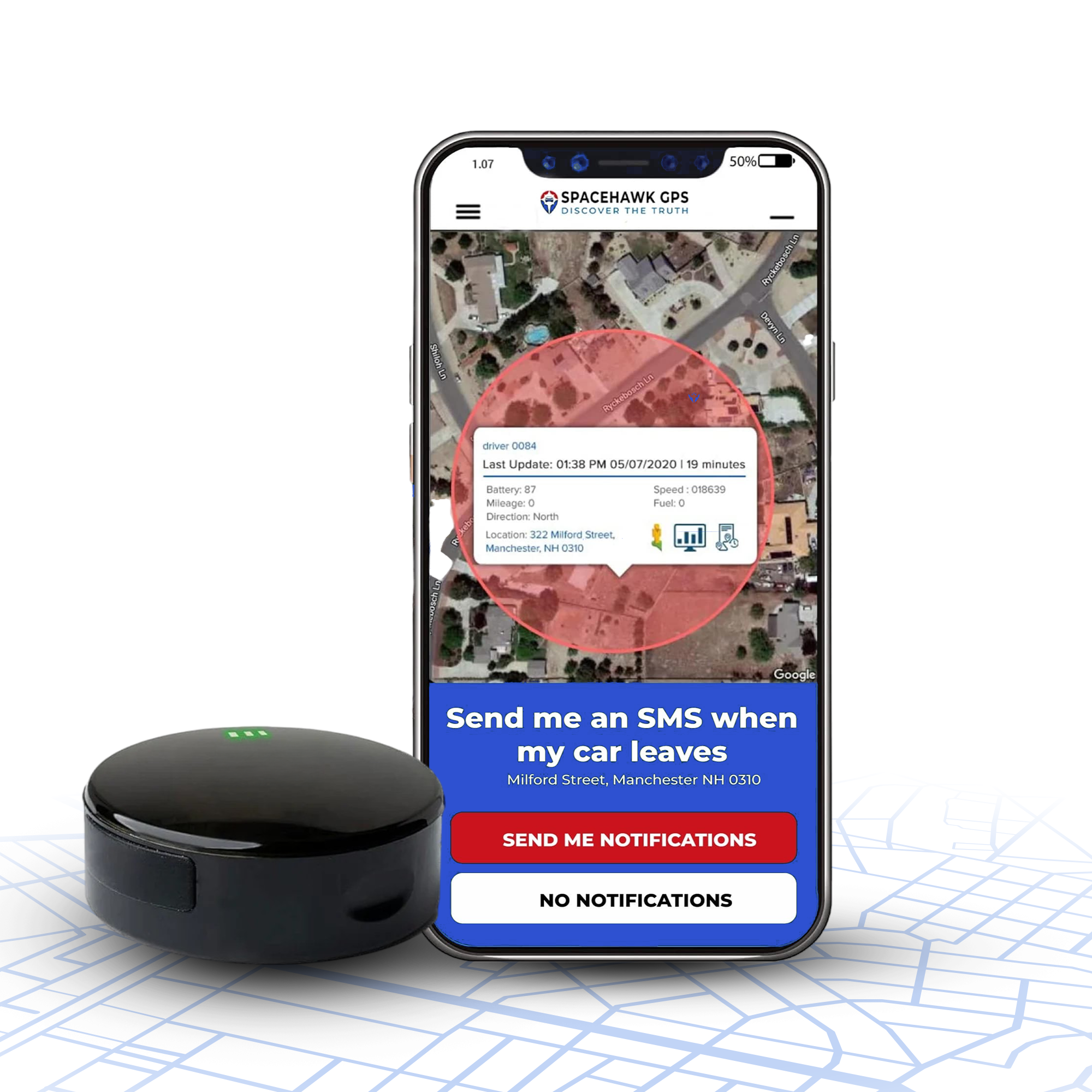
Konnect is a plug-in OBD2 tracker. The port sits under the dash on every US car built since 1996. The unit clips in and starts reporting on the next trip.
Nobody has to remember to charge it, which is the whole point of this article. The car supplies power, and the plan is $8.95 a month flat.
- Live location and trip history from a phone app
- Safe zone alerts when the car leaves or arrives
- No charging, no wiring and no tools to fit it
Pros and cons
What's Good In The Konnect GPS
- Plugs into any car since 1996, no charging
- Flat $8.95 a month
What's Not So Great In The Konnect GPS
- Only tracks the car
- No SOS button
- Nothing if they walk
If they no longer drive, a car tracker is the wrong shape. Skip straight to the watches. Fitting one to a vehicle that sits on the driveway tells you nothing.
If your senior family member still drives, the Konnect GPS is my recommendation for anyone worried about them getting lost.
Ryan Horban, GPS Tracking Expert
Have the conversation before you buy anything
A tracker fitted quietly is a decision made about somebody rather than with them. Where dementia is involved, that call belongs with the family and their doctor together.
A watch gets accepted more readily when it arrives as a way to keep driving or walking to the store. A leash is a harder sell. Say what it does and who can see it.
1. Theora Connect: ALZ Store GPS Watch Recommendation
Theora Care built this one specifically around dementia and memory loss. The Alzheimer's Store stocks it as their GPS tracker watch. Stocking is not the same as an endorsement, but it is a reasonable signal.
The feature that separates it from a general smartwatch is the calling. A caregiver rings the watch and it connects on its own. A confused wearer never has to work out how to answer.
- SOS button that calls a family member directly
- Safe zones that alert on exit and again on return
- Only accepts calls from numbers the caregiver approves
- Optional locking clasp that needs a tool to undo
Two things to price in honestly. Note that fall detection is a separate monthly add-on rather than part of the base plan. The faster location mode refreshes every three minutes, not every few seconds.
An independent review site ran ten location tests and found the watch and app worked. On several the reported position was out by a few houses. For a search radius that is fine. For a doorstep it is not.
Pros and cons
What's Good In The Theora Connect
- Built for wandering
- Auto-answers calls
- Locking clasp option
- Calls limited to approved numbers
What's Not So Great In The Theora Connect
- Priciest plan here
- Fall alerts cost extra
- Updates every 3 min
6 in 10
People living with dementia will wander at least once, and many do so more than once.
Source: Alzheimer's Association
2. Medical Guardian Freedom Smartwatch: Best With 2-Way Voice Messaging

One correction before the rest, because the naming has moved on. Medical Guardian's current smartwatch is the MGMove. The Freedom Guardian was its predecessor, and the MGMove replaced it with a touch screen and a 4G connection.
What you are buying here is not really hardware. Pressing the side button or swiping the screen opens a two-way call. A trained operator answers from a US monitoring center, around the clock.
- Red SOS button plus a swipe-to-alert screen
- Location, step counting and reminder alerts
- Optional fall alerting on the plan
That operator is the whole difference. One watch calls your mobile. The other gets somebody dispatched while you are still in traffic. Medical Guardian's systems rate well with the National Council on Aging.
The catch is the bill. Monitoring runs $39.95 a month after the first month, and the watch is not much use without it.
Pros and cons
What's Good In The Medical Guardian
- Live operator answers
- Two way voice
- Optional fall alerts
What's Not So Great In The Medical Guardian
- $39.95 a month
- Subscription required
- Basic step tracking
3. Osmile ED1000: Best GPS Watch With SOS

The Osmile earns its place on one idea. In an emergency you can pull a picture of the wearer's surroundings. That turns a map pin into a recognizable doorway or shop front.
You can also open a video call, or a plain voice call if that suits better. One press of the SOS button reaches up to three stored contacts in turn.
Treat the blood pressure figure as a wellness reading rather than a measurement. The same goes for any wrist sensor. Check stock before you plan around this one, since the maker currently lists it as unavailable.
Pros and cons
What's Good In The Osmile ED1000
- SOS to 3 contacts
- Photo and video call
- Voice call from wrist
What's Not So Great In The Osmile ED1000
- Out of stock direct
- Wellness readings only
- Support is overseas
4. Apple Watch Ultra: Most Durable GPS Tracker Watch For Seniors

For a parent who still hikes or walks long distances alone, this is the strongest watch here. The current model is the Ultra 3, released in September 2025 at $799, and it added satellite messaging.
That last part matters more than any fitness number on this page. A senior who walks somewhere without a cell signal can still get a message out.
- Real GPS on board plus satellite messaging, no phone required
- Accessibility settings for vision, hearing and mobility
Be clear about what you are not buying. There is no caregiver safe zone, no monitoring center and no locking clasp. This is a capable watch rather than a care device.
Pros and cons
What's Good In The Apple Watch Ultra
- Real GPS on board
- Satellite messaging
- Very tough build
What's Not So Great In The Apple Watch Ultra
- Costs $799
- Not a care watch
- Needs daily charging
1.5 miles
Most people who wander are found within a mile and a half of where they set off. They tend to travel in the direction of their dominant hand.
Source: Alzheimer's Association
Read that second half again, because it is the part almost nobody knows. At a fork, a right-handed relative usually goes right. Searchers should check brush and treelines, not only the sidewalks.
5. AirTag: Smallest Personal GPS For Seniors

There is one limitation to understand before you rely on one, and the name of the category hides it. An AirTag holds no GPS receiver at all.
What it does is shout over Bluetooth and wait for a passing Apple device to relay the position. On a busy street that works well. On a quiet road at four in the morning there may be nothing listening for hours.
An AirTag in a coat pocket makes a sensible backup for a parent who stays close to home. Where wandering is the actual worry, the gap between reports is exactly the wrong thing to gamble on.
Pros and cons
What's Good In The AirTag
- Cheapest option here
- No monthly fee
- Sets up in one tap
What's Not So Great In The AirTag
- No GPS of its own
- Needs Apple nearby
- Not for wandering
6. MorePro: Best Senior Watch For Heart Rate And Blood Pressure Monitoring

The obvious point comes first. MorePro makes a fitness band, not a tracker, and there is no GPS inside it.
Included anyway, because plenty of families here have a parent who is sharp and mobile. That parent wants to watch their own numbers. Heart rate, blood oxygen, sleep and steps all sit in one app, and the battery runs about a week.
MorePro's own listings say the readings are not intended for medical use. Take that at face value. Treat them as everyday wellness estimates, never as a replacement for a monitor a doctor has prescribed.
Pros and cons
What's Good In The MorePro
- Cheap and simple
- About 7 day battery
- Sleep and heart data
What's Not So Great In The MorePro
- No GPS at all
- Wellness data only
- No help if they walk
7. Amazfit GTR 3: Best Fitness Tracker Watch For The Elderly

The GTR 3 is the long-battery option, and the display is large and plain enough to read without glasses. Built-in GPS means a walk gets mapped without carrying a phone.
Amazfit quotes up to 21 days on a charge, which reviewers reached only with most smart features switched off. In ordinary use expect closer to ten days, still far beyond anything Apple sells.
Worth knowing before you shop. The GTR 3 launched in 2021 and later Amazfit generations replaced it. Stock varies by seller. There is no SOS button and no caregiver alerting. This is a fitness watch rather than a care watch.
Pros and cons
What's Good In The Amazfit GTR 3
- Up to 21 day battery
- Easy to read face
- Built in GPS
What's Not So Great In The Amazfit GTR 3
- A 2021 model
- No SOS or safe zone
- Availability varies
Key Features For A GPS Tracker Watch For Elderly Parents
Use this to judge anything that is not on the list above. The first three decide whether a watch is a care device at all.
Still driving, and that is the part that worries you?
Buy Now
| Key Feature | What It Actually Does |
|---|---|
| SOS Button | Calls for help from the wrist, either to stored family numbers or to a monitoring center. A watch without one is a fitness band. |
| Geofencing | You draw a safe zone on a map and get alerted the moment the wearer crosses it. This is what turns a location dot into an early warning. |
| Fall Detection | Alerts a caregiver when the wearer goes down. Often sold as a paid add-on rather than included, so read the plan. |
| Live Locations | Cellular and GPS tracking reports over any distance. Bluetooth tags such as the AirTag only report when another Apple device is close enough to relay. |
| Two-Way Voice | Lets you talk to the wearer directly. The versions that answer automatically matter most, since a confused relative may not manage the screen. |
| Removal Resistance | A locking clasp keeps the watch on the wrist. A device in a kitchen drawer protects nobody. |
| Health Tracking | Heart rate, blood oxygen and sleep figures are wellness estimates for everyday use. They are not medical-grade and do not replace a prescribed monitor. |
5 Key Wandering Prevention Tips For Seniors
A watch shortens a search. These reduce the number of searches you have to run at all. None of them costs anything.


If a relative is missing right now
Search the immediate area for no more than 15 minutes. Then call 911 and say a vulnerable adult with dementia is missing. That phrasing changes how the call is handled.
Do not wait out of embarrassment or hope. Of those not found within 24 hours, around half suffer serious injury or worse. The first hour is the one that matters.
Two programs are worth setting up before you ever need them. One is MedicAlert with the Alzheimer's Association Safe and Found service. The other is your state's Silver Alert system for adults over 65.
15 minutes
Search that long, then call 911. Say a vulnerable adult with dementia is missing.
Source: Alzheimer's Association guidance

One last note on language, because it shapes how these conversations go. Wandering is a behavior, not a label for a person. From the inside it usually feels purposeful rather than aimless.
A relative heading out to collect children who grew up decades ago still wants to be useful. Talking about the behavior rather than the person keeps them on your side. The distinction is what keeps the watch on the wrist.
Final Thoughts
None of these watches removes the worry. What the right one does is shrink a search from hours to minutes. A found parent is the entire point.
Match the device to the person. The Theora Connect fits a parent who wanders, and Medical Guardian adds a live operator around the clock. The Apple Watch suits a fit parent who hikes alone. A parent who still drives is best served by the Konnect on the car.
Whichever you choose, bring your parent into the decision. Set up the contacts the day it arrives, and check the clasp weekly. A watch only works while it is worn, so the strap and the conversation matter as much as the app.
Related guides
If they still drive, start with the car
About the Author

Frequently Asked Questions
Are elderly GPS tracking watches safe?
Do all senior watches have monthly subscription fees?
Can I monitor my elderly parent from a distance?
What is the best GPS tracker watch for elderly parents?
Do GPS watches for seniors work without a smartphone?
Can a GPS watch detect if my elderly parent falls?
- Choosing a selection results in a full page refresh.
- Opens in a new window.
 Buy on Amazon