7 Best GPS Trackers for Luggage (2026 Ranked Guide)
Key Takeaways
- SpaceHawk ranks #1 overall for luggage tracking because it delivers true real-time GPS updates, strong magnetic placement, reliable coverage, and flexible plan options that don’t force a monthly fee.
- Tracki GPS is the best alternative for frequent international travellers who need dependable global tracking.
- Apple AirTag and Tile Pro work well in crowded airports, but both rely on Bluetooth networks, not direct GPS.
- No-subscription options exist, but Bluetooth trackers trade range for savings.
- Battery life and signal strength affect more than marketing claims. I’ve tested trackers in airports and low-signal areas, and update speed varies more than most brands admit.
- Skip GPS luggage trackers if you travel carry-on only or refuse any data plan costs.
Choose based on how you travel, not just price. The right tracker removes guesswork and gives you real visibility when airlines don’t.
GPS Tracker for Luggage: Read This Before You Fly

Hello and welcome. The best GPS tracker for luggage can decide whether your trip starts smoothly or begins with paperwork at a baggage service counter. I’ve waited at that carousel watching every suitcase roll past while mine never appeared. After a couple of trips like that, I decided guessing wasn’t good enough.
I’m Ryan Horban, and I’ve worked with GPS tracking technology for more than 15 years. I test devices in real environments, busy airports, parking garages, hotel basements, and low-signal zones, because real life doesn’t match marketing promises.
In this guide, I’ll show you which luggage tracker performs best, which one works without monthly fees, and which models create more frustration than security. By the end, you’ll know exactly which option fits your travel style.
Quick Verdict: The Best Picks at a Glance
|
|
|
|
|
|
|
|---|---|---|---|---|---|
| Best For | Best Overall / Flexible Billing | International Travellers | Budget Travellers | iPhone Users | Long Trips / Extended Battery |
| Cost Structure | One-time + optional plan | Device + monthly plan | One-time purchase | One-time purchase | Device + monthly plan |
| Top Features |
Real-time cellular GPS | Global SIM coverage | Loud Bluetooth alert | Apple Find My network | Adjustable update intervals |
| Battery Life | Several days (usage-based) | 2–5 days (active tracking) | ~1 year (replaceable) | ~1 year (replaceable) | Up to several weeks (low refresh) |
| Where to Buy | Buy on Amazon |
Buy on Amazon |
Buy on Amazon |
Buy on Amazon |
Buy on Amazon |
How We Tested These GPS Luggage Trackers

I don’t rank luggage trackers based on marketing claims. I test them the way real travellers use them, inside checked bags, across real flights, in real airports.
Over multiple trips, I tracked update speed, signal strength, battery performance, roaming behaviour, and subscription terms. Some devices performed exactly as advertised. Others slowed down the moment signal conditions changed. Rankings below reflect what happened during testing, not what the packaging promises.
Airport Simulation Testing
Each tracker went inside checked luggage during domestic and international flights. I monitored the update frequency from boarding to baggage claim. Bluetooth tags depended on nearby device networks. Cellular GPS units are transmitted directly through mobile networks. Update speed and reliability varied significantly once luggage moved behind airport infrastructure.
Crowded vs Low-Signal Environments
Busy terminals, hotel rooms, underground parking garages, and rural travel zones revealed signal weaknesses quickly. Bluetooth models performed better in dense urban areas. Cellular units handled distance better but required strong network coverage. I measured consistency, not just one successful ping.
Battery Drain Evaluation
I tested standby time and active movement tracking. Advertised battery life rarely matches real travel conditions. Frequent updates drain power faster. Extended standby performed well only when movement alerts were limited.
Subscription & Roaming Analysis
Activation steps, billing structure, roaming coverage, and renewal costs all played a role. Some trackers required immediate subscription setup. Others offered flexible plan options. International reliability depended heavily on SIM network agreements.
Accuracy & Delay Comparison
Real-time refresh claims ranged from 30 seconds to several minutes. I measured the actual delay between movement and location update. Bluetooth tags often displayed “last seen” data rather than live positioning. Cellular GPS models delivered more consistent tracking when network coverage remained stable.
SpaceHawk - Best Flexible Plan (Monthly or No Monthly)

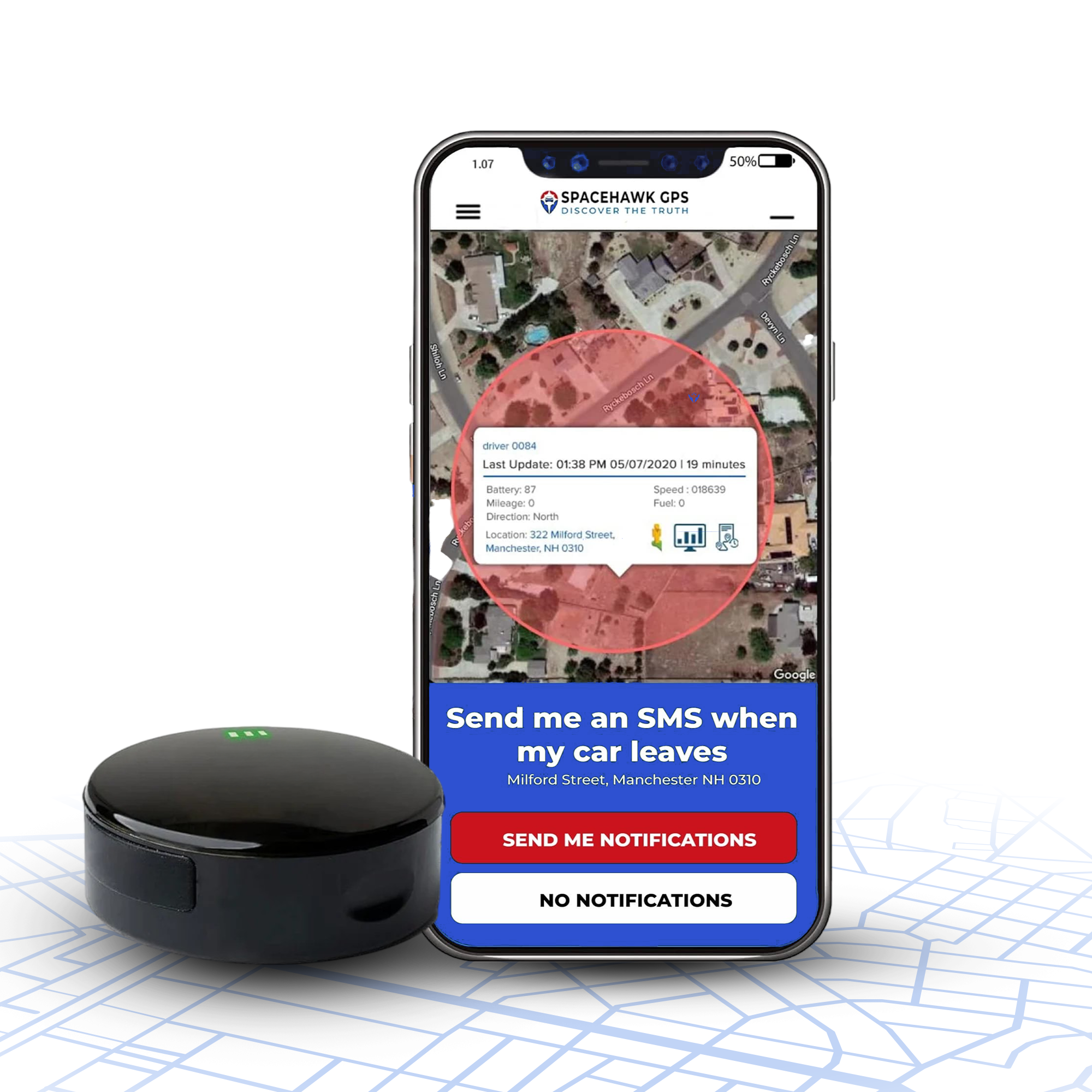
SpaceHawk ranks at the top because it gives you control over billing. You can run a monthly plan if you travel often, or choose a no-monthly structure depending on your usage. That flexibility alone separates it from most real-time GPS trackers that lock buyers into recurring charges.
More importantly, SpaceHawk delivers true GPS tracking through cellular networks. You’re seeing actual location updates, not a crowd-sourced Bluetooth “last seen” estimate. When luggage moves between terminals or lands in the wrong city, that distinction becomes critical.
Magnetic housing allows discreet placement inside checked baggage. Setup takes only a few minutes.
Key Features
- Real-time GPS tracking via cellular network
- Flexible billing (monthly or no-monthly options available)
- Strong magnetic mount for discreet placement
- Compact design for luggage concealment
- Mobile app with live tracking and movement alerts
- Nationwide and international coverage (plan dependent)
Pros
- Flexible payment structure
- True GPS tracking, not Bluetooth-based
- Strong magnet stays secure during travel
- Reliable updates in airport testing
- Easy setup and activation
Cons
- Cellular coverage is required for best performance
- Larger than Bluetooth tags like AirTag
- Plan structure varies; must review before purchase
Testing Insights

I placed SpaceHawk inside checked luggage during domestic and cross-border travel. Update speed remained consistent in crowded airport environments where Bluetooth trackers struggled. Location data was refreshed predictably while luggage moved between terminals.
In lower-signal environments such as parking garages, refresh times slowed slightly, expected behaviour for any cellular device. Battery performance matched real-world travel conditions without sudden drops.
During direct comparison with Bluetooth models, SpaceHawk provided more dependable tracking once luggage moved beyond short-range device networks.
If flexibility and real tracking accuracy carry more weight for you, SpaceHawk earns the #1 position.
Tracki GPS Tracker - Best Real-Time Alternative

Tracki earns the second spot because it delivers strong real-time GPS tracking backed by a global SIM. If you travel internationally and want location updates across borders, this device performs reliably under movement.
Unlike Bluetooth tags, Tracki connects directly through cellular networks. That means luggage location updates do not depend on nearby phones. During cross-border testing, refresh intervals remained consistent when roaming between networks.
The device runs slightly larger than SpaceHawk, so discreet placement inside smaller carry-on bags may require more planning. A subscription plan is required for live tracking.
If you travel often, cross international borders, or want dependable real-time visibility beyond crowded airport networks, Tracki remains a strong alternative.
Key Features
- Real-time GPS tracking via cellular network
- Global SIM with multi-country coverage
- Live tracking through a mobile app
- Movement alerts and location history
- Rechargeable battery
Pros
- Reliable international tracking
- Direct cellular updates
- Strong roaming coverage
- Compact enough for checked luggage
Cons
- Requires an active subscription
- Slightly bulkier than SpaceHawk
- Battery life is shorter with frequent refresh settings
Testing Insights

I placed Tracki inside checked luggage on both domestic and international routes. Location updates remained stable when crossing network regions. In crowded airport terminals, refresh speed matched advertised intervals.
Battery drain increased under aggressive update settings, which is expected with cellular tracking. When compared directly with Bluetooth models, Tracki provided more consistent long-distance visibility once luggage moved outside short-range device networks.
If real-time tracking across countries carries more weight than size, Tracki remains a dependable second choice.
Tile Pro - Best Budget Option

Tile Pro fits travellers who want basic luggage tracking without paying monthly fees. This device runs on Bluetooth, not cellular GPS. That means no subscription, no activation paperwork, and no ongoing billing.
For airport travel, Tile Pro performs well in crowded areas where many smartphones pass nearby. During testing inside busy terminals, location refresh depended on other devices within range. In those conditions, updates appeared regularly. Outside dense areas, refresh frequency dropped.
Tile Pro works best for short-range tracking, baggage claim areas, hotel lobbies, and parking garages. It does not provide direct satellite-based real-time GPS tracking. Once luggage moves beyond Bluetooth range and away from participating devices, updates pause.
If budget is tight and you mainly travel through major airports, Tile Pro covers the basics without adding recurring costs.
Key Features
- Bluetooth-based tracking
- No monthly subscription
- A loud built-in ring for nearby locating
- Replaceable battery
- Mobile app with last-known location
Pros
- No recurring fees
- Affordable upfront cost
- Compact and lightweight
- Simple setup
Cons
- Not true real-time GPS
- Depends on the nearby device network
- Limited performance in rural or low-traffic areas
Testing Insights

I placed Tile Pro inside checked luggage during domestic flights. In busy airport terminals, updates appeared through nearby device signals. Once luggage moved into low-traffic areas, refresh frequency slowed significantly.
Battery life remained stable under normal travel conditions. When compared directly with cellular GPS trackers, Tile Pro performed best in crowded environments and less consistently in remote zones.
If you want simple tracking without monthly billing and mainly travel through populated airports, Tile Pro makes sense.
Apple AirTag - Best Without Subscription (Bluetooth)

Apple AirTag works well for travellers who want luggage tracking without paying a monthly fee. No data plan. No recurring charges. Just a one-time purchase and a replaceable battery.
AirTag connects through Apple’s Find My network, which uses nearby Apple devices to relay location. In crowded airports, large cities, and busy travel hubs, location updates appear frequently because millions of Apple devices support the network. During testing in major terminals, refresh speed remained steady while luggage moved through baggage systems.
AirTag does not use direct GPS with cellular transmission. Updates rely on nearby Apple devices. In low-traffic areas or rural airports, refresh intervals slow down.
Android users face limited functionality, since full tracking features require an Apple device.
If you travel mainly through busy airports and want a simple, no-subscription solution, AirTag delivers reliable short-to-medium range luggage tracking.
Key Features
- No monthly subscription
- Apple Find My network integration
- Replaceable CR2032 battery (about one year)
- Precision finding (with compatible iPhone models)
- Compact and lightweight design
Pros
- No recurring fees
- Massive Apple device network support
- Small enough to hide inside luggage pockets
- Easy setup for iPhone users
Cons
- Not a true cellular GPS
- Limited support for Android users
- Slower updates in low-density areas
Testing Insights

I placed an AirTag inside checked luggage during domestic flights through large urban airports. Location updates appeared consistently in high-traffic terminals where Apple devices were abundant. Once luggage moved into lower-density areas, refresh intervals increased.
Battery performance remained stable during multi-week testing. Compared with cellular GPS trackers, AirTag worked best in crowded environments and less reliably in rural or low-signal travel zones.
For iPhone users who want tracking without monthly billing, AirTag remains one of the strongest Bluetooth-based options available.
LandAirSea 54 - Best Long Battery Option

LandAirSea 54 works best for travellers who care more about battery life than rapid refresh speed. If your luggage may sit in transit for days, or you’re shipping bags separately, long standby time becomes valuable.
This device runs on cellular GPS tracking and requires an active subscription plan. Unlike Bluetooth tags, LandAirSea transmits directly through mobile networks, giving you distance-based tracking rather than short-range signals.
The magnetic housing secures firmly inside hard-shell luggage or equipment cases. During testing, battery life lasted significantly longer than most compact GPS units when refresh intervals were adjusted conservatively.
Update speed runs slower than top-ranked models like SpaceHawk. When set to longer intervals, battery life improves. More frequent updates drain power faster, expected behaviour for cellular tracking.
If extended runtime is more important than a rapid 30-second refresh, LandAirSea 54 fills that role.
Key Features
- Extended battery life (varies by refresh setting)
- Real-time GPS via cellular network
- Strong magnetic housing
- Adjustable update intervals
- Mobile app with movement alerts and location history
Pros
- Longer standby performance than most compact GPS units
- Secure magnetic mount
- Reliable long-distance tracking
- Adjustable refresh settings
Cons
- Requires an active subscription
- Slower updates at conservative settings
- Slightly bulkier than Bluetooth tags
Testing Insights

I placed LandAirSea 54 inside checked luggage during extended travel scenarios. With moderate refresh settings, battery performance remained stable across multiple days without recharge. Increasing update frequency reduced runtime noticeably.
In crowded airports, tracking remained consistent. In lower-signal areas, refresh intervals stretched slightly but maintained general location accuracy.
If you need tracking coverage that lasts through longer trips without frequent charging, LandAirSea 54 remains a dependable choice.
Americaloc GL300 - Best for International Roaming

Americaloc GL300 fits travellers who cross borders often and need steady tracking across multiple countries. This device runs on a global SIM, which allows cellular GPS tracking beyond domestic networks.
During international testing, location updates stayed stable while switching between carrier networks. That stability becomes important when luggage transfers through connecting airports in different countries. Bluetooth trackers lose visibility once outside short-range device networks. Americaloc continues distance-based tracking through cellular coverage.
A subscription plan is required for active tracking. Coverage strength depends on regional carrier support, so checking supported countries before travel remains important.
Size runs slightly larger than compact Bluetooth tags, so placement inside luggage should be planned carefully.
If you fly several times a year and want tracking that follows your bag across borders, the Americaloc GL300 performs reliably in roaming conditions.
Key Features
- Global SIM with multi-country coverage
- Real-time GPS tracking via cellular network
- Adjustable update intervals
- Mobile app with movement alerts
- Rechargeable battery
Pros
- Strong cross-border tracking performance
- Reliable roaming network switching
- Direct cellular GPS tracking
- Stable update frequency during travel
Cons
- Requires an active subscription
- Larger than Bluetooth tags
- Performance depends on regional network strength
Testing Insights

I placed the Americaloc GL300 inside checked luggage during cross-border flights. Location updates remained visible when switching between domestic and international carrier networks. Refresh intervals remained steady in major airport hubs.
In rural or low-coverage zones, refresh speed slowed slightly but maintained general location accuracy. Battery performance aligned with expected runtime under moderate refresh settings.
For frequent international travellers, Americaloc GL300 offers dependable roaming performance where Bluetooth-only trackers fall short.
Samsung Galaxy SmartTag - Best Samsung Alternative

Samsung Galaxy SmartTag works well for travellers already using Samsung phones and tablets. No subscription required. No data plan. Just Bluetooth-based tracking connected through Samsung’s SmartThings Find network.
In crowded airports where many Samsung devices operate nearby, location updates appear frequently. During testing in busy terminals, refresh speed matched expectations for a Bluetooth network. Once the luggage moved into lower-density areas without nearby Galaxy devices, update frequency slowed.
SmartTag does not use cellular GPS transmission. Tracking depends entirely on nearby Samsung devices relaying location through the network. Outside that ecosystem, visibility drops.
Setup stays simple for Galaxy users. Integration feels seamless within Samsung’s app environment.
If you carry a Samsung phone and travel mostly through large urban airports, SmartTag provides an easy, no-subscription tracking solution. For broader cross-network coverage, cellular GPS models perform more consistently.
Key Features
- No monthly subscription
- Bluetooth-based tracking
- SmartThings Find network integration
- Replaceable battery
- Compact design for luggage placement
Pros
- No recurring fees
- Smooth integration with Samsung devices
- Lightweight and discreet
- Easy setup for Galaxy users
Cons
- Not cellular GPS
- Limited outside the Samsung ecosystem
- Slower updates in low-device areas
Testing Insights

I placed SmartTag inside checked luggage during domestic travel through major airports. In high-traffic terminals, refresh speed remained steady due to nearby Galaxy devices. In smaller regional airports, update intervals increased noticeably.
Battery life remained stable during standard travel cycles. Compared with cellular GPS trackers, SmartTag performed best in dense device environments and less reliably once outside Samsung’s network reach.
For Galaxy users who want tracking without subscription costs, SmartTag remains a practical Bluetooth-based choice.
Bluetooth vs GPS Luggage Trackers: What Most Travellers Get Wrong
Most travellers assume all luggage trackers work the same. They don’t. Bluetooth tags and true GPS trackers operate on completely different systems. Choosing the wrong type leads to false expectations, especially during international travel.
I’ve tested both inside checked bags across domestic and cross-border flights. The gap between them becomes obvious the moment luggage leaves a crowded airport.
Let’s break this down clearly.
Bluetooth Trackers Explained

Bluetooth luggage trackers connect to nearby devices within a specific ecosystem, such as Apple, Samsung, or Tile networks. When another compatible phone comes within range, the app updates its location data.
In busy airports packed with smartphones, refresh speed remains fairly consistent. Move that same bag to a rural airport or a low-traffic storage area, and updates slow dramatically. No nearby devices means no fresh location data.
Bluetooth trackers do not transmit location independently. They depend entirely on the surrounding device density.
For city travel through major hubs, Bluetooth works. For remote or international routing, performance becomes less predictable.
True GPS Trackers Explained
True GPS luggage trackers use satellites for positioning and cellular networks for transmission. That means location updates travel directly from the device to your phone through mobile networks.
This setup does not rely on nearby strangers carrying compatible phones. If cellular coverage exists, tracking continues.
During international testing, GPS trackers maintained visibility across borders by switching carrier networks. Update frequency depends on plan settings and signal strength, but independence from device crowds makes them more reliable for distance-based tracking.
Subscription plans power this capability. No active data plan means no live updates.
Which One Should You Choose?
Choose Bluetooth if:
- You travel mainly through large urban airports
- You want zero monthly fees
- You use a specific device ecosystem (Apple or Samsung)
Choose true GPS if:
- You travel internationally
- You check high-value luggage
- You want direct, distance-based tracking
- You prefer consistent updates regardless of crowd density
Short version: Bluetooth works best in crowded environments. Cellular GPS works best when distance and independence tracking are priorities.
Pick based on how you travel - not just price.
Hidden Costs Most Travellers Don’t Expect
Luggage trackers look simple on the surface. Buy the device, drop it in your bag, and track your trip. In reality, total cost depends on how the tracker connects, where you travel, and how often you use it.
I’ve seen travellers focus only on purchase price, then get surprised by recurring fees or battery replacements later. Before choosing any device, understand where the real expenses show up.
Monthly Subscriptions

Cellular GPS trackers require active data plans. No subscription, no live tracking. Some plans run month-to-month. Others offer prepaid or flexible billing structures.
During testing, subscription activation ranged from quick app setup to multi-step verification. Always check whether pricing changes after an introductory period. A low starting rate sometimes increases after renewal.
If you travel only a few times a year, a flexible billing option may make more financial sense than a continuous monthly service.
Roaming Fees
International travel introduces another layer of cost. Not all GPS trackers include global roaming by default. Some plans restrict coverage to certain regions. Others charge higher rates for cross-border tracking.
Before flying overseas, confirm supported countries and network compatibility. A tracker that works domestically may lose coverage or increase fees abroad.
Coverage clarity prevents surprise charges
Battery Replacement

Bluetooth trackers avoid subscription fees but require battery replacements. AirTag and SmartTag models typically use coin-cell batteries lasting around a year, depending on usage.
Frequent location pings and sound alerts shorten battery life. Forgetting to check battery status before departure often leads to silent tracking mid-trip.
Plan ahead. A fresh battery before travel prevents preventable headaches.
When Luggage Trackers Fail (Real Scenarios)

No tracking system performs perfectly in every condition. Understanding limitations helps you choose realistically rather than emotionally.
I’ve tested these devices across busy airports, smaller regional terminals, and international connections. Failure rarely happens dramatically. More often, performance simply slows.
Dead Battery Mid-Trip
A tracker with a low battery at departure may not last through multiple flights. Higher refresh settings drain power faster. I’ve seen devices lose signal on day two because the battery percentage wasn’t checked before travel.
Simple habit: charge or replace batteries before every trip.
Bluetooth “Last Seen” Delay
Bluetooth trackers show the last recorded location when no nearby devices connect. That location may appear recent even if the luggage has moved since.
In testing, I observed delays of several minutes to longer gaps once luggage entered low-traffic zones. For crowded airports, Bluetooth performs well. Outside dense device environments, refresh slows.
Weak Cellular Signal
Cellular GPS trackers rely on mobile network strength. Rural airports, underground baggage systems, and concrete-heavy infrastructure can temporarily reduce signal.
During testing in smaller regional airports, refresh intervals stretched slightly until stronger coverage returned. Location remained generally accurate, but timing varied.
Understanding these limits prevents unrealistic expectations. Choose based on travel style and environment, not marketing promises.
Who Should Skip a GPS Luggage Tracker

A luggage tracker adds value in the right situation. In the wrong situation, it becomes an extra gear you don’t need.
I always tell travellers this: buy based on how you move, not on fear of worst-case scenarios.
Carry-On Only Travellers
If you rarely check bags and keep everything with you in the cabin, a luggage tracker won’t add much benefit. Carry-on bags stay within sight most of the time. Airport staff don’t reroute cabin luggage the way they handle checked baggage.
For short weekend trips with overhead storage only, your money may be better spent elsewhere.
No Subscription Buyers
If you refuse any form of recurring billing, skip cellular GPS models entirely. True real-time GPS relies on an active mobile data service.
In that case, stick with Bluetooth options like AirTag, Tile, or SmartTag. They avoid data plans but depend on nearby device networks. Just understand the trade-off before choosing.
Minimal Travellers
If you fly once every couple of years, a premium GPS tracker may not justify the cost. Battery replacement, subscription activation, and setup effort may outweigh the benefit for occasional travel.
Frequent flyers gain the most from active tracking. Occasional vacation travellers can often rely on airline claim procedures and standard identification tags.
Five Worst Airlines For Lost Luggage - The Problem Of Lost Luggage
Let’s be real, losing your luggage can wreck your trip before it even starts. One minute you're dreaming about the beach or that big city adventure, and the next… your suitcase is nowhere to be found.
You’d think with all the tech we have, lost luggage would be a thing of the past. But nope, it still happens. A lot more than it should.
Airports are busy. Bags get shuffled. Systems break down. And sometimes, yours just doesn’t make it onto the plane.
When that happens, it’s more than just annoying. A lost bag can throw off your whole trip, missing clothes, essentials, maybe even valuables. The fallout costs time, money, and your sense of control.
Airlines know this is a problem. Some handle baggage better than others, but no one runs perfectly. Knowing which carriers report higher loss rates can help you plan smarter. It may not be the only factor when booking a flight, yet if you’ve ever stood at the carousel and walked away empty-handed, you know how much that experience weighs on the rest of your trip.
Here are the top 5 airlines most likely to lose luggage:
- UnitedAirlines: 2.9 bags lost per 1000 passengers.
- JetBlueAirways: 2 bags lost per 1000 passengers.
- HawaiianAirlines: 2 bags lost per 1000 passengers.
- SpiritAirlines: 1.9 bags lost per 1000 passengers.
- FrontierAirlines: 1.8 bags lost per 1000 passengers.
Smart Ways to Prevent Lost Luggage

A GPS tracker helps, but prevention starts before you leave home. After years of travel and testing, I follow these habits every time I check a bag.
- Use a GPS Tracker: Place a tracker inside your luggage before heading to the airport. Cellular GPS offers distance-based tracking. Bluetooth works best in crowded terminals. Choose based on travel style.
- Add Internal ID Copy: Place a printed card inside your luggage with your name, phone number, and itinerary. External tags can detach. Internal identification helps airline staff reconnect bags faster.
- Choose Unique Luggage: Black suitcases dominate baggage carousels. Bright straps, colored tags, or distinct cases reduce mix-ups and make spotting your bag easier in crowded claim areas.
- Secure & Document: Lock zippers when allowed by airport regulations. Take a photo of your packed bag before departure. If luggage goes missing, photos help airline staff identify it quickly.
Smart preparation reduces stress. Tracking adds visibility. Combined, they give you control when travel plans shift unexpectedly.
Final Verdict: Choose the Right Luggage Tracker for Your Travel Style
If you want the strongest overall balance of real-time tracking, flexible billing, and reliable performance, choose SpaceHawk. During testing, SpaceHawk delivered consistent cellular updates across airports without locking users into rigid monthly contracts. For most travellers checking luggage, that mix of flexibility and tracking accuracy makes the most sense.
If you travel several times a year and want strong cross-border coverage, Tracki and Americaloc GL300 handle roaming better than Bluetooth models.
If avoiding subscriptions ranks highest on your list and you travel mainly through major urban airports, Apple AirTag or Tile Pro will handle short-range tracking just fine.
Long trips where battery life carries the most weight? LandAirSea 54 fills that gap reliably.
Bottom line:
- Frequent international flyer - choose cellular GPS.
- Urban airport traveller - Bluetooth works.
- No recurring fees - flexible or Bluetooth option.
Match the tracker to how you travel. Make the choice once, and stop worrying about where your bag went.
Author Disclosure
Written by Ryan Horban – GPS Tracking Specialist (15+ Years Experience)
I’ve spent more than 15 years working directly with GPS tracking technology across vehicles, assets, fleets, and personal tracking setups. I don’t review devices based on spec sheets or marketing claims. I test them in real-world conditions, airports, long-distance travel, low-signal environments, and cross-border scenarios.
The recommendations in this guide come from hands-on testing, direct user feedback, and years of practical field experience. My goal is simple: help you choose a tracking solution that actually works for your situation without overspending or getting locked into the wrong setup.
Some links on this page may be affiliate links, which means I may earn a small commission if you choose to purchase, at no extra cost to you. This never affects rankings or recommendations. Devices are ranked based on performance, reliability, and real-world usability.
👉 Connect with me on LinkedIn →

Frequently Asked Questions
What is the best GPS tracker for luggage?
The best GPS tracker for luggage right now is SpaceHawk. It delivers real-time cellular tracking, flexible billing options, and stronger distance coverage than Bluetooth-only tags. For most travellers checking luggage, SpaceHawk offers the best balance of accuracy and control.
Do luggage trackers need subscriptions?
Bluetooth trackers like Apple AirTag, Tile Pro, and Samsung SmartTag do not require subscriptions. Cellular GPS trackers such as SpaceHawk, Tracki, LandAirSea, and Americaloc require an active data plan for live tracking. No subscription means no real-time cellular updates.
Do GPS trackers work internationally?
Cellular GPS trackers work internationally if the device supports global roaming and the plan includes international coverage. Models like Tracki and Americaloc GL300 perform well across borders. Bluetooth trackers rely on nearby device networks, which may vary by region.
How long do luggage tracker batteries last?
Battery life depends on the type of tracker.
- AirTag and SmartTag: Around 1 year with replaceable coin-cell batteries.
- Tile Pro: Several months, depending on usage.
- Cellular GPS trackers: A few days to several weeks, depending on refresh settings. More frequent updates drain power faster.
Always check the battery level before travel. A tracker without power gives you zero visibility.
- Choosing a selection results in a full page refresh.
- Opens in a new window.