
9 Best GPS Tracking Device on Amazon (Ranked & Compared)

-
01Flexible placement allows better concealment and wider installation options
-
02Faster updates reduce battery life, so balance speed with runtime needs
-
03Subscriptions are required for most real-time trackers and add to cost
-
04Tracking without ownership or consent can create legal issues
-
05Consistent performance and app reliability define long-term usability
9 Best GPS Trackers on Amazon (Ranked & Compared By Real Use)

Search "GPS tracking device" on Amazon and dozens of options show up at once. Sponsored listings sit at the top, big brands shout the loudest, and ads push products hard. None of that tells you how a tracker actually behaves after a few weeks on the road. Sales numbers look impressive and reviews pile up, yet real use tells a different story.
I'm Ryan Horban. I've spent over 15 years working with GPS trackers across daily driving, work vehicles, and long-term product testing. Some models fail fast. Some drain batteries too quickly. Some stay reliable without drawing attention.
This guide clears the noise. It breaks down what actually works, what disappoints, and why placement and day-to-day reliability carry more weight than ad spend. Here's how the rankings shake out.
Our Top Picks: Best GPS Tracking Device on Amazon
 SpaceHawk
|
 LandAirSea 54
|
 Tracki
|
 Optimus 2.0
|
 Spytec GL300
|
|
|---|---|---|---|---|---|
| Best For | Overall performance & long-term reliability | Secure magnetic & outdoor tracking | Small, portable tracking across cars & items | Long battery life & extended tracking | Asset tracking & short-term vehicle use |
| Cost | ~$44.44 | ~$14.95 | ~$7.54 | ~$19.95 | ~$17.95 |
| Top Features | Flexible placement, stable real-time tracking, app & web access | Strong magnet, waterproof build, rugged outdoor use | Very small size, portable use, worldwide coverage | Battery-focused design, adjustable update intervals | Compact build, reliable app, consistent tracking |
| Battery Life | Up to 2–3 weeks (usage dependent) | Up to 14 days | Up to 1–2 weeks | 10–14 days | Up to 14 days |
| Where to Buy | Buy on Amazon | Buy on Amazon | Buy on Amazon | Buy on Amazon | Buy on Amazon |
How We Ranked These GPS Trackers

These GPS trackers were ranked the way they'd actually be used in real life: real placement, real driving, real trade-offs, not marketing claims or ad promises.
Size and placement flexibility come first. A tracker that only works in one obvious spot rarely lasts long, so whether a device fits under seats, inside trim panels, behind cargo liners, or tucked near the trunk without drawing attention carries more weight than spec sheets alone.
Tracking reliability comes next. GPS tracking needs to stay consistent during city driving, highways, and short stops. Real-time updates mean nothing if signals drop or lag. Battery trade-offs factor in too, since faster updates usually shorten battery life, so the ranking weighs balance rather than extremes.
App reliability seals the ranking. An app or web dashboard needs to load fast, show clean location history, and handle alerts without confusion. Every product on this list earned its placement on that basis.
#1 SpaceHawk GPS Tracker - Best GPS Tracker on Amazon

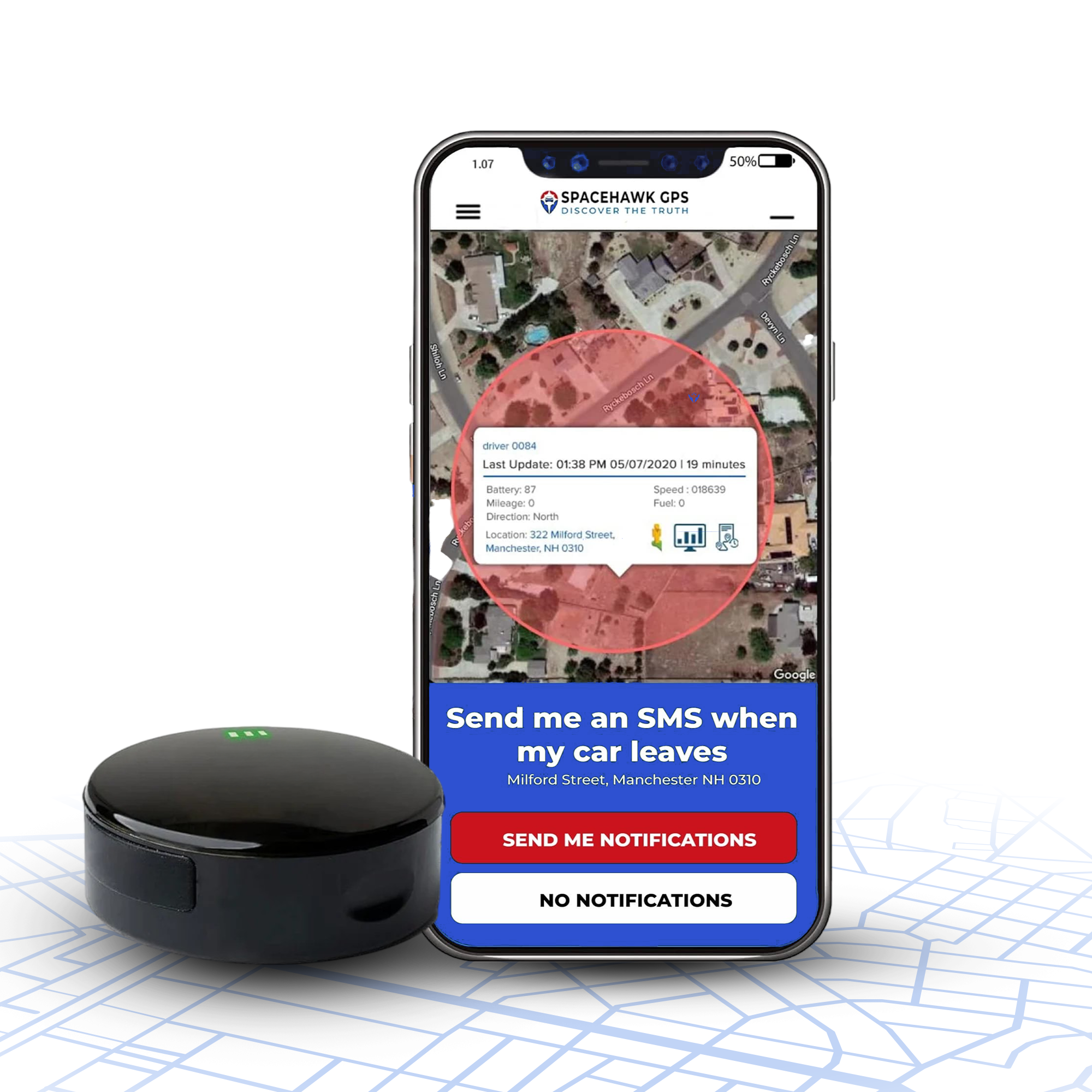
SpaceHawk GPS Tracker is a compact GPS tracking device built for discreet vehicle and asset monitoring. This tracker targets car owners who want reliable GPS tracking without bulky hardware or an obvious dashboard connection. It works through a dedicated app, uses a SIM card connection, and supports real-time tracking with consistent location updates during daily driving.
SpaceHawk sits at the top of this list because placement and performance work well together in everyday use. Many OBD trackers plug into the dashboard and stay there; that spot stays visible, and over time those devices can deal with loose connections, restarts, or missed updates. SpaceHawk avoids that by allowing placement under a seat, inside trim, or near a trunk liner while still getting steady real-time updates while driving, stopping, or parking for hours.
What to Expect
SpaceHawk's compact size is built around flexible placement, under a seat, inside trim, or behind a trunk liner, which is the main advantage over OBD-port trackers stuck in one visible spot. Because the device isn't tied to a fixed connection, positioning has more influence over reception than with plug-in trackers, so a bit of care during setup goes a long way toward steady updates during city driving, highway stops, and extended parking.
View Key Features
- Compact body that fits easily under seats, inside trim panels, or behind trunk liners
- Real-time tracking with frequent location updates during movement and stops
- Supports geofence alerts for boundary-based notifications
- App or web access with clear location history and live map view
- SIM card–based connectivity with global coverage across 150+ countries
- Extended battery options depending on update frequency settings
- Designed for car owners, asset tracking, and basic fleet management use
- Simple setup without wiring into vehicle systems
- SOS button support available on select plans for emergency alerts
View Pros & Cons
Pros
- Easy to place discreetly without visible wiring or dashboard hardware
- Reliable GPS tracking during city driving, highways, and short stops
- Stable app experience without frequent crashes or sync delays
- Flexible update intervals to balance battery life and tracking accuracy
- Works well for driver monitoring, teen driver situations, and backup tracking
- Clear geofence alerts that trigger consistently
Cons
- A monthly subscription is required for active tracking
- Requires occasional access for charging, depending on usage settings
#2 LandAirSea 54 GPS Tracker - Best for Secure Magnetic & Outdoor Tracking
LandAirSea 54 GPS Tracker is a waterproof, magnetic GPS tracking device built for vehicles, trailers, and outdoor equipment. It targets users who want a rugged option that handles rain, dirt, and road spray without extra protection. The housing feels solid, and the magnetic base allows quick attachment to exposed metal surfaces without wiring or vehicle access.
LandAirSea 54 ranks below SpaceHawk mainly due to placement limits tied to the magnetic design. Metal surfaces determine where it can sit, which narrows real placement choices, interior trim, plastic panels, and concealed cabin areas stay off-limits. SpaceHawk allows more flexibility inside a vehicle, while LandAirSea 54 works best underneath or on exposed metal. Tracking performance stays reliable once mounted, though fewer placement options affect long-term usability.
What to Expect
LandAirSea 54 is built around its magnetic base, so placement comes down to where exposed metal is available: underbody, trailer frames, or metal panels. That's the main trade-off versus trackers designed for interior concealment — fewer discreet spots, but a very secure mount once attached. The waterproof housing is built for the exposure that comes with underbody or outdoor placement.
View Key Features
- Strong magnetic base designed for vehicle frames and metal panels
- Waterproof housing suitable for outdoor and underbody placement
- GPS tracking with steady real-time updates during movement
- App or web access for live location and route history
- SIM card connectivity supporting wide-area coverage
- Geofence alerts for movement and boundary notifications
View Pros & Cons
Pros
- Very secure mounting on metal surfaces
- Durable build that handles weather and road conditions
- Reliable GPS tracking during highway and city driving
- Quick setup without tools or wiring
Cons
- Placement is limited to metal surfaces only
- Bulkier shape compared to compact trackers
- Fewer discreet placement choices inside vehicles
#3 Tracki GPS Tracker - Best for Small, Portable Tracking Across Cars & Personal Items
Tracki GPS Tracker (2024 Model) is a small, portable GPS tracking device built for vehicles, bags, and personal items. This model focuses on flexibility rather than fixed installation, working well for users who want one tracking device that moves between a car, backpack, or piece of equipment without tools or wiring.
Tracki earns the third position mainly due to size advantages paired with battery trade-offs. The compact body allows quick placement in tight spaces where larger trackers struggle, but smaller hardware means shorter battery cycles, especially with real-time tracking active. Compared to SpaceHawk, Tracki trades long-term endurance for portability, which fits short-term or rotating use better than a permanent setup.
What to Expect
Tracki's small form factor is its biggest selling point, fitting into places larger trackers can't. That size comes with a smaller battery, so expect shorter runtime between charges compared to bulkier trackers, especially with frequent update intervals. This suits short-term or rotating placements better than a permanent, unattended setup.
View Key Features
- Very small form factor suited for tight placement areas
- Portable design that works across vehicles and personal items
- GPS tracking with real-time updates during movement
- App or web access for live location and travel history
- SIM card–based connectivity supporting wide coverage
- Geofence alerts for movement and boundary notifications
View Pros & Cons
Pros
- Easy to place discreetly due to compact size
- Works well for users who move one tracker between multiple items
- Quick setup without wiring or vehicle access
- Reliable location reporting during short trips
Cons
- Faster battery drain with frequent real-time updates
- Requires more frequent charging during daily vehicle use
- Less suitable for long-term unattended tracking
#4 Optimus 2.0 GPS Tracker - Best for Long Battery Life & Extended Tracking

Optimus 2.0 GPS Tracker focuses on battery endurance rather than constant location refreshes. It targets users who want long stretches of tracking without frequent charging or daily attention, suiting vehicles, equipment, and situations where access stays limited for days at a time.
Optimus 2.0 lands in the fourth position because battery life clearly takes priority over update speed. Fewer location pings extend runtime, which works well for longer monitoring periods, though refresh intervals feel slower compared to top-ranked options. SpaceHawk delivers faster updates with more balance, while Optimus 2.0 leans hard toward endurance, which places it slightly lower despite strong reliability.
What to Expect
Optimus 2.0 is built around battery endurance rather than rapid refresh, which means update intervals run slower than trackers tuned for near-constant movement tracking. That trade-off favors buyers who check in periodically rather than watch live movement, and it suits vehicles or equipment that go unmonitored for days at a stretch.
View Key Features
- Extended battery options designed for multi-day tracking
- GPS tracking optimized for lower power usage
- App or web access for location history and alerts
- SIM card connectivity supporting wide coverage
- Adjustable update intervals to manage battery drain
- Geofence alerts for movement notifications
View Pros & Cons
Pros
- Long battery life that reduces charging frequency
- Works well for vehicles or assets checked less often
- Stable tracking over extended idle periods
- Simple setup without wiring or dashboard access
Cons
- Slower real-time updates compared to higher-ranked trackers
- Less suitable for users who want constant live movement tracking
- Larger battery profile compared to ultra-compact devices
#5 Spytec GL300 GPS Tracker - Best for Asset Tracking & Short-Term Vehicle Use

Spytec GL300 GPS Tracker is commonly used for assets such as equipment, cargo, and portable valuables. The compact build and clean app design make it appealing for users who want straightforward GPS tracking without complex setup, and many buyers use it across different items rather than dedicating one unit to a single vehicle.
Spytec GL300 ranks fifth because placement flexibility stays moderate, while vehicle-specific adaptability feels limited. Asset tracking works smoothly since placement options stay flexible outside a car; inside a vehicle, choices narrow compared to higher-ranked options designed around interior placement. Tracking reliability remains solid, though long-term vehicle use requires more planning around where the device can sit without shifting or drawing attention.
What to Expect
Spytec GL300's compact build and simple app make it a natural fit for asset tracking, where placement isn't constrained by a vehicle interior. Used inside a car, placement options narrow compared to trackers purpose-built for interior concealment, so it works best for buyers who move the device between assets rather than dedicating it to one vehicle long-term.
View Key Features
- Compact build suitable for asset-focused tracking
- Reliable GPS tracking with steady real-time updates
- App or web access with clear location history
- SIM card connectivity supporting wide-area coverage
- Geofence alerts for movement and boundary notifications
View Pros & Cons
Pros
- Reliable tracking during movement and stops
- Clean, easy-to-use app experience
- Works well across multiple assets
- Simple setup without wiring
Cons
- Limited placement options inside vehicles
- Less adaptable for permanent vehicle tracking
- Requires repositioning when switching use cases
#6 Americaloc GL300W - Best for Budget-Friendly GPS Tracking

Americaloc GL300W is a budget-friendly GPS tracker aimed at buyers who want basic tracking without paying premium pricing. It covers core GPS tracking needs for vehicles and simple asset use, keeping setup straightforward and costs lower than most competitors on Amazon.
Americaloc GL300W lands in the sixth spot because affordability comes with fewer refinements. Tracking accuracy holds steady for everyday movement, though the overall experience feels simpler compared to higher-ranked options. App design stays functional but lacks polish, and update behavior feels less smooth during longer sessions. For buyers focused on price first, those trade-offs make sense; for long-term daily tracking, other models perform more consistently.
What to Expect
Americaloc GL300W is positioned as the budget option on this list, and that shows up mainly in app polish and customization rather than core tracking function. For buyers prioritizing price over refinement, it covers the basics; for daily, long-term tracking, the more full-featured options on this list tend to hold up better.
View Key Features
- Lower-cost GPS tracking option for basic use
- GPS tracking with standard real-time updates
- App or web access for live location and history
- SIM card connectivity supporting broad coverage
- Simple setup without wiring or vehicle integration
View Pros & Cons
Pros
- Affordable pricing compared to most GPS trackers
- Straightforward tracking for vehicles or assets
- Easy setup without technical steps
Cons
- App limitations compared to higher-ranked trackers
- Fewer customization options for alerts and updates
- Overall experience feels basic during extended use
#7 Invoxia Cellular GPS Tracker - Best for Simple Setup Without Wiring

Invoxia Cellular GPS Tracker is a cellular-based tracking device that doesn't rely on traditional GPS hardware. It targets users who want a slim tracker with no wiring, no dashboard connection, and quick deployment across vehicles or personal items, handling location reporting through nearby network signals rather than constant satellite lock.
This tracker sits at number seven because the discreet form trades accuracy for convenience. Setup stays simple and placement options remain flexible, though real-time precision drops compared to GPS-based trackers higher on this list. Location updates work well for general movement awareness, while fine-grain tracking during fast driving or short stops feels less consistent. For buyers who value simplicity over precision, that trade-off works; for drivers needing tight location accuracy, other options perform better.
What to Expect
Invoxia relies on cellular positioning rather than dedicated GPS hardware, which trades some precision for a slim, wiring-free design. Accuracy tends to be stronger in dense urban areas with more cell towers and weaker in rural areas with sparse coverage, so it fits general movement awareness better than tight, turn-by-turn tracking.
View Key Features
- Cellular-based positioning without traditional GPS hardware
- No wiring required for setup or placement
- Slim profile suited for discreet placement
- App or web access for live location and history
- Low-maintenance operation with minimal setup steps
View Pros & Cons
Pros
- Easy setup with no wiring or vehicle access
- Flexible placement across vehicles and personal items
- Lightweight design that avoids bulky hardware
Cons
- Less precise location reporting than GPS-based trackers
- Real-time accuracy varies with network coverage
- Not ideal for detailed route tracking
#8 Bouncie GPS Tracker - Best for Plug-and-Play OBD Tracking & Driving Data

Bouncie GPS Tracker is an OBD plug-in GPS tracker designed for vehicles with an onboard diagnostics port. It targets drivers who want quick setup, driving data, and automatic GPS tracking without dealing with batteries or charging cycles, powering on as soon as the vehicle starts.
Bouncie ranks lower on this list because OBD placement limits discreet use from day one. The dashboard location stays visible, especially to anyone sitting in the driver's seat or checking under the steering column. Setup stays easy and tracking runs consistently, yet placement never disappears from sight. For families, car owners monitoring teen drivers, or basic fleet management, that compromise works; for buyers wanting subtle placement, other options perform better.
What to Expect
Bouncie's OBD plug-in design means setup takes minutes and there's no charging to manage, but the trade-off is visibility: the device sits under the dashboard where anyone in the driver's seat can spot it. For monitoring situations where the driver already knows a tracker is installed, like teen drivers or company vehicles, that visibility isn't a dealbreaker. For anyone wanting a hidden tracker, it isn't the right fit.
View Key Features
- Plug-and-play OBD installation with no charging required
- GPS tracking with frequent real-time updates
- Driving data such as speed, trip history, and vehicle activity
- App access with alerts and route summaries
- Automatic power from the vehicle without batteries
View Pros & Cons
Pros
- Very easy installation that takes minutes
- Consistent tracking without battery concerns
- Useful driving data for car and driver monitoring
- Works well for families and small fleets
Cons
- Always visible due to dashboard placement
- Limited placement flexibility compared to portable trackers
- Not suited for discreet vehicle tracking
#9 Vyncs GPS Tracker - Best for Advanced Driving Data & Analytics

Vyncs GPS Tracker is a data-focused OBD GPS tracker built for drivers who care more about reports and analytics than placement flexibility. Plugging directly into the vehicle's OBD port, it pulls detailed driving data along with GPS tracking, appealing to users who want long-term driving insights, trip summaries, and vehicle behavior records without managing batteries.
Vyncs ranks last on this list for one simple reason: permanent visibility. The OBD port location leaves no room to reposition or conceal the device. Tracking stays consistent and data depth remains impressive, but placement never changes, and anyone checking under the dashboard can spot the tracker immediately. Compared to portable trackers that allow flexible placement, that limitation outweighs the advanced analytics for buyers focused on subtle use.
What to Expect
Vyncs leans into data depth, trip logs, driving behavior, and detailed reports, more than placement flexibility. Like other OBD trackers, it sits permanently under the dashboard once installed, so buyers trade discretion for the analytics. It's a stronger fit for fleet-style monitoring than for anyone who wants the tracker out of sight.
View Key Features
- OBD plug-in GPS tracking with automatic vehicle power
- Advanced vehicle data, including trip logs and driving behavior
- GPS tracking with regular real-time updates
- App access with detailed reports and history
- No charging required due to direct vehicle connection
View Pros & Cons
Pros
- Detailed driving reports and long-term analytics
- Consistent tracking without battery management
- Useful data for fleet management and usage monitoring
Cons
- Always visible due to permanent OBD placement
- No flexibility to change location or reduce visibility
- Less suitable for users who prefer portable tracking options
What to Look for in a GPS Tracker on Amazon

Buying a GPS tracker on Amazon feels simple until real choices show up. Specs look great, reviews look strong, and real use exposes trade-offs fast. Before clicking buy, a few factors carry more weight than most people expect.
Size and placement come first. Smaller trackers give more options: under seats, behind trim, inside cargo areas, those spots only work when the device stays compact. Larger units limit choices and draw attention faster. If placement feels forced, daily use turns annoying.
Battery life comes next, and no tracker escapes compromise here. Faster updates drain power more quickly, and longer battery life means slower updates. The right balance depends on the situation, not on chasing perfect numbers that never exist in practice.
Then comes subscription clarity. Many buyers skip this step and regret it later. Monthly subscription plans vary in cost, features, and flexibility, so checking renewal terms, alert limits, and tracking intervals before committing pays off.
Every GPS tracker involves compromise. Knowing where to bend saves money, time, and frustration later.
Is It Legal to Use a GPS Tracker?

This question comes up often, and asking early saves trouble later. GPS tracker use stays legal in many situations, though rules depend on ownership and consent. Most problems start when people skip that basic check.
Tracking personal property is generally allowed. A car under your name, a work vehicle, or company equipment, those cases rarely cause issues. Consent changes everything when another driver enters the picture. Tracking a vehicle driven by a spouse, employee, or teen driver usually requires clear permission, even when ownership stays shared.
Problems show up when tracking crosses into surveillance. Placing a tracker on property owned by someone else, or tracking a person without consent, often violates local laws. Some states enforce stricter privacy rules, so checking local regulations becomes essential before installation.
A simple rule for buyers to keep in mind:
- If ownership feels unclear, get consent.
- If consent feels awkward, pause the idea.
Staying upfront keeps GPS tracking useful rather than risky.
Conclusion
Choosing a GPS tracker on Amazon stops being confusing once you know what actually counts in daily use. Ads, reviews, and feature lists only tell part of the story. Real value shows up after weeks of driving, parking, checking updates, and trusting the data when something feels off.
Reliability and usability tend to matter more than long spec sheets. A tracker should stay consistent, easy to manage, and predictable over time. When those basics fall into place, everything else feels simpler.
Use the rankings above, understand the trade-offs, and pick the tracker that fits how you actually live and drive. With clear expectations going in, GPS tracking becomes a helpful tool instead of another regret.
Author Disclosure
Written by Ryan Horban - GPS Tracking Specialist (15+ Years of Hands-On Experience)
Ryan has spent more than 15 years working directly with GPS tracking devices in real-world situations. That includes helping parents track family vehicles, small business owners monitor equipment, and teams manage fleets without unnecessary complexity.
His work focuses on practical GPS setups that hold up over time, evaluated across daily driving, long-term vehicle use, and real placement scenarios. Some devices impress early and fail later. Others stay reliable where it counts most.
Everything in this guide reflects hands-on industry experience, not brand messaging or ad influence. The goal is straightforward: help you choose a GPS tracker that works legally, reliably, and without creating more problems than it solves.
👉 Connect with me on LinkedIn →

FAQs About GPS Trackers on Amazon
How long does battery life last on a GPS tracker?+
Do GPS trackers on Amazon require a subscription?+
- Subscriptions pay for SIM card connectivity and data usage
- Plans unlock features such as geofence alerts and real-time updates
- Pricing, billing cycles, and cancellation terms vary by brand
Can a GPS tracker be placed anywhere in a car?+
Are GPS trackers difficult to set up?+
What should I check before buying a GPS tracker on Amazon?+
- Battery expectations versus update speed
- Monthly subscription cost and terms
- Placement options inside the vehicle
- App reliability and alert accuracy
- Choosing a selection results in a full page refresh.
- Opens in a new window.
 Buy on Amazon