
How To Track Employee Location

Key Takeaways
5 things to know before you track employee locations with GPS
-
01
Write the policy first, then buy the hardware. Doing that in reverse is where trouble starts.
-
02
New Jersey requires written notice before tracking a vehicle an employee drives.
-
03
Phone apps are cheap and quick, but the record breaks when a phone stays behind.
-
04
A vehicle tracker reports the van, not the person, and keeps reporting all day.
-
05
Say what happens after hours. Vague language is what gets challenged later.
Ready to track your fleet?
Plug-in hardware for company vehicles, with free lifetime USA-based support.
 Policy, technology, rollout, review. Four steps, in that order.
Knowing where your crew is changes how a day runs. Dispatch gets faster. Billing gets accurate. Arguments about arrival times stop being arguments.
Plenty of businesses reach for a tracking app or a vehicle tracker to get there, and both work. Which one fits depends on what you are tracking. A person's phone and a company van are very different things.
I'm Ryan Horban. I have spent 15 years working with GPS vehicle trackers, fleet tracking devices, and commercial tracking systems. Below is the order I would set this up in, and the parts businesses usually skip.
Tell your team. Several states require it. The better reason is simpler. A driver who learns about a tracker by finding it is a driver you have lost. Transparency costs nothing and it removes almost every problem this article covers.
Step 1. Write the policy before you buy anything
 The document is what a dispute gets decided on, not the tracker data.
Hardware is the easy half. A written policy is what turns location data into something you can actually rely on in a disciplinary conversation. Three things belong in it.
-
Purpose
Name the business reasons outright. Route optimization, billing verification, driver safety, theft recovery. Vague oversight language is what gets challenged.
-
Transparency
Say what is collected, when, and who can see it. Then get a signature on a standalone form rather than a clause buried in a handbook.
-
Privacy
State the retention window and the named roles with access. Thirty to ninety days covers most operations, and unlimited access across a management team does not.
Our free employee GPS tracking policy template covers all three, plus the acknowledgment form to go with it.
Policy drafted? The hardware is the easy half.
Fit one in under a minute, then pay a flat monthly plan per vehicle.
Shop fleet trackersWhat the law actually asks of you
General information, not legal advice. Rules vary by state and by situation, so have counsel review your policy before you distribute it.
Tracking company-owned vehicles is legal in all 50 states. The statutes that matter split into two groups, and confusing them is the mistake most guides make.
The first group is employer notice law. New Jersey is the clear case. Its notice statute took effect in April 2022. Written notice is required before an employer knowingly uses a tracking device in a vehicle an employee drives.
New York, Connecticut, and Delaware also have electronic monitoring notice statutes. All three were written for telephone, email, and internet use. Whether vehicle GPS falls inside them has not been settled, so attorneys advise giving notice anyway.
Those three statutes predate vehicle GPS by decades. No court has settled whether a tracker on a company van counts as electronic monitoring. Giving notice anyway costs one form and removes the argument entirely.
The second group is criminal law, and businesses misread it constantly. Texas, Nevada, Indiana, California, and Florida all bar putting a tracker on another person's vehicle. Every one exempts the owner. Nevada and Indiana both added theirs in 2023.
Personal vehicles. A tracker on an employee's own car, without consent, is the conduct those laws were written to punish. Keep the policy scoped to company-owned vehicles, and say so in writing.
One state, New Jersey, has an employer notice statute written specifically about vehicle tracking devices.
Sources: N.J.S.A. 34:6B-22 and the NCSL statute index. Multi-state fleets should also check our state-by-state hub.
Step 2. Pick the technology that matches the job
 One dashboard, every vehicle. That is what a fleet buys.
Three options come up, and they answer different questions.
-
Vehicle trackers
Fitted to the van rather than the person. These go into the OBD2 port, standard on US cars since 1996. Reporting starts in under a minute.
-
Phone apps
Sensible when your crew already carries company phones and you want timesheets alongside location. Timesheet Mobile and QuickBooks Time are the common picks.
-
RFID badges
Useful inside one building or a fenced yard, and useless on the road. Warehouses and large campuses are where these earn their keep.
For a mixed fleet, the honest answer is usually both. Trackers on the vehicles for routing and recovery, an app for timesheets, and a policy explaining why each exists.
 Our own photo of a magnetic unit. Smaller than most managers expect.
Plug it in and the fleet is live
Three-second updates, a full year of trip history, and a flat $8.95 a month per vehicle.
See the OBD2 trackerStep 3. Roll it out and train people properly
 Two weeks of notice and one short walkthrough prevents most of the friction.
Announce before you activate
Give at least two weeks. Hold a short meeting, walk through the policy in plain language, and leave room for questions.
Lead with what drivers get out of it. Accurate mileage, protection against a false customer complaint, and dispatch that stops sending them across town for no reason.
Collect signatures, then switch it on
Hand out the policy and the acknowledgment form together. In New Jersey that notice is a legal duty rather than a nicety. Everywhere else the signed form is still your best protection.
Be straight about what can be switched off
A phone app can usually be paused off the clock, and drivers should be shown exactly how. A vehicle tracker cannot.
Hardware wired to a van reports around the clock. Off-hours handling is a policy question rather than a button. Promising a driver they can disable it is the fastest way to lose trust.
Give people somewhere to take concerns
Name one person in HR or fleet management as the contact. Every driver should know who to call about a record they think is wrong.
Step 4. Review it, and respect the edges
 Book the review in January. Statutes keep moving, and 2022 and 2023 both brought new ones.
Audit the data quarterly
Check that the records are accurate and still serving the purpose you wrote down. Data nobody looks at is data you should stop collecting.
Hold the line on off-hours
Unless a role is genuinely on call, nobody should be pulling weekend location history. Write that restriction into the access rules rather than trusting habit.
Re-sign after any material change
New vehicle types, a longer retention window, wider access, or a new alert type all count. Update the document, re-date it, and collect fresh signatures first.
“Track the vehicle, not the person. Once a business gets that distinction right, most of the awkward conversations stop happening.
Ryan Horban, GPS Tracking Expert
Apps against vehicle trackers
| Option | Where it wins | Where it falls down |
|---|---|---|
| Phone apps |
|
|
| Vehicle trackers |
|
|
Phone apps in detail
- No hardware to buy or fit, so a crew can be live the same day
- Time clock, mileage and scheduling usually come in the same subscription
- Works for crews with no company vehicles at all
- Depends on employees keeping permissions on and the app running
- A phone left on a workbench breaks the record for the whole afternoon
- Tracking a personal handset raises objections a company van never does
Vehicle trackers in detail
- Consistent data with nothing for a driver to remember
- Routes and stop times accurate enough to bill from
- Protects the asset, since a stolen van can be located and reported live
- Tracks the company's property rather than a person's phone
- Device cost per vehicle, then a plan on top of it
- Blind the moment an employee is working away from the vehicle
- Hardwired installs want an auto electrician rather than a spare afternoon
What businesses actually get out of it
| Benefit | Why it matters |
|---|---|
| Accountability | Clock-in and clock-out times line up with where the vehicle actually was. |
| Productivity | Idle patterns and long gaps between jobs become visible, and coachable. |
| Payroll accuracy | Hours feed straight into payroll instead of being reconstructed on Friday. |
| Billing evidence | Timestamped arrival and departure settle a disputed invoice in one screen. |
| Route planning | Dispatch sends the nearest van rather than the one that answers first. |
| Driver protection | A false complaint about a missed appointment gets answered with a record. |
| Safety response | A missed check-in or a roadside breakdown has a location attached to it. |
| Theft recovery | A stolen van can be reported with a live position rather than a description. |
| Fuel and wear | Unauthorized trips and long idling show up as cost, not as suspicion. |
| Insurance records | Trip history supports a claim when an incident is contested. |
Our pick for company vehicles

Made for fleets
Konnect OBD2 GPS Tracker
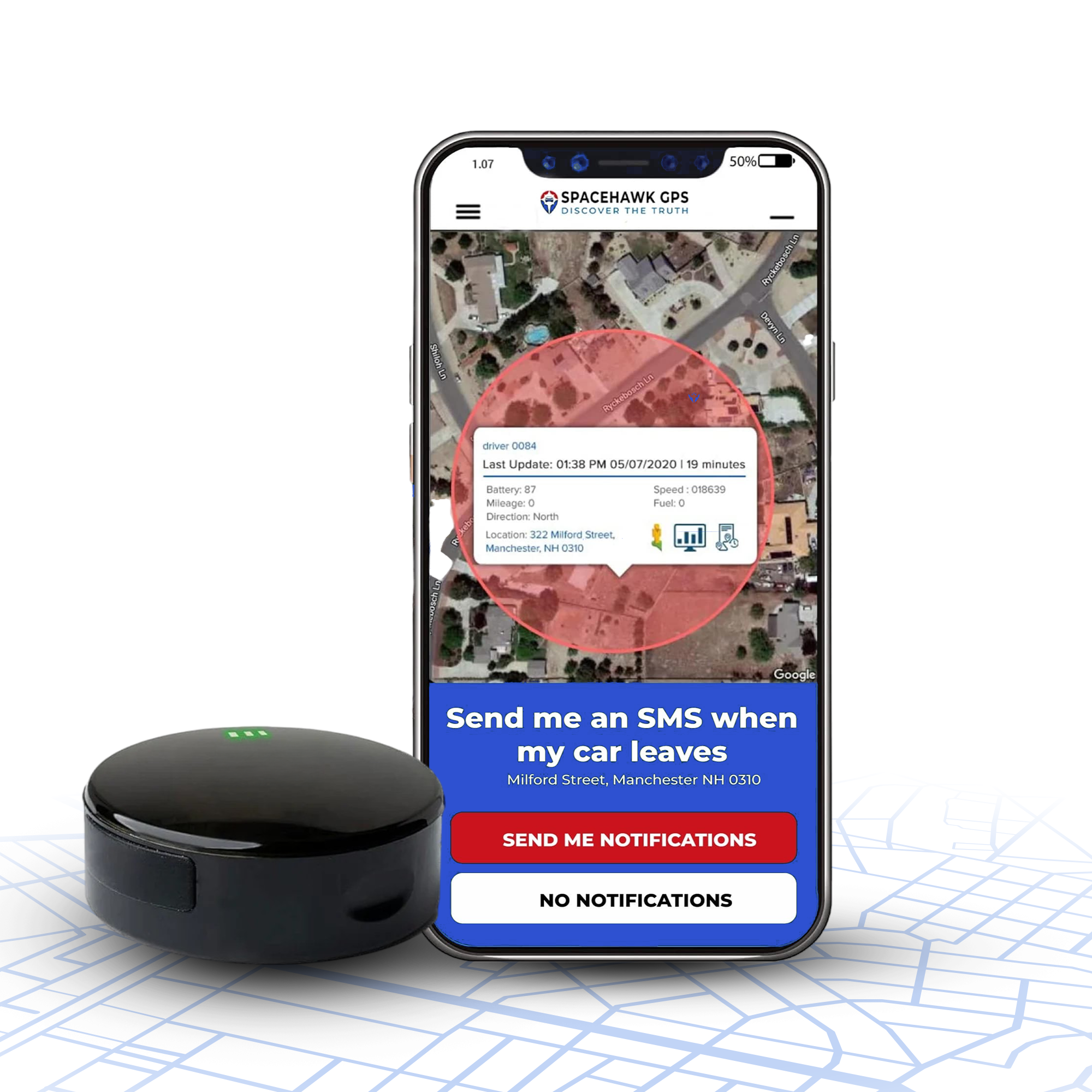
Push it into the diagnostic port and the van goes live in under 30 seconds. Three-second updates, a full year of trip history, plus speed and geofence alerts. A tamper alert fires if anyone unplugs it. The plan is a flat $8.95 a month with no contract, which is the lowest running cost we sell.
See the Konnect trackerPer vehicle, per month, flat and contract-free. Run the yearly total before comparing device prices.
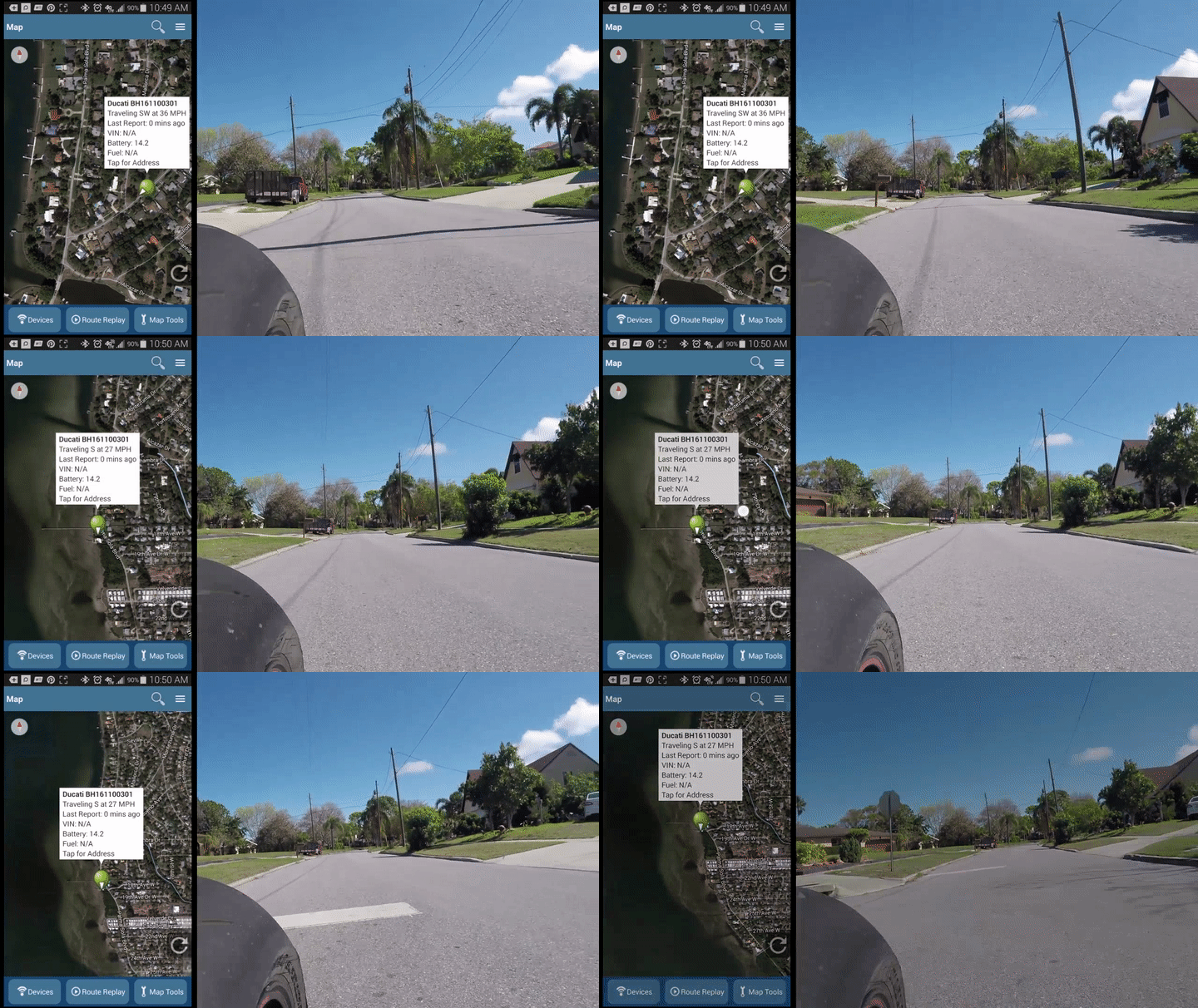 Live position, updating as the van moves. The rest is reporting on top.
Where this leaves you
The order matters more than the hardware. Policy, then technology, then a rollout people were told about, then a review that actually happens.
Get that sequence right and the data holds up when you need it. Skip the paperwork and you own a tracker that produces evidence nobody can use.
One line worth keeping in mind through all of it: you are monitoring a company asset, not a person. Write the policy that way, run the fleet that way, and the rest follows.
Ready to fit the first van?
Company-vehicle hardware with a flat monthly plan and free USA-based support.
Shop fleet trackersSome images in this article were generated using AI.
- Choosing a selection results in a full page refresh.
- Opens in a new window.
 Buy on Amazon