
LandAirSea 54 vs SpaceHawk GPS Tracker: Tested & Compared
-
01SpaceHawk provides steady tracking while LandAirSea 54 focuses on detailed movement
-
02SpaceHawk offers longer battery life while LandAirSea drains faster at high update rates
-
03LandAirSea 54 costs roughly half as much per month at every matched update speed
-
04SpaceHawk's app is simpler while LandAirSea offers deeper control features
-
05Both support magnetic, waterproof placement but suit different tracking priorities
LandAirSea 54 vs SpaceHawk: Real-World Comparison

LandAirSea 54 vs SpaceHawk keeps coming up because both rank among the most in-demand portable GPS tracker options for cars, trailers, and asset tracking. Anyone shopping for a mini GPS tracker wants real GPS, fast update speeds, a strong magnetic mount, IP67 waterproof housing, and real-time tracking. The problem shows up fast: both trackers claim similar abilities, and choosing between them gets confusing.
This comparison cuts through that confusion. No sponsorships, no paid placements, both devices come from our own store and get used in real situations. After 15 years working with GPS trackers, patterns show up quickly once real driving, parking, and long idle periods enter the picture.
SpaceHawk is our own product. GPS Tracker Shop sells it, we support it, and we make money when you buy it. LandAirSea 54 is another company's tracker that we also stock, and the Amazon links in this article earn us a commission at no extra cost to you.
You should read the verdict with that in mind, so here is the part most comparisons leave out. LandAirSea 54 wins on price, and it is not close. At every matched update speed it runs about half what SpaceHawk costs per month, and the table further down shows the exact figures rather than talking around them. SpaceHawk earns the overall pick here on battery life, app simplicity and phone support, not on cost. If the monthly bill is what matters most in your situation, buy the LandAirSea.
This guide explains where each tracker fits, where trade-offs appear, and how to pick the one that matches how you plan to track, not how a product page talks.
Comparison at a Glance
SpaceHawk favours steady, readable live tracking for daily use. The 54 delivers dense location detail while something is actually moving.
SpaceHawk runs longer between charges through routine tracking and parking. The 54 draws more when frequent updates stay active.
SpaceHawk keeps controls shallow for quick check-ins. SilverCloud offers deeper tools for anyone who wants hands-on management.
One bills by the day and one by the month, but line the tiers up by update speed and the 54 costs roughly half at every level.
Each supports hidden magnetic placement and waterproof protection across vehicles, trailers and equipment.
SpaceHawk suits everyday drivers, families and small fleets wanting consistency. The 54 fits short-term monitoring where movement detail leads.
Quick Overview: SpaceHawk vs LandAirSea 54 GPS Tracker
| Category | SpaceHawk GPS Tracker | LandAirSea 54 GPS Tracker | Edge |
|---|---|---|---|
| Tracking speed | Consistent live tracking with steady refresh rates | Very frequent updates during movement | LandAirSea |
| Battery behavior | Longer cycles with saver modes for extended use | Shorter cycles under frequent update use | SpaceHawk |
| Mounting style | Waterproof magnetic housing for hidden installs | Built-in magnet with compact footprint | Tie |
| App experience | Simple layout focused on live location and alerts | Feature-dense SilverCloud app with controls | Depends |
| Subscription costs | Day-based pricing, about $20 to $51 per month | Monthly tiers, $9.95 to $24.98 per month | LandAirSea |
| Support | U.S. phone and email support, lifetime warranty | Online resources and account-based, lifetime warranty | SpaceHawk |
| Typical use case | Daily vehicle, asset, and equipment tracking | Event-based or high-activity tracking | Depends |
What Each Plan Actually Costs
This is the part that decides the bill, so it is worth putting the numbers side by side rather than describing them. Both companies charge by update speed. Line the tiers up and the gap is consistent.
Prices at the time of writing. SpaceHawk also offers 10-second and 5-second tiers at $1.33 and $1.50 per day, which LandAirSea does not match.
So LandAirSea 54 lands at roughly half the monthly cost at every tier both companies offer. Over two years at 30-second updates that is a difference of about $430, which is real money and worth weighing against the things SpaceHawk does better. What SpaceHawk buys you for the premium is the day-based billing, which you can move up and down without changing plans, longer battery life between charges, a simpler app, and a U.S. phone number when something goes wrong.
SpaceHawk GPS Tracker Overview

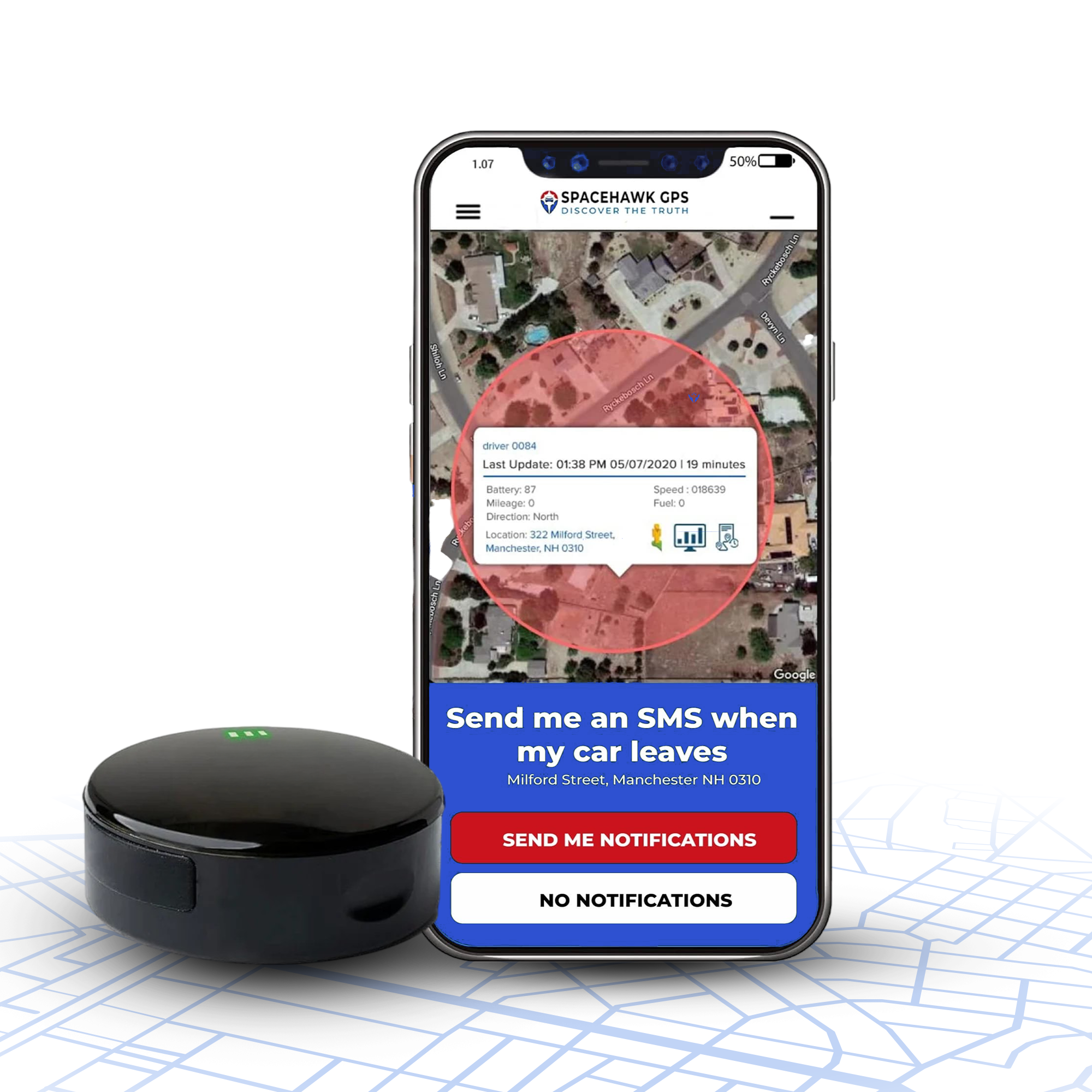
SpaceHawk targets users who want hidden GPS tracking without constant adjustments. Real-time GPS tracking stays steady during driving, parking, and longer idle stretches. Magnetic mounting grips securely under vehicles, trailers, or equipment, while waterproof housing handles weather exposure without extra cases.

Battery cycles last longer during normal car tracking, which reduces charging interruptions. The mobile app keeps controls simple: live location, movement alerts, speed alerts, geofence alerts, and route history remain easy to access without digging through menus. Support access stays human-focused, which helps during setup or troubleshooting.
Key features of SpaceHawk GPS
- Real-time GPS tracking with consistent update behavior
- Strong magnetic mount for hidden vehicle and asset placement
- Waterproof housing for outdoor and under-vehicle use
- Longer battery cycles during daily tracking and idle periods
- Simple mobile app with live location, alerts, and route history
- Movement alerts, speed alerts, and geofence notifications
- U.S.-based human support and lifetime warranty
Best for: drivers, families, fleets, and asset owners who want consistent tracking, longer battery cycles, and low daily maintenance.
LandAirSea 54 GPS Tracker Overview

LandAirSea 54 leans toward aggressive tracking behavior. Location refresh rates reach very tight intervals during motion, which suits short-term monitoring where movement detail takes priority. The compact body and strong magnet allow discreet placement on vehicles, trailers, or equipment, while IP67 waterproof housing protects against water and dust.

Battery usage increases when frequent updates stay active, especially during long driving sessions. The SilverCloud app provides detailed controls, historical playback, InstaFence alerts, and energy saver options for managing power during idle time. This setup rewards users willing to manage settings actively.
Key features of LandAirSea 54
- High-frequency real-time GPS tracking during active movement
- Compact design with built-in magnetic mounting
- IP67-rated waterproof and dust-proof housing
- Motion-based tracking with adjustable update intervals
- SilverCloud app with detailed controls and playback tools
- InstaFence temporary geofence alerts
- Energy saver modes for idle-time power management
- Lifetime warranty with account-based support access
Best for: users who need frequent location updates, detailed movement visibility, and short-term tracking where speed takes priority over battery longevity.
What We'll Break Down in This Comparison

Before getting into feature-level detail, here's exactly how this comparison flows, so you know what's coming and why each section exists. Not every tracking feature helps in daily use, and some create extra work instead. The sections below focus on how each GPS tracker behaves during real driving, parking, and long idle periods.
Each section keeps the comparison practical and easy to match with how you plan to track.
1. Real-Time Tracking Behavior - Consistency vs Frequency

Real-time tracking behavior shows a clear split between SpaceHawk and LandAirSea 54 once a vehicle starts moving.
Consistency first. Updates arrive in a steady rhythm while driving and slow naturally at stops, which keeps the map readable across city traffic and long routes.
Frequency first. Points refresh very often in motion, catching tight turns, short pauses and quick direction changes. Long drives produce a busier map.
2. Battery Life & Charging - Daily Use vs Burst Tracking

3. Subscription & Pricing Model - Flexibility vs Value

Billed by the day, $0.67 to $1.67 depending on update speed, or roughly $20 to $51 a month. Six tiers, including 10-second and 5-second steps the 54 does not offer.
Billed monthly, $9.95 to $24.98 across four tiers. Some tools, including extended history and advanced alerts, depend on which plan stays active.
Note: Both SpaceHawk and LandAirSea also offer GPS tracker options that work without a monthly subscription. See Best GPS Tracker Without Subscription (No Monthly Fees) for full details.
Key difference: LandAirSea 54 is clearly cheaper month to month, while SpaceHawk offers finer control over what you pay for and more update tiers to choose from.
4. App Experience & Ease of Use - Control vs Simplicity

A clean layout built around live tracking, movement and speed alerts, and route history. Navigation stays shallow, which suits quick checks during a busy day.
The SilverCloud app, with InstaFence tools, energy saver settings and detailed historical playback. More capability, and more time spent configuring it.
5. Alerts & Geofencing - Reliability vs Intensity

Movement, speed and geofence alerts arrive in a steady pattern matched to the tracking rhythm. Notification volume stays manageable on an ordinary driving day.
Instant fence alerts and temporary boundaries, tied to the faster update rate. Alert volume climbs during active motion and rewards manual tuning.
6. Mounting & Portability - Magnetic vs Discreet Carry

Mounting style affects concealment and stability. SpaceHawk uses a waterproof magnetic housing designed for hidden placement under vehicles, trailers, or equipment, with a magnetic grip that stays firm through rough roads and weather exposure. LandAirSea 54 features a compact body with a built-in magnet; its smaller size allows placement in tighter spaces, supported by IP67-rated waterproof housing.


Key difference: SpaceHawk focuses on heavy-duty hidden mounting, while LandAirSea 54 focuses on compact placement flexibility.
7. Coverage & Reliability - Signal Stability

GNSS positioning paired with cellular, holding steady through city driving and highway travel across regions.
Strong GNSS and cellular antennas with broad coverage, plus historical playback that preserves the route through brief signal gaps.
For more on how satellite tracking works, see GPS Satellite Tracking.
Key difference: SpaceHawk prioritizes steady live connectivity, while LandAirSea 54 emphasizes data retention during temporary signal loss.
8. Support & Warranty - Responsiveness and Replacement

U.S.-based phone and email support with stated weekly availability, video guides and direct contact options. Lifetime replacement warranty under brand terms.
Lifetime warranty with support through online resources, FAQs and direct channels. Account and device management runs through SilverCloud, which also gates plan-tied features.
What We Liked About Each

This part comes from hands-on use, not spec sheets or marketing copy. Some choices made daily tracking easier. Others added friction depending on how tracking was handled.
SpaceHawk GPS
- Tracking felt predictable during daily driving, stops, and overnight parking
- Battery cycles stretched longer during normal car and asset tracking
- App layout stayed simple enough for quick location checks
- Magnetic housing held firm under vehicles during rough-road use
- Support access stayed straightforward through phone and email channels
- Costs about double the LandAirSea plan at every matched update speed
- Fewer advanced configuration options for users who want deep control
- Alert customization leaned toward practical rather than granular
- Less focus on detailed playback tools compared with feature-heavy platforms
LandAirSea 54
- Frequent location updates captured tight turns and short movement bursts
- Roughly half the monthly cost at every tier both trackers offer
- Compact size helped with discreet placement in tight areas
- SilverCloud tools supported detailed playback and temporary fence setup
- Energy saver options helped manage power during idle periods
- Battery drain increased quickly during long drives with frequent updates active
- The app required more time to configure for daily use
- Feature access is tied to which plan stays active
Both trackers served different tracking styles. One favored simplicity and consistency. The other favored control and movement detail. The right choice depended on how often tracking happened and how much hands-on adjustment felt acceptable day to day.
Which GPS Tracker Should You Choose?
Choosing between SpaceHawk and LandAirSea 54 comes down to how tracking fits into daily routines, not headline specs or marketing claims.
Think about how often tracking runs, how much time you want to spend adjusting settings, and how frequently charging feels acceptable. Some users want steady location checks with minimal interaction. Others want dense movement detail during short tracking windows. Defining that preference upfront makes the decision clearer before spending money.

Tracking should stay simple and consistent. Daily monitoring gets easier with steady live updates, longer battery cycles and an app built for fast check-ins.
- Everyday car tracking with minimal setup
- Families monitoring teen drivers
- Small fleets needing steady live views
- Long parking periods without frequent charging
- A clean, straightforward app

Tracking calls for close movement detail, or the monthly bill is the deciding factor. Short-term monitoring benefits from the faster refresh and deeper SilverCloud controls.
- Short-term or event-based tracking
- Keeping the subscription as low as possible
- Situations needing tight movement visibility
- Detailed playback and fence tools
- Hands-on control over tracking behaviour
Both trackers support hidden placement, magnetic mounting, and real GPS tracking. The right choice depends on how often tracking runs, how much control feels comfortable, and how much hands-on management fits your routine.
Final Verdict - SpaceHawk GPS Tracker Takes the Lead
Across daily driving, long parking and mixed scenarios, SpaceHawk takes the overall pick. Consistent live tracking, longer battery cycles and a cleaner app add up to a setup that works without constant adjustment.
That verdict comes with a caveat we would rather state than bury. SpaceHawk is our own product, and it is the more expensive of the two by a wide margin, roughly double per month at matched update speeds. The lead rests on battery life, app simplicity and U.S. phone support. It does not rest on value, and anyone shopping primarily on monthly cost should buy the LandAirSea 54 instead.
The 54 keeps a specific role. Frequent updates and deeper controls support short-term monitoring and recovery-focused use where tight movement detail leads, in exchange for more involvement around settings and charging.
Both trackers support hidden placement, magnetic mounting, and real GPS tracking. The difference shows up in day-to-day ownership.
- SpaceHawk - best for simple, everyday hidden tracking with steady performance and longer battery life
- LandAirSea 54 - best for high-frequency tracking, detailed movement visibility, and the lower monthly bill
For most real-world tracking needs, SpaceHawk delivers the more practical and balanced experience.
Frequently Asked Questions (FAQs)
How long does the battery last on SpaceHawk and LandAirSea 54?+
Which tracker is cheaper to run?+
What are the monthly subscription costs for each GPS tracker?+
- $0.67/day - updates every 3 minutes
- $0.83/day - updates every 60 seconds
- $1.17/day - updates every 30 seconds
- $1.33/day - updates every 10 seconds
- $1.50/day - updates every 5 seconds
- $1.67/day - updates every 3 seconds
LandAirSea 54 follows a monthly subscription model with pricing tied directly to update frequency inside the SilverCloud platform. Based on prepayment terms at the time of writing:
- $9.95/month - updates every 3 minutes
- $12.48/month - updates every 1 minute
- $17.48/month - updates every 30 seconds
- $24.98/month - updates every 3 seconds
Key difference: SpaceHawk offers day-based pricing with more tiers to choose from, while LandAirSea 54 uses fixed monthly tiers that come in at roughly half the cost at every matched speed.
Which tracker provides more accurate real-time location updates?+
Can these GPS trackers be used for cars, trailers, and equipment?+
Do these GPS trackers work outside the United States?+
Which GPS tracker suits fleet management or teen driver monitoring?+
- Choosing a selection results in a full page refresh.
- Opens in a new window.
 Buy on Amazon